
I built the version of Blockster you’re reading with Claude. I use OpenAI to create artwork, transcribe recordings and edit stories, and I pair it with HeyGen to create our Blockster Briefing video reports with Electra. I also dip into Gemini regularly to think through business strategy, but I haven’t tried its other features yet. So I walked into Google DeepMind’s AI Build Night in Wynwood with a question I suspect plenty of builders have. I already know where Gemini fits into my planning. Where else could it help me do better work?
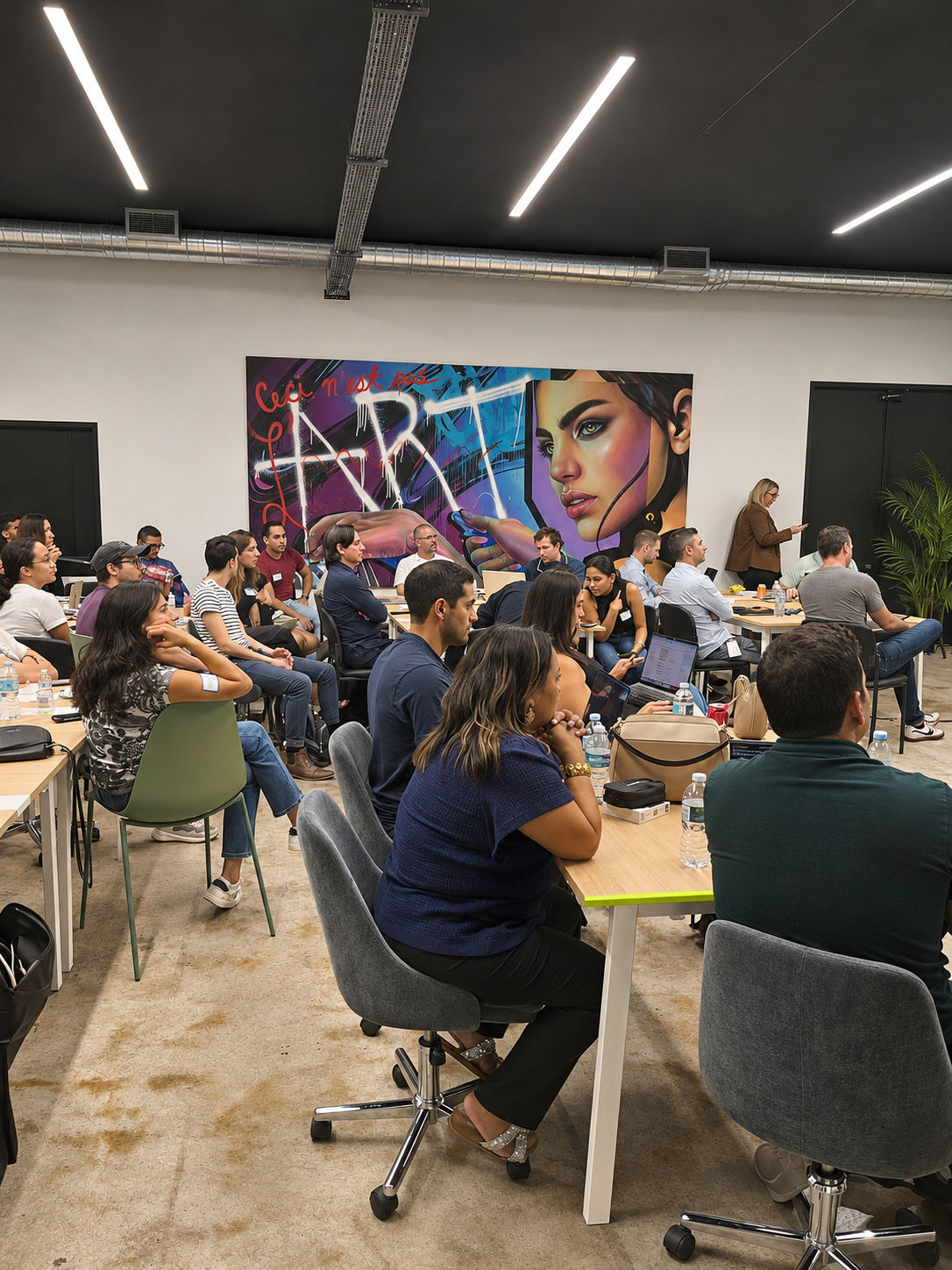
Superteam’s Miami chapter co-hosted the November 5 build night inside The LAB in Wynwood. The room was packed. People had laptops open at the long tables and others stood at the back. I knew Miami had a big AI community. It feels different when you’re sitting in the middle of it. DeepStation said the event, which brought together Google DeepMind, DeepStation, The LAB Miami and Superteam USA, drew more than 600 signups.
Post from @thorwebdevView the original post on X↗
What struck me was how far along the projects were. One company helps record labels find the right person to promote a song. Another helps doctors find research while they’re caring for patients. Both teams could point to a particular job they’d given Gemini and explain why.
Influur gives music teams back the hours they spend scouting creators
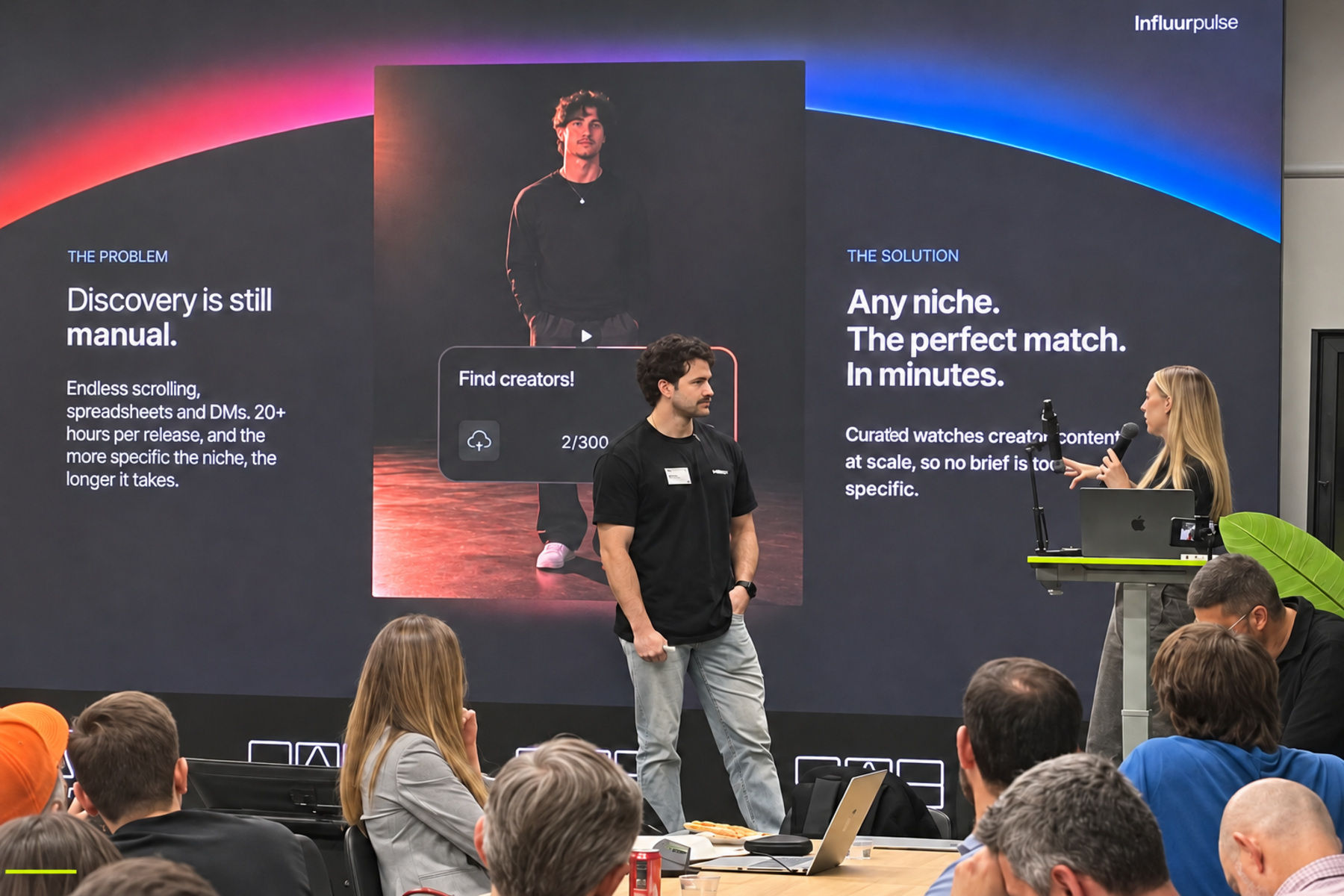
Find a creator who has filmed themselves drinking matcha on a New York street. That was one of the briefs Influur showed us in Wynwood. Picture doing it by hand: a team divides up accounts, watches clip after clip, saves links in a spreadsheet and compares notes. The person you want might never mention matcha in a caption. Influur put the cost of that kind of manual scouting at more than 20 hours per music release.
That’s a real business problem for Influur, the Miami company founded by four Latinas to connect brands with creators. Its campaign portfolio includes Warner Music Group, Mastercard, Goya and Subway. In April, the company said its network included more than 80,000 active influencers and that major record labels were already using Pulse, its AI tool for finding creators.
“We have their bios, we have their comments, we have their captions,” Influur engineer Nick Incardone told the room. All of that helps a label get to know a creator. None of it tells you what’s in their hand as they cross the street.
“We knew we needed to actually watch the videos.”
— Nick Incardone, Influur, at AI Build Night Miami
What struck me was how much of that scouting the agent has already done before a label asks. Pulse uses Gemini to watch recent videos and record details like the setting, the music and what the creator is doing. When a brief comes in, the agent can search those descriptions, rank the matches and check fresh footage from the finalists. Incardone said that final video check takes under 15 seconds. The team gets a shortlist with posts it can review, and can spend its time deciding whom to hire.
The time savings extend beyond the search. Influur co-founder Estefany Oliveira said setting up a campaign used to take at least 48 hours. With Pulse, she said, it takes under four minutes.
The campaign that caught my attention was for Temper City’s “Self Aware.” Influur says it used Pulse to find overlooked creators and worked with 17 of them on a $5,100 budget. Their posts drew 30.7 million organic views, according to the company. One creator who was paid $150 accounted for more than two million of those views. For a label deciding whom to back on the next release, that’s a good reason to look beyond follower counts.
That $150 creator reminded me of a question we explored in our coverage of Google advertising. AI has made it cheaper to build a business, but how do you afford to find its customers? For a label launching a song, a creator who already reaches the right listeners is one answer.
What happens when a doctor searches for peptides?
The OpenEvidence presenter used peptides as his example. What struck me was how little a long list of search results tells a doctor. A patient wants to know whether a peptide will do what they’ve heard it can do. Which study tested that claim? In people or in a lab? What did the researchers actually measure? That’s where OpenEvidence comes in. A doctor can ask a specific question, read a short answer and go straight to the papers behind it.
The company has agreements with publishers including The New England Journal of Medicine and the JAMA Network. That gives doctors access to details that can be hard to judge from an abstract alone, down to a table showing which patients a study included. In Wynwood, the presenter gave us a sense of how often clinicians turn to the service.
“We’re powering about two million clinical consultations every day in the United States.”
— OpenEvidence presenter, at AI Build Night Miami
“We’re mainly using Gemini Embedding 001 for a lot of our retrieval tasks,” the presenter said. Think of it as finding the right page when the doctor and the researcher use different words for the same thing. The presenter said those lookups take roughly a fifth of a second. That figure covers finding relevant material. The doctor still has the evidence in front of them to read and weigh.
What I liked about seeing these companies in the same room was how differently they use the same idea. At Influur, a marketer can go straight to the clip and decide whether to hire the creator. At OpenEvidence, a physician can go straight to the paper and decide whether its findings apply to this patient. In both jobs, that’s where you want the person spending their time.
We saw a similar split between what an agent can prepare and what a person decides in Blockster’s look at Aina’s AI ring. The software can line up a task. The person wearing the ring gets to say yes.
Post from @SuperteamUSAView the original post on X↗
How big is Gemini compared with ChatGPT and Claude?
Google reported 950 million monthly active Gemini app users in July. By August 11, the app had crossed one billion. Its audience was growing among daily users, too. Google said in July that daily active users had tripled over the previous year.
OpenAI reported more than 1.2 billion people using ChatGPT each week in September. Comparing that directly with Google’s monthly count would mix two different measures. For a fairer look at all three, here’s how many people visited each service on the web over the same month, according to Similarweb estimates published by Momentic.
| Service | Estimated unique web visitors, September 2026 |
|---|---|
| ChatGPT (OpenAI) | 492.6 million |
| Gemini (Google) | 313.1 million |
| Claude (Anthropic) | 119.0 million |
On the web, Gemini reached about 64% of ChatGPT’s audience and roughly 2.6 times Claude’s that month. The table leaves out people who used only the mobile apps. Claude is growing quickly there. Similarweb estimates its standalone mobile app audience in August was 17 times the size it had been a year earlier.
What I want to try with Gemini
Thor Schaeff helps developers build voice applications with Gemini at Google DeepMind. Midway through his presentation, he showed how the model follows someone who changes their mind as they speak. I liked his advice on how to judge the tools for myself.
“What’s better than a benchmark is testing it out yourself.”
— Thor Schaeff, Google DeepMind, at AI Build Night Miami
At Blockster, I have a very practical use for video search. Say I want the moment Thor asks his Live Jukebox to speak Spanglish. With Gemini’s developer tools, I can send the original recording and ask for a timestamp. The model can use the sound and the picture together. I can jump to that moment, listen back and check the quote before publishing.
Here’s where that makes a difference if I’m building the feature into Blockster. OpenAI’s GPT-6 Astra takes text and still images as inputs, and Anthropic’s Claude vision guide describes working with images. With those models, I’d first need a way to extract frames and transcribe the audio. Gemini’s direct video input saves me that preparation. That’s a concrete reason to try it alongside the tools I already use. I’d still want to run the same recordings through each workflow before saying which one finds the right clip most reliably.
What a custom voice could sound like at Talk Society
Voice is closer to home for me. At Talk Society, Blockster’s sister company, we combine OpenAI’s voice technology with a knowledge-base system we built using Claude and our own voice training. We’re still in the early stages, but we’ve built a simple widget a company can put on its website. A visitor can ask a question out loud and hear an answer drawn from that company’s own material.
I see a use for that with the growing number of blockchain, digital asset and AI businesses listed on Blockster that publish with us. A reader might discover a company in a story, visit its website and ask, “How do I get started?” We can tailor the same widget to handle customer support questions, too. For our publishing partners, it’s a way to keep that conversation going after someone clicks through.
That’s why I’m curious about Gemini’s voice design tools. Google’s text-to-speech model lets you describe the voice you want in plain English.
Thor, I’d love to have you on Blockster for an interview. If I already build with OpenAI and Claude, what’s one job you’d give Gemini first, and what difference should I expect to see? I’d love to hear your answer in plain English.
I went in using Gemini for business strategy. I left wanting to see what else I could make with it. I want to search our interview footage for a quote, design a voice for a partner’s website and see what happens when I give a jukebox a brief of my own. I like using Gemini, Claude and OpenAI side by side. It keeps my finger on the pulse, and I can judge each tool on a job I know. If one saves me an hour hunting for a clip, that’s an hour I can spend on the story.
To try this yourself, open Google Gemini and upload a short clip. Ask, “At what timestamp does the speaker first mention the product, and what is on the screen?” Play that moment back and check. To experiment with models and prompts, open Google AI Studio. To build it into an app, start with the Gemini API quickstart and choose the official Python SDK or JavaScript and TypeScript SDK.
If you’ve got an idea you’ve been putting off because you don’t consider yourself a developer, try building the first piece. That’s how I built this site. And a special thank-you to Superteam’s Miami chapter for inviting me into that room.
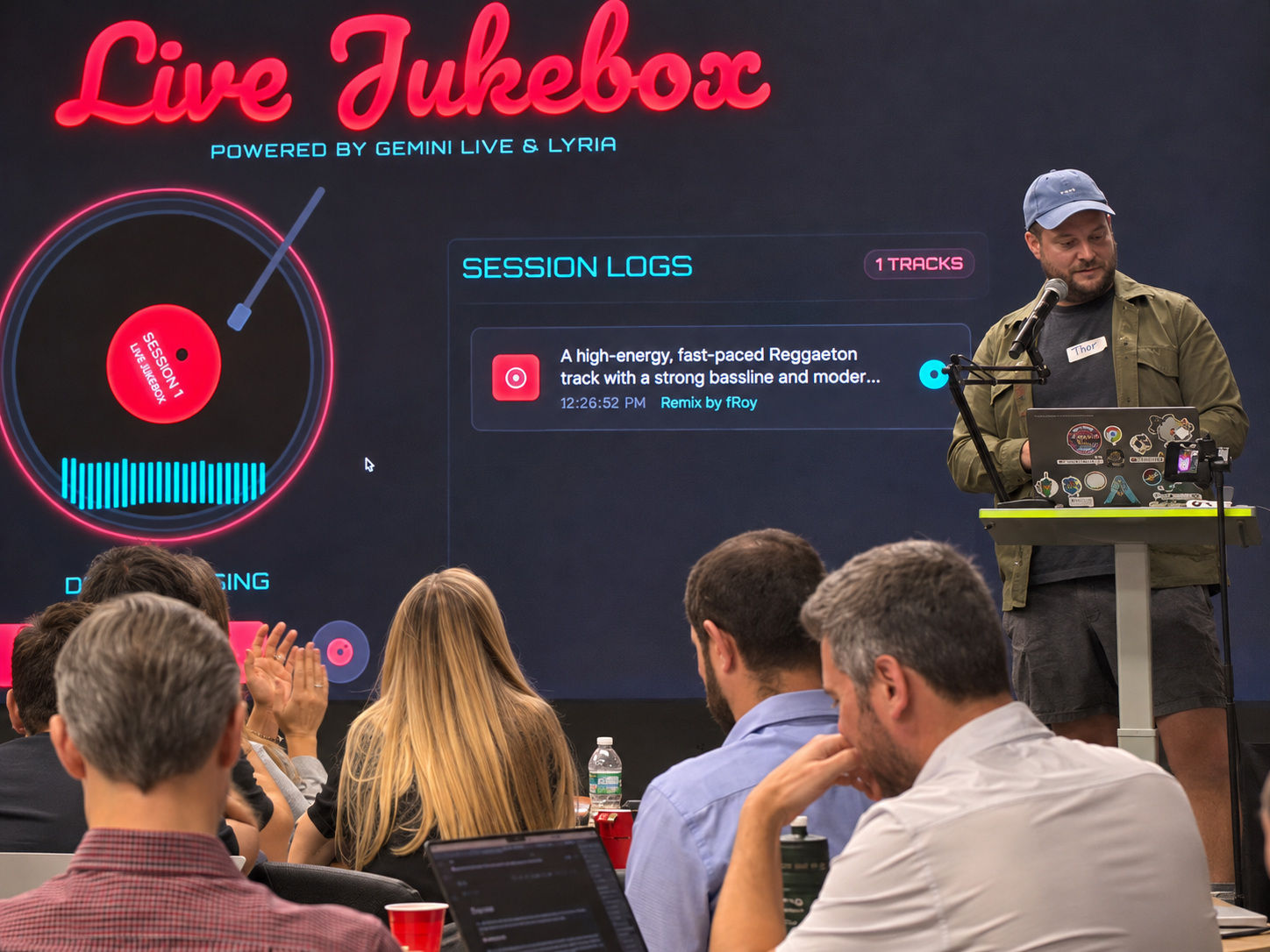
My favorite part? Thor’s DJ set. He asked his Live Jukebox to speak Spanglish and make a high-energy track about Miami’s AI builders. When the music came through the speakers, the room broke into applause. I haven’t seen anything quite like it anywhere else, and honestly, it looks like a lot of fun. That’s one I want to try myself.
Reporting by Lidia Yadlos