Miami’s next big technology gathering has a Wall Street question at its center: who gets paid as AI and digital finance expand—and who finances the infrastructure they need?
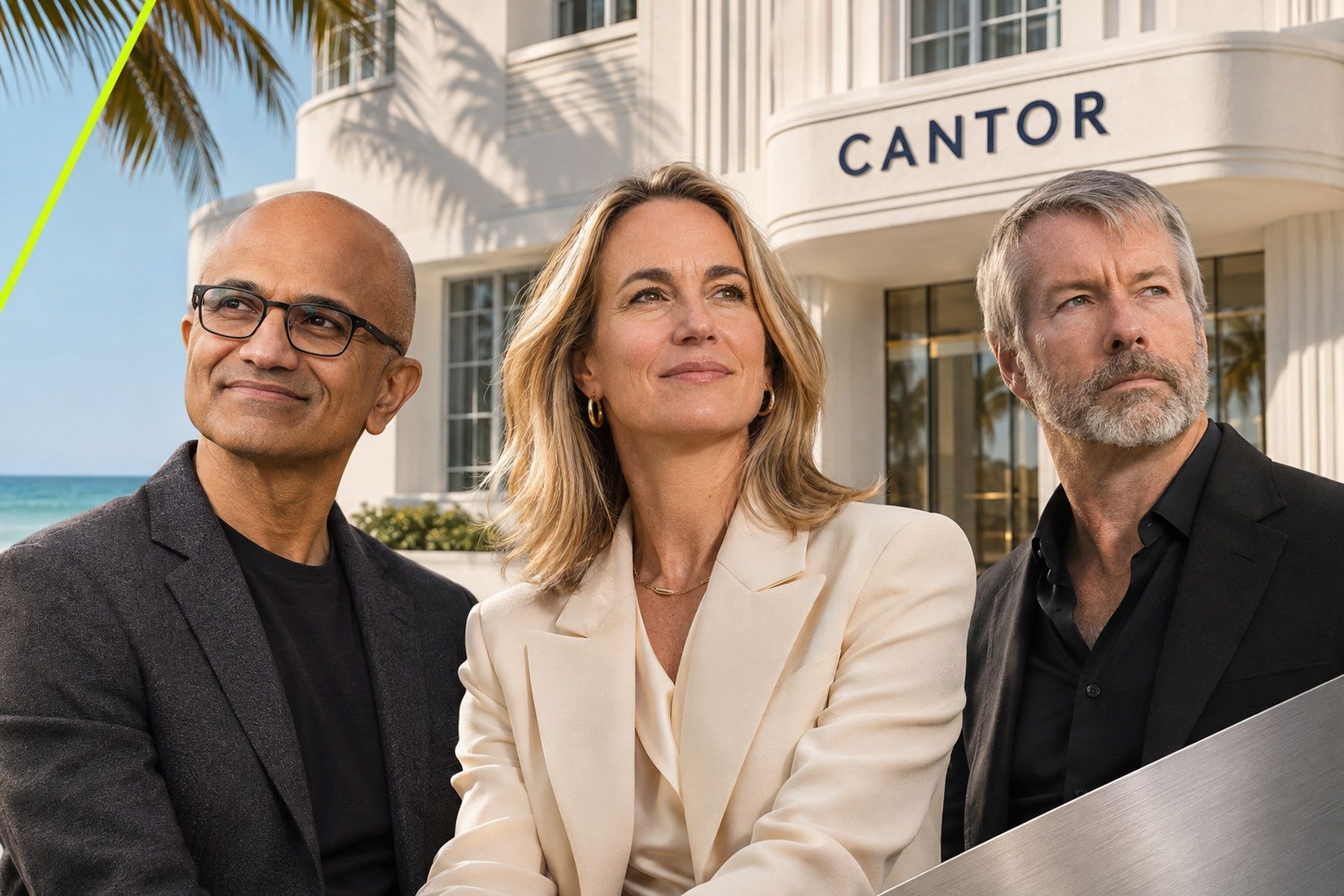
Cantor Convergence opens November 10 at The Ritz-Carlton South Beach, with a program spanning crypto, fintech, AI infrastructure, energy, quantum computing, robotics, and space and defense. Cantor says it expects more than 500 senior executives, entrepreneurs, investors and policymakers.
The three-day event begins with VIP activities, registration and a welcome reception. Its main stage programming runs November 11–12. This is a preview of the scheduled discussions, with the biggest conversations still ahead.
The Lineup Explains the Investment Thesis
Cantor’s current speaker list puts some of the biggest names in AI alongside companies supplying electricity, computing capacity and financial infrastructure.
| Area | Scheduled speakers include |
|---|---|
| AI and chips | Microsoft’s Satya Nadella, OpenAI’s Sarah Friar and Qualcomm’s Cristiano Amon |
| Crypto and digital money | Coinbase’s Brian Armstrong, Tether’s Paolo Ardoino, Circle’s Jeremy Allaire and Strategy’s Michael Saylor |
| Computing infrastructure | CoreWeave’s Brannin McBee, Crusoe’s Chase Lochmiller and Lambda’s Stephen Balaban |
| Power and nuclear | Constellation Energy’s Joseph Dominguez, TerraPower’s Chris Levesque and Ameresco’s Nicole Bulgarino |
| Markets and tokenization | NYSE’s Lynn Martin and Securitize’s Carlos Domingo |
| Quantum and robotics | IonQ’s Niccolo de Masi, D-Wave’s Alan Baratz and Agility Robotics’ Peggy Johnson |
That mix is the point. A better model creates opportunities for software companies, but serving more customers also requires chips, buildings, electricity and financing. Digital finance companies, meanwhile, need to turn technical capability into services customers use.
The investment question reaches across that chain: which businesses can convert demand into durable revenue, and which face expensive construction or uncertain adoption before they get there?
Post from @Official_CantorView the original post on X↗
AI’s Power Problem Gets Its Own Seat at the Table
One of Wednesday’s scheduled panels examines the infrastructure needed to take AI projects from power requirements to large-scale construction. The agenda pairs Ameresco’s Nicole Bulgarino with executives from Centuri Holdings and Primoris Services.
Ameresco has confirmed its participation, along with investor meetings during the conference. Its business includes power generation, storage and infrastructure modernization—the physical work behind the software story.
For investors, useful answers would go beyond a forecast of rising AI demand. How much capacity is operating today? What still needs a grid connection or permit? Are customers contractually committed, and how much money must be spent before revenue arrives?
Those distinctions matter when comparing a company with an energized site against one with land and a development plan.
It is the same issue explored in Blockster’s coverage of energy as a scarce asset in the AI economy: powerful software can become available quickly, while the infrastructure needed to run it takes much longer to build.
Crypto’s Question: What Comes After the Treasury?
The crypto discussions extend into what companies do with their capital after acquiring digital assets.
Twenty One Capital says CEO Raphael Zagury is scheduled to join Sharplink CEO Joseph Chalom and Forward Industries CFO Mark Brazier for a November 12 panel about building businesses beyond digital-asset treasuries. Its announcement lists the session at 1:15 p.m. Eastern.
That is a useful distinction for shareholders. Owning a token gives a company exposure to its price. Building an operating business adds questions about customers, revenue, costs and execution.
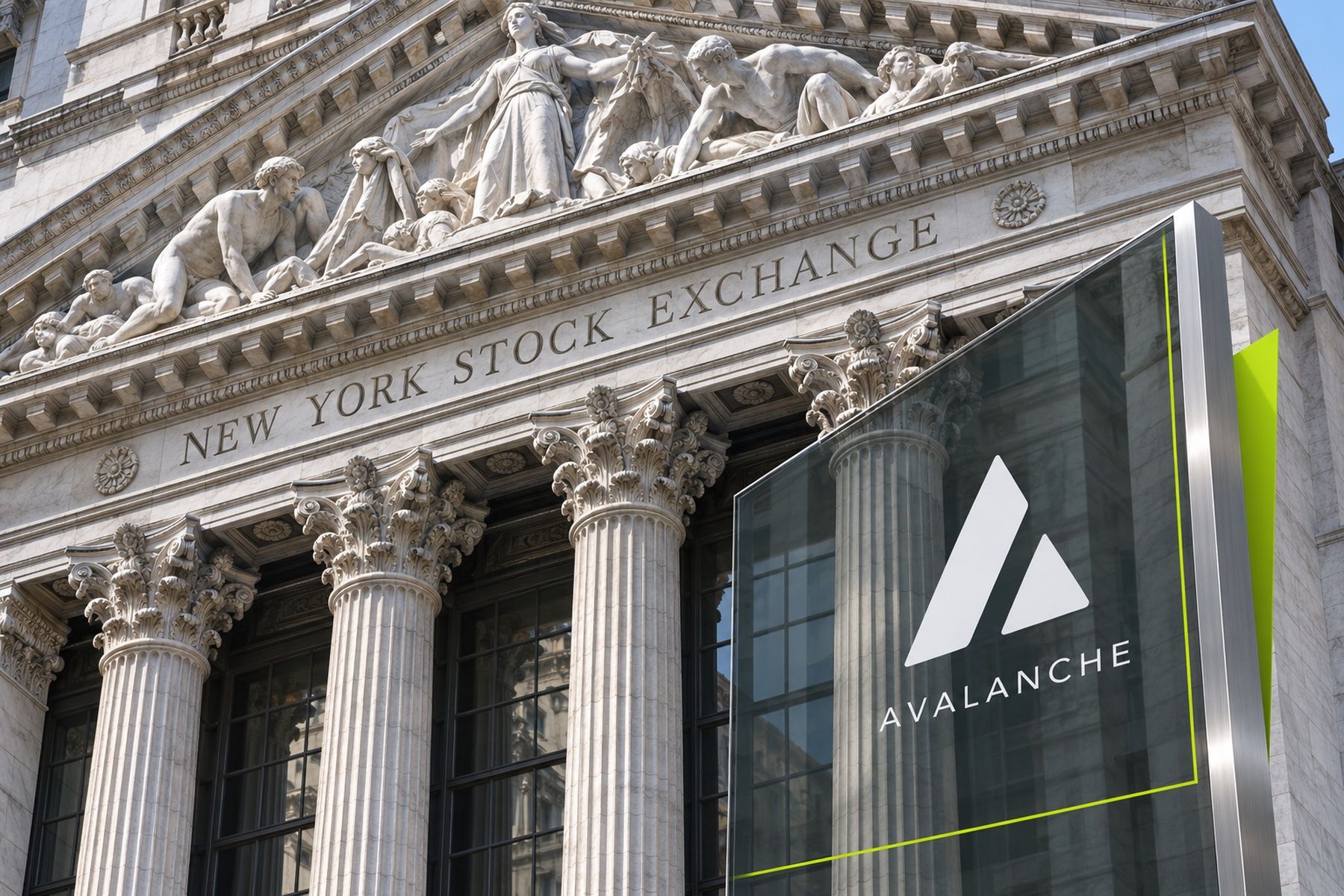
The wider lineup also places exchanges, stablecoin issuers and tokenization companies alongside established financial-market operators. Readers following Blockster’s report on NYSE’s Avalanche settlement plans will recognize the larger theme: how digital assets become part of financial infrastructure.
Cantor chairman Brandon Lutnick described the reasoning behind the expanded conference in its announcement:
“Wall Street has always connected capital to innovation, and the biggest ideas no longer sit inside one sector.”
Quantum Security Adds Another Practical Test
The conference also gives companies a chance to explain where emerging technology can solve an immediate business problem.
SEALSQ founder and CEO Carlos Moreira said he will be in Miami Beach on November 11 to present the company’s quantum-security roadmap and meet investors. In his November 9 post, he focused on protecting digital assets, payment systems and AI infrastructure, and on the transition to quantum-resistant security.
For investors following that field, the useful distinction is between a technology roadmap and a product customers are already purchasing. Commercial deployments, revenue and delivery timelines will say more than the size of a future market.
Post from @CreusMoreiraView the original post on X↗
Miami’s Builders Meet the Capital Conversation
The gathering follows Google DeepMind’s AI Build Night at The LAB in Wynwood, where Blockster’s Lidia Yadlos saw local teams demonstrating practical uses for AI.
Together, the events show two parts of the same challenge: building something useful and assembling the resources to deliver it at scale.
Cantor says livestreams will be available through its X and LinkedIn channels. The official agenda is the place to check session details and changes.
The most valuable takeaway from Miami will be evidence that connects the promise to a business: a customer, a contract, an operating facility or a credible path to revenue.
Reporting by Eric Spivak