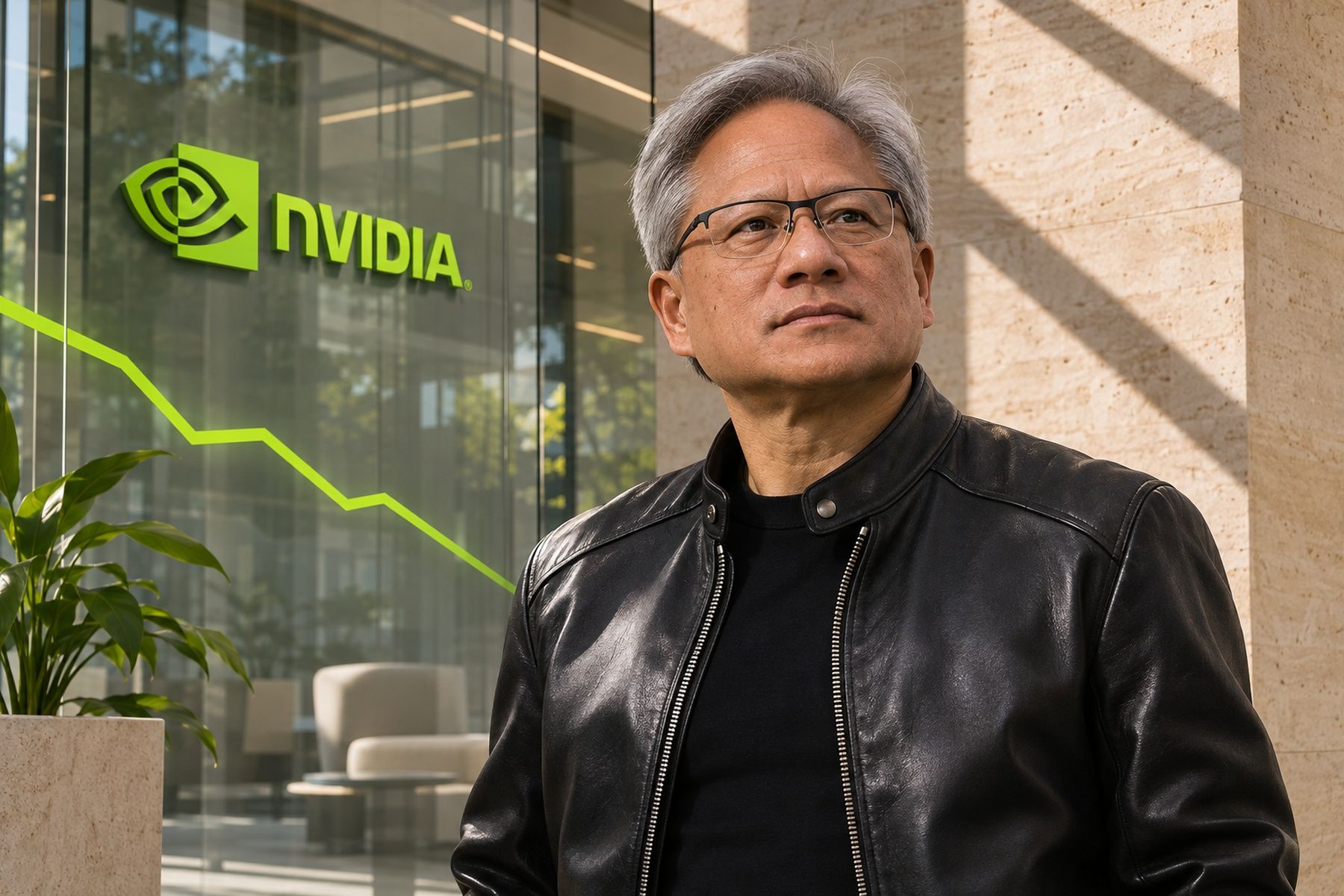

Jensen Huang has resigned as Nvidia’s chief executive, president and a director, effective immediately, ending his 33-year run leading the company he co-founded.
Nvidia appointed chief financial officer Colette Kress as interim CEO while its board searches for a permanent successor. She will retain her finance role during the transition. The company also named former Synopsys chief Harvey C. Jones as its first-ever board chair.
Post from @nvidianewsroomView the original post on X↗
The market reaction was immediate. Reuters reported Nvidia shares fell more than 12% on Thursday, putting roughly $500 billion in market value at risk during trading. Those figures represent an intraday snapshot, rather than a closing loss.
The decline follows the approximately $430 billion erased over two trading days that Blockster covered yesterday. That earlier selloff reflected growing concern about Huang’s conduct, the board’s investigation and whether he could remain in charge. His departure now turns the succession question into an immediate operating challenge.
How the board changed course
On November 8, Nvidia’s board announced an independent investigation into reports that Huang had been targeted by a foreign intelligence effort. At that point, directors publicly backed his leadership and said they had no reason to believe national security or company secrets had been compromised.
Two days later, the independent directors retained former acting U.S. Attorney Joon H. Kim and Wachtell, Lipton, Rosen & Katz to conduct the inquiry.
Post from @nvidianewsroomView the original post on X↗
Thursday’s resignation follows reporting about Huang’s extramarital relationships, including one with a woman whom U.S. authorities reportedly suspect of spying for China. That remains an allegation; the leadership announcement does not establish the investigation’s findings.
For shareholders, changing the CEO addresses who runs Nvidia today. It leaves questions about oversight and the investigation’s eventual conclusions unresolved.
Who is Colette Kress?
Kress brings more than a decade of experience inside Nvidia to the interim role. She joined as CFO in September 2013, after senior finance positions at Cisco and Microsoft.
At Cisco, her responsibilities covered financial strategy across business segments, engineering and operations. She previously spent 13 years at Microsoft, including four as CFO of its Server and Tools division, according to her Nvidia biography.
Her appointment gives Nvidia an experienced internal executive during a sudden transition. The longer-term decision remains open: the board says its CEO search will include internal and external candidates.
Kress’s first message emphasized continuity:
“Our focus remains on serving our customers, partners, developers and shareholders.”
— Colette Kress, interim CEO and CFO, Nvidia
Nvidia’s board also said it expects operations, customer commitments and the product roadmap to continue without interruption.
The business she inherits
Nvidia’s latest reported results show the scale of the business facing this leadership change.
| Measure | Nvidia’s reported figure |
|---|---|
| Second-quarter fiscal 2027 revenue | $96.2 billion |
| Revenue growth from a year earlier | 106% |
| Data Center revenue | $89.0 billion |
| Data Center revenue growth | 117% |
| Previously issued third-quarter revenue outlook | $108 billion, plus or minus 2% |
The third-quarter outlook excluded any Data Center compute revenue from China. These are previously reported results and guidance, rather than a fresh forecast issued with the CEO announcement.
Those numbers explain why investors will scrutinize execution closely. A leadership crisis does not, by itself, establish that customers have canceled orders. It does create uncertainty about how the company will manage product delivery, major commercial relationships and future investment decisions without its founder.
The exposure also extends to crypto investors. As Blockster reported when NEAR.com added tokenized Nvidia, Tesla and Apple through Ondo, eligible users can access Nvidia’s share-price performance through onchain products. The underlying company’s leadership risk travels with that economic exposure.
November 17 is the next test
Nvidia says its third-quarter fiscal 2027 results remain scheduled for Tuesday, November 17, with the release expected around 4:20 p.m. Eastern and the earnings call at 5 p.m.
That gives investors a near-term checkpoint: whether Nvidia delivers against its existing outlook, what management says about demand ahead, and how clearly the new leadership explains responsibility for the company’s technology and commercial decisions.
Reporting by Eric Spivak