
Tether's ambitions now stretch far beyond stablecoins. The company has open-sourced BrainWhisperer, a brain-to-text engine capable of translating neural signals into text while running entirely on local hardware.
Built as part of Tether's growing QVAC AI ecosystem, the software reflects a broader strategy centered on privacy-first artificial intelligence—where sensitive data never needs to leave a user's device.
The release is the latest milestone for Tether EVO, the company's AI research division, which has spent much of 2026 building open-source tools designed to reduce dependence on centralized cloud providers.
Earlier this year, Tether launched the QVAC SDK, followed by on-device medical AI models and memory-compression technology that allows large language models to run efficiently on consumer hardware.
Post from @paoloardoinoView the original post on X↗
Reading Brain Signals Without Sending Them to the Cloud
BrainWhisperer is designed to convert brain activity into written language using brain-computer interface (BCI) technology.
Instead of processing data through remote servers, the software performs inference locally using QVAC, ensuring neural data remains on the user's own hardware. The system builds on whisper.cpp, an optimized implementation of OpenAI's Whisper model, adapting its decoding architecture for neural signal processing rather than conventional speech recognition.
For brain-computer interfaces, that distinction matters. Neural data is among the most sensitive information a person can generate, and Tether argues it should never become another dataset stored inside centralized AI platforms.
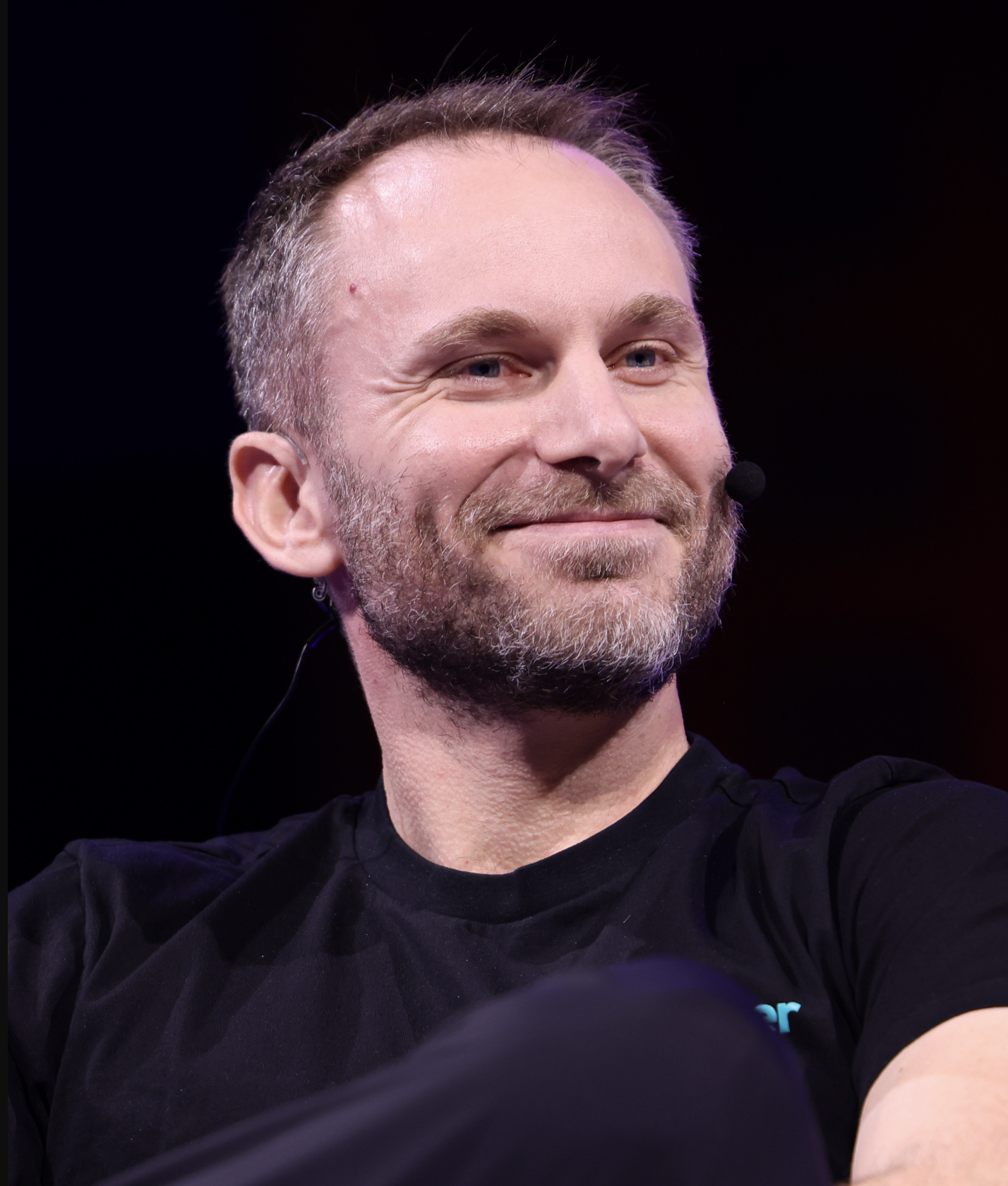
CEO Paolo Ardoino has repeatedly positioned QVAC around a simple principle: users—not cloud providers—should retain full ownership of their data, especially when it comes to information generated directly from the human brain.
Proven Performance Before Public Release
The technology has already been tested against some of the world's leading machine-learning teams.
In February, Tether EVO finished fourth out of 466 participants in the global Brain-to-Text '25 Kaggle Competition, achieving a 1.78% word error rate while decoding electrocorticography (ECoG) brain signals into readable text.
The company's research has also begun appearing in peer-reviewed academic literature. Earlier this month, engineers from Tether EVO published research on cross-subject neural speech decoding in the Journal of Neural Engineering, highlighting continued work on improving brain-computer interfaces beyond competition benchmarks.
Building an AI Ecosystem, Not Just a Model
BrainWhisperer is only one component of a much larger strategy. Since unveiling the QVAC SDK in April, Tether has consistently expanded its local-first AI stack with tools designed for smartphones, laptops, robots and decentralized AI networks.
Post from @NEURARoboticsView the original post on X↗
Recent releases include QVAC MedPsy, a medical AI model capable of running directly on mobile devices, and TurboQuant, an open-source memory optimization system that allows larger AI models to operate efficiently without relying on hyperscale cloud infrastructure.
The long-term vision extends beyond chatbots. Tether has described QVAC as the foundation for a decentralized "Machine Economy," where autonomous AI agents can operate locally while interacting with Bitcoin, USDT and other blockchain-based systems without depending on centralized infrastructure.
Why It Matters
The race to build AI has largely been dominated by companies investing billions into centralized data centers.
Tether is pursuing the opposite approach. Rather than concentrating intelligence inside hyperscale cloud platforms, the company is betting that the next generation of AI will run directly on personal devices, giving users greater control over their data while reducing dependence on external infrastructure.
With BrainWhisperer now available as open source, developers can inspect, modify and build upon the technology themselves—a move that reinforces Tether's broader push for transparent, decentralized AI at a time when concerns around privacy and data ownership continue to grow.
Reporting by Lidia Yadlos