
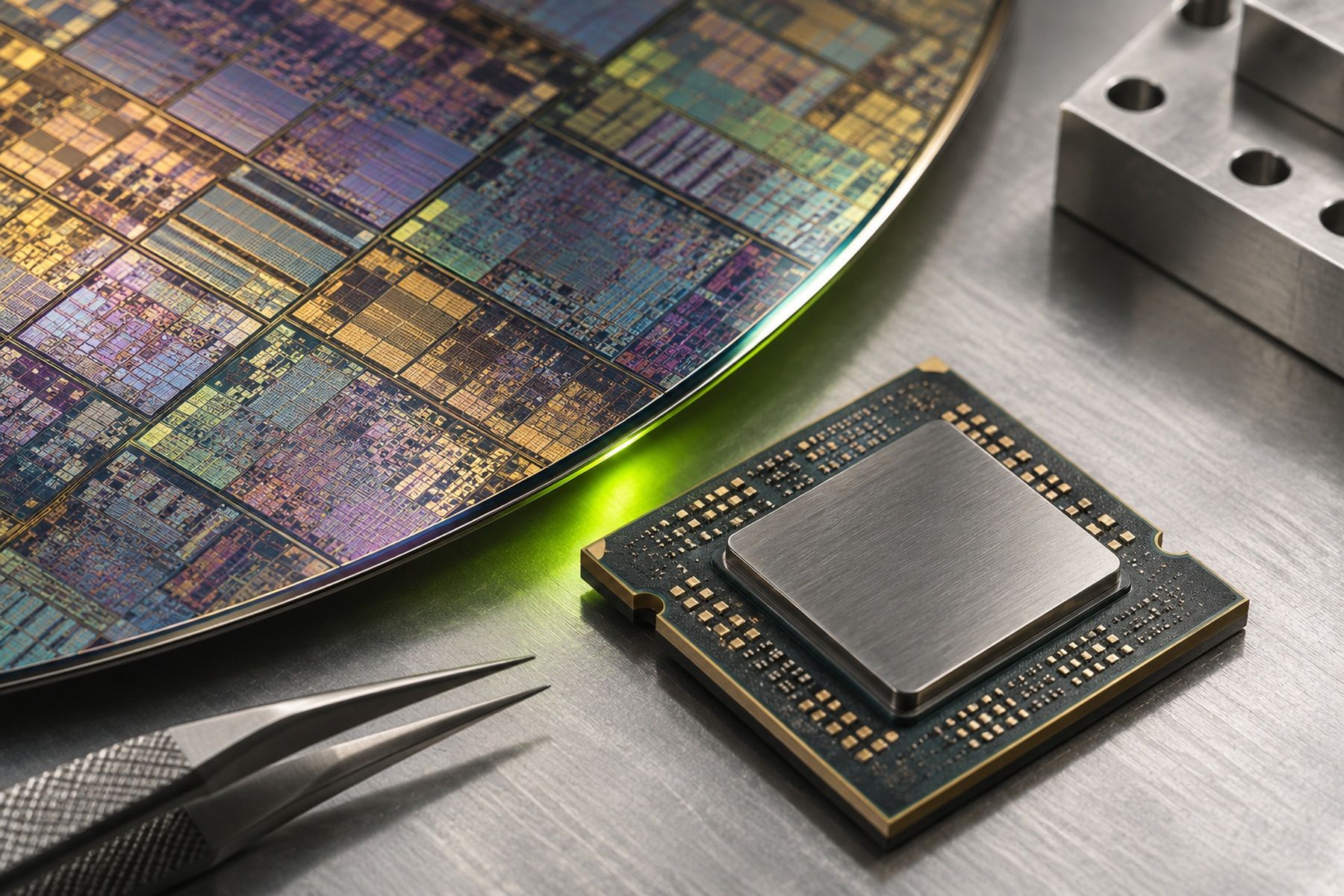
The chips powering AI are increasingly being shaped by AI themselves. In a November 18 research update, OpenAI says its models helped AMD improve key GPU designs, with some changes already included in a design sent for manufacturing.
OpenAI reports improvements of up to 14% against heavily optimized baselines in power, performance and area, commonly grouped as PPA. That does not mean every future AMD GPU will be 14% faster. It describes improvements within the design work evaluated.
Changing the circuits before the chip exists
The models rewrote SystemVerilog RTL, code that describes how chip circuits behave. Synopsys tools checked whether the revised circuits preserved their behavior and evaluated the engineering trade-offs.
This is different from writing an application that runs on a processor. It changes the underlying machinery that performs calculations, moves data and coordinates operations.
For chipmakers, even modest savings can matter when repeated across a large design. But a circuit improvement must survive the rest of the engineering process: verification, physical layout, manufacturing and testing.
Production evidence matters more than a demo
OpenAI says the AMD effort produced roughly a year's progress in under five months. That is its characterization of the collaboration, not an independently established industry-wide productivity rate.
“AMD has already included some of these changes in a recent design it sent for manufacturing”
— OpenAI, November 18 research update
The company also reports silicon-proven improvements in its own Jalapeño chip and separate experiments on open-source processor cores. Those are distinct categories of evidence. A result in a constrained evaluation is not interchangeable with a measured improvement in a finished commercial product.
The investment question is whether better design tools can lower the cost of useful computing over time. Blockster's coverage of the AI-stock selloff examined the pressure on spending expectations. This research points to a more tangible efficiency lever: improving what each new chip can do within its power and size constraints.
Reporting by Sasha Steenkamp