
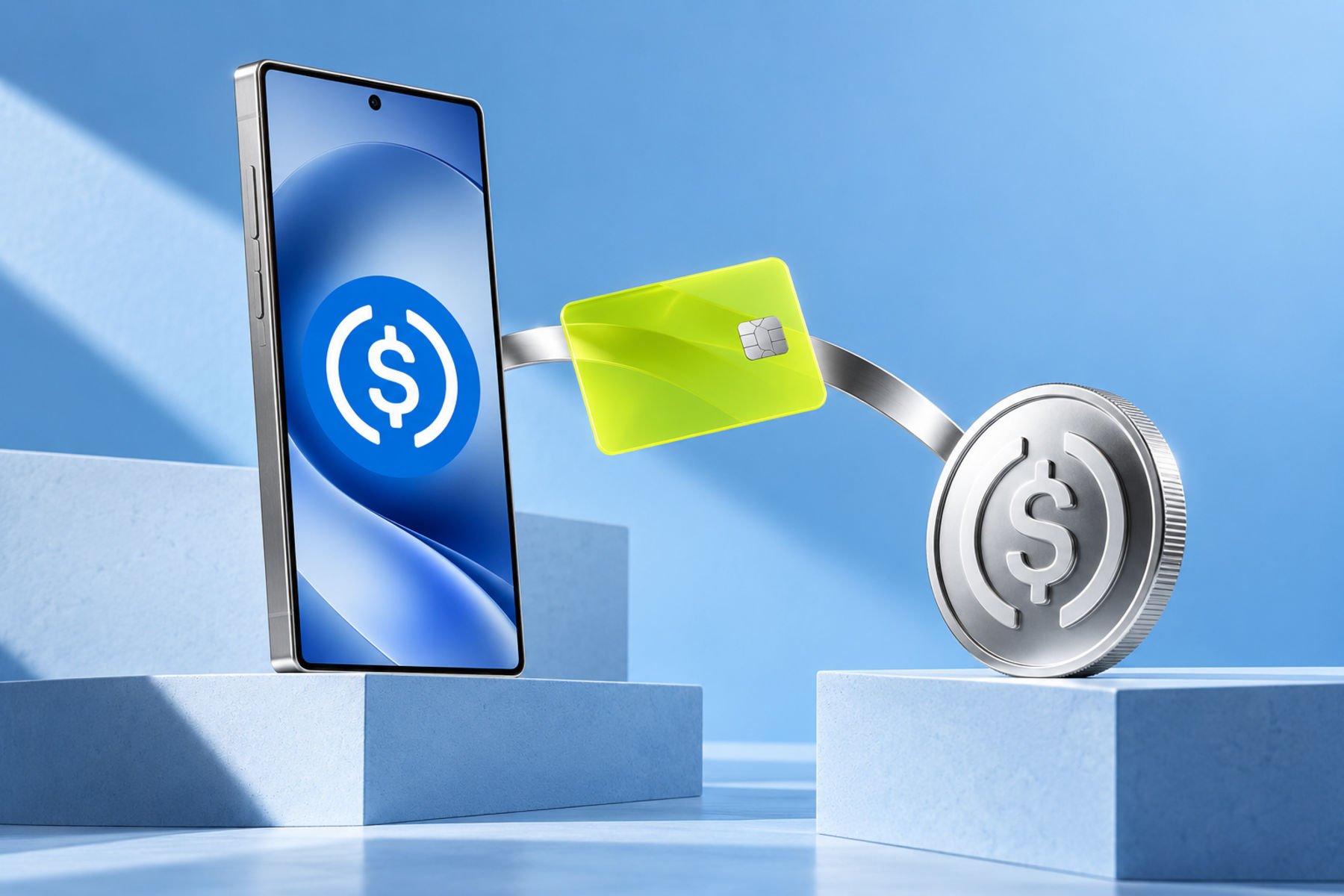
Samsung has a distribution advantage most crypto companies can only envy: the wallet is already on the phone.
The company plans to add USDC transfers to Samsung Wallet in the last week of October, giving eligible U.S. Galaxy owners a way to send digital dollars abroad without setting up a separate crypto app. The announcement puts the compatible device base at 82 million. That is the potential audience, not 82 million people who have opened stablecoin accounts.
The distinction matters. Samsung has secured space on the home screen; it still has to earn a place in people's financial routines. The real test will come when someone needs to send money to family overseas and compares what the recipient actually gets.
A Familiar Wallet, Two Different Payment Routes
Samsung's October 7 announcement describes transfers to compatible crypto wallets and payouts to eligible bank accounts in more than 60 countries. The first delivers USDC. The second delivers local currency, so the recipient does not need a crypto wallet.
“Sending money abroad should feel as convenient as using the wallet already on your phone.”
Those two routes solve different problems. Sending USDC is useful when the recipient already wants digital dollars. A local bank payout is more useful when the money is meant for rent, groceries or school fees payable in another currency.
Consider a hypothetical sender paying a relative's household bill. A fast blockchain transaction is only one part of the job. The payment succeeds for that family when the recipient can use the money, in the right currency and through an account they already have. That final step is where conversion, banking coverage and delivery times become important.
Samsung will charge no transfer fee for supported external-wallet transfers, although recipient providers may charge. Bank payouts have separate fees and estimated delivery times displayed before confirmation. The launch therefore does not establish that every international transfer will be free or instant.
Who Actually Holds the Money?
Samsung provides the interface. The financial service underneath involves several companies.
In Bastion's announcement, the infrastructure provider describes maintaining each user's balance, executing USDC transfers, screening customers and blockchain addresses, and monitoring transactions. For bank payouts, it converts USDC and routes the money through local regulated partners.
Coinbase serves as Bastion's USDC sub-custodian through Coinbase Prime Vault. Transfer requests must come from a registered device, use biometric authorization and pass the device-signature checks described by Bastion.
“Financial infrastructure works best when people don't have to see it.”
This is a managed custody experience: users do not take responsibility for a private key simply by opening Samsung Wallet. That makes onboarding less demanding, but also makes the account providers and their operating terms central to how the service works.
It differs from the approach in Ether.fi's new MoonPay integration, which Blockster covered on October 6. Ether.fi says users retain control of their wallet keys while MoonPay connects the app to funding and payment services. Both pursue an easier financial routine, through different custody arrangements.
Solana and Sui Share the Infrastructure Story
The Solana Foundation's release emphasizes built-in conversion between conventional money and stablecoins. The blockchain operates behind the familiar Samsung interface.
Post from @solanaView the original post on X↗
Sui's separate announcement confirms that it is also a network partner. It says supported USDC transfers on Sui require no network fee and no SUI balance to pay gas. Sui's FAQ specifies that USDC is supported at launch; the SUI token itself is not supported in Samsung Wallet.
That detail removes a familiar obstacle: having money in one token while needing a second token merely to move it. It also shows why a network partnership should not automatically be read as a new retail trading channel for that network's native asset.
Post from @SuiNetworkView the original post on X↗
Samsung has named both networks. The announcements do not provide a breakdown of how much transfer activity each will receive. The device count therefore cannot be converted into a transaction forecast for either chain.
Payments Are Becoming the Competition
This launch fits a broader shift in the products crypto companies are trying to sell. OKX's October 6 expansion into digital dollars, spending and stocks targets a wider financial relationship than occasional token trading. Samsung starts from the opposite direction: an established consumer interface is adding digital money.
Neither distribution nor a familiar logo answers every product question. Eligibility still matters: Samsung specifies U.S. adults, a Samsung account, compatible devices running Android 13 or later, identity verification and biometric setup. The recipient's country and bank also have to qualify.
Holding USDC should also be distinguished from earning a return. As Blockster's stablecoin yield guide explains, the token itself does not automatically pay interest to its holder. Lending, rewards and investment products add separate terms. This announcement is about custody and moving money.
The Number to Watch Comes After Launch
Samsung's installed base gives the service a substantial starting point. The more revealing measures will be completed registrations, repeat transfers, total customer costs and money successfully delivered to recipients.
A sender comparing services will need the final local-currency amount and expected arrival time, not just a claim about blockchain speed. A recipient will care whether their bank is supported. A returning customer will care whether the process works reliably a second and third time.
The late-October rollout will begin answering those questions. For now, Samsung has made stablecoins easier to encounter. Turning that access into a habit is the next job.
Reporting by Lidia Yadlos