
Buying a tokenized stock is one thing. Deciding how much of it to hold, what else belongs in the portfolio and when to rebalance is another.
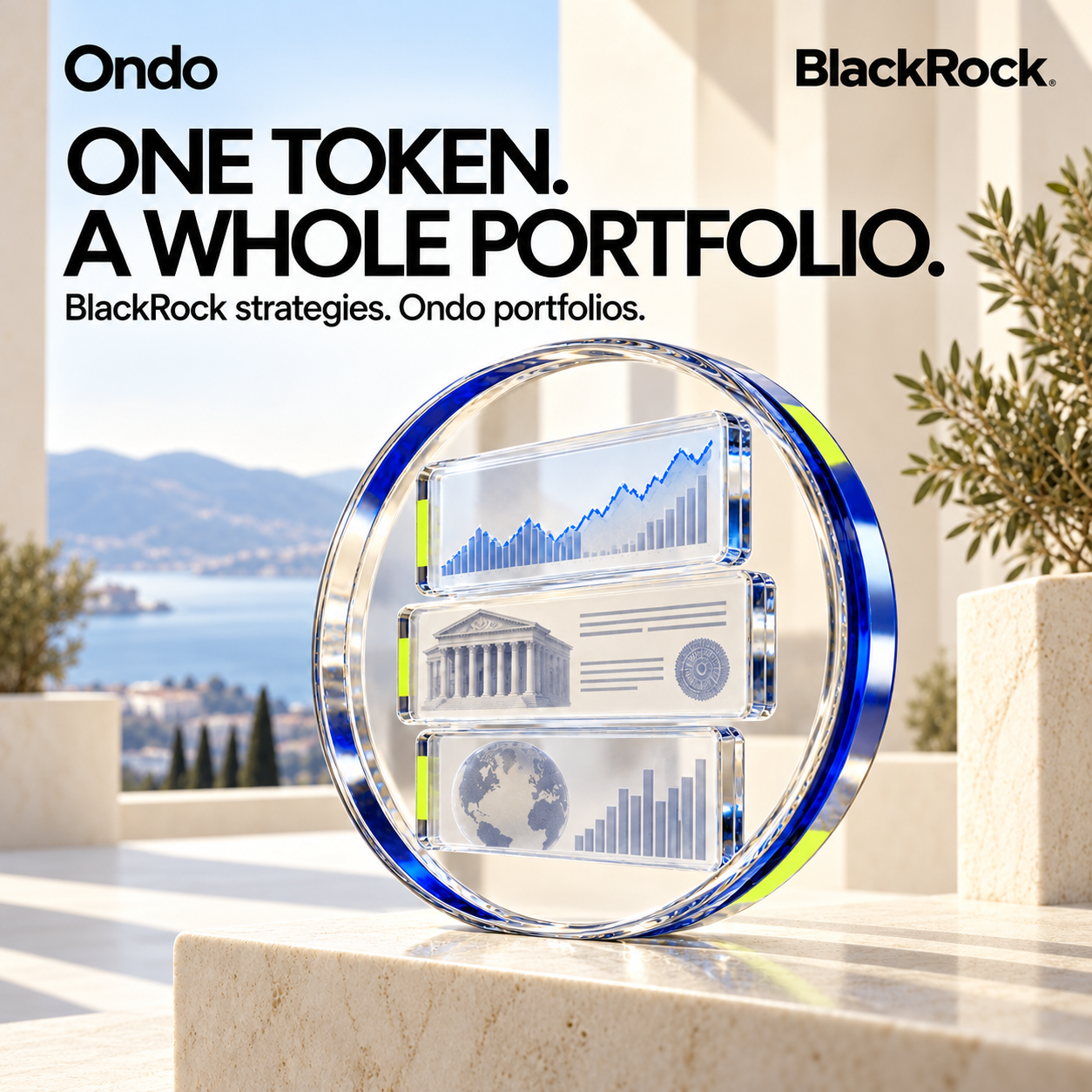
Ondo Finance is taking on that second job with Intelligent Portfolios, launched September 24. Each product packages exposure to a basket of tokenized assets into one onchain token, with target allocations and scheduled rebalancing.
The first three use portfolio strategies developed by BlackRock for Ondo. They span high income, diversified growth and high growth. Ondo is also listing portfolios focused on targeted income and themes including AI leaders.
The distinction is central to the story: BlackRock supplied models for the first three portfolios; Ondo manages, sponsors and administers the tokens.
Post from @OndoView the original post on X↗
From Individual Stocks to a Portfolio in Your Wallet
Two days ago, Blockster covered NEAR.com’s integration with Ondo Stocks. Eligible users can reach tokenized exposure to companies such as Nvidia, Tesla and Apple from an account that also holds crypto.
That solves an access problem. Investors still have to choose their positions and manage the mix themselves.
Intelligent Portfolios sit one level above those individual assets. A holder gets exposure to a weighted basket through a single token. Ondo says the underlying positions consist of its tokenized stocks and ETFs, which track the economic performance of securities held in traditional markets.
The portfolio’s holdings, target weights and rebalances are visible onchain. Smart contracts execute rebalancing on a defined schedule, so a holder does not have to adjust each position individually. Ondo says the products are designed to reflect total returns, including reinvested dividends or interest where applicable, after relevant withholding taxes.
What BlackRock Actually Does
BlackRock’s involvement gives the launch its headline appeal, but the product terms draw a firm boundary around its role.
The asset manager provided nondiscretionary portfolio strategies based on specifications from Ondo. Ondo’s disclosures say BlackRock does not manage the onchain portfolios, decide their trades or owe duties to tokenholders. Ondo determines how to implement the models and carries out the rebalancing under its product rules.
Post from @OndoView the original post on X↗
There is another limit worth understanding: BlackRock generally has no obligation to keep updating a strategy after delivering it. Ondo decides whether to update the corresponding onchain portfolio. Investors therefore should not assume that holding one of these tokens means receiving an actively managed BlackRock product.
The tokens themselves are separate securities issued by Ondo. They give holders economic exposure to a portfolio; they do not give holders ownership of, or a claim to receive, the funds and securities underneath it.
Where Yesterday’s MoonPay Deal Fits
Ondo’s launch and MoonPay’s proposed North Capital acquisition, which Blockster covered yesterday, address different parts of the move toward onchain investing.
MoonPay agreed to buy regulated infrastructure for private securities: investor onboarding, brokerage services, custody and secondary trading. That deal still requires regulatory approval. Ondo is building investment products from tokenized exposure to publicly traded stocks and ETFs, then letting eligible users hold an entire strategy through one token.
Together, the announcements show how the market is moving beyond placing a single asset on a blockchain. Companies are building the machinery for accessing securities, constructing portfolios, managing them and moving the resulting products between compatible platforms.
They also show why “onchain” does not remove the rules surrounding an investment. MoonPay needs regulated infrastructure for private-market activity. Ondo restricts who can directly access and redeem its portfolio tokens.
Post from @BlocksterComView the original post on X↗
A Token Can Move Around the Clock. The Underlying Market Cannot.
Ondo says eligible investors can mint or redeem portfolio tokens directly after completing onboarding, including identity and eligibility checks. The products are offered only outside the United States to eligible non-U.S. persons. Someone may obtain a transferable token through another venue without having completed that process, but holding it does not automatically qualify them to redeem it with Ondo.
The tokens can move between wallets or trade through supported platforms around the clock. Their underlying equities and ETFs still depend on traditional-market liquidity and pricing. Investors will need to examine how closely a token’s trading price tracks its portfolio when those markets are closed.
Costs and execution also matter. A single token may simplify portfolio management, but holders still face product fees, the performance of the underlying assets, smart-contract risk and the liquidity available when they want to exit. BlackRock’s involvement does not remove those risks.
Ondo has moved quickly from offering tokenized stocks to offering a way to hold a strategy built from them. The next measure of success is whether investors use these portfolio tokens at scale—and whether their pricing, rebalancing and redemptions work as clearly as the one-token pitch suggests.
Reporting by Lidia Yadlos