
OKX Ventures is putting part of its MOCA holdings behind developers building on Moca Network, in a partnership aimed at turning digital identity infrastructure into applications people actually use.
The companies will jointly identify and support projects using Moca’s technology, including AIR Kit and Moca Chain. Selected teams will also gain access to OKX’s payment and on-ramp services, wallet integration and other resources that could help their products reach customers.
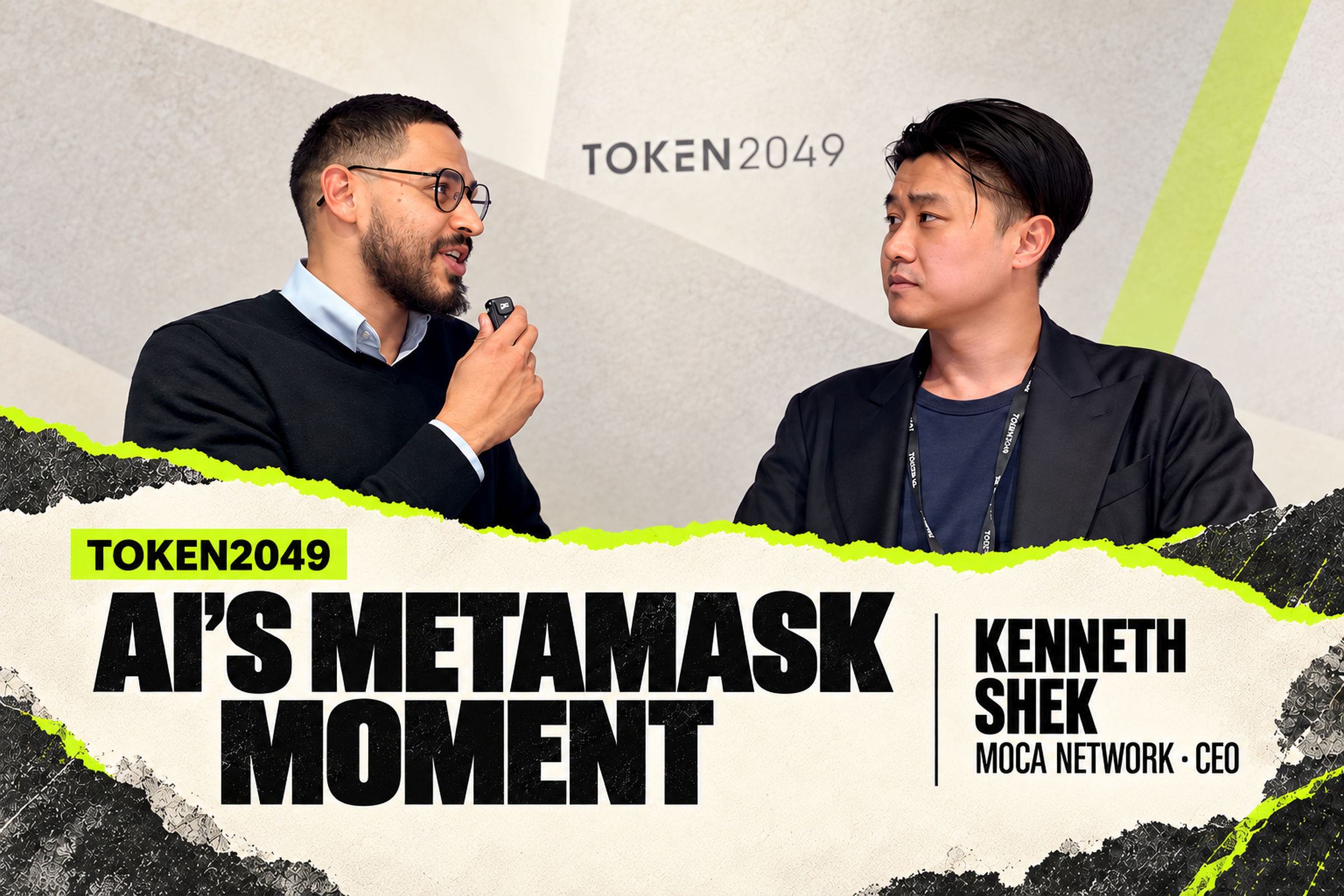
The announcement connects directly with Blockster’s interview with Moca Network CEO Kenneth Shek last month. Speaking with Ivan Zhelev at TOKEN2049 in Singapore, Shek argued that AI’s next challenge is making powerful technology useful without leaving customers to manage all the complexity themselves.
What OKX Is Putting Behind the Partnership
Under the November 10 announcement, OKX Ventures will allocate a portion of its existing MOCA reserves to co-investment opportunities identified through the partnership.
The companies have not disclosed the number of tokens, their dollar value or a fixed funding pool. Additional investment from Animoca Brands and OKX Ventures is possible as projects mature, rather than guaranteed for every team.
The collaboration builds on OKX Ventures’ earlier investment in Moca’s ecosystem, announced in November 2024. This next phase combines financing with practical help: connecting an application to a wallet, letting customers move money into the system and supporting payments.
For a developer, those are separate jobs that can consume time before a product reaches its first users. Access to existing infrastructure could make launching easier, although each application will still need to attract and retain customers.
Post from @Moca_NetworkView the original post on X↗
The Problem Shek Described to Blockster
In our October 9 interview, Shek compared AI’s current usability challenges with crypto’s early wallet experience. The technology can be impressive while the everyday experience remains difficult.
His identity argument was especially relevant to agents: a business needs to recognize the customer behind an automated request, understand the agent’s authority and apply the benefits that customer has earned.
A travel agent, for example, should be able to make a booking without losing its user’s membership perks or receiving unrestricted access to their information. Shek’s emphasis was on useful applications with permissions people can control.
“Most people only want a few things: very simple, easy-to-use and opinionated tools to solve specific problems.”
The OKX partnership offers a way to finance applications pursuing that goal. It does not, by itself, establish that every agent permission or consumer service discussed in the interview is available today.
Why Identity Matters at Checkout
Moca’s pitch becomes easier to understand through a familiar example: a customer has Gold status with one business and wants to claim a partner offer elsewhere.
In a November 9 demonstration, Moca described AIR allowing a partner to verify a specific membership requirement with the customer’s consent, without receiving the person’s full membership record. The demonstrated flow connects verification, an offer, a purchase and loyalty rewards.
For businesses, that could make existing customer relationships more useful across partner services. For customers, the appeal is carrying proof of eligibility without handing over an entire account history.
Adding an AI agent creates another requirement. Proof that someone qualifies for a benefit does not automatically authorize software to spend their money. The application must also establish what the agent may do.
Blockster previously explored that distinction in its coverage of AIR, Minds, Reap and Pivota’s agentic-commerce collaboration, which connected customer credentials with shopping and controlled payments. The OKX partnership adds a separate source of investment and infrastructure support for builders across Moca’s ecosystem.
Post from @Moca_NetworkView the original post on X↗
A Large Potential Audience Still Needs Working Products
Moca describes an ecosystem spanning more than 600 portfolio companies and over 700 million addressable users through Animoca Brands and its network.
“Addressable” is the key word. That figure describes potential reach; it is not a count of active Moca accounts, paying customers or people using the applications this partnership will fund.
For MOCA holders, the concrete development is that OKX Ventures intends to deploy some of its existing reserves to support ecosystem projects. The announcement does not disclose a new open-market purchase or establish how much additional token demand those projects might generate.
The next milestones are more tangible than the partnership itself: which teams receive backing, what they launch, how many people use their products and whether identity makes those experiences easier.
Watch Blockster’s full interview with Kenneth Shek for the thinking behind Moca’s approach to customer data, agent permissions and useful AI applications.
Reporting by Sasha Steenkamp