

A long-term crypto investment and a short-term need for money can arrive at an awkward intersection. Selling frees up funds, but it also means giving up exposure to an asset the investor may still want to hold.
OKX is building a borrowing product around that tension.
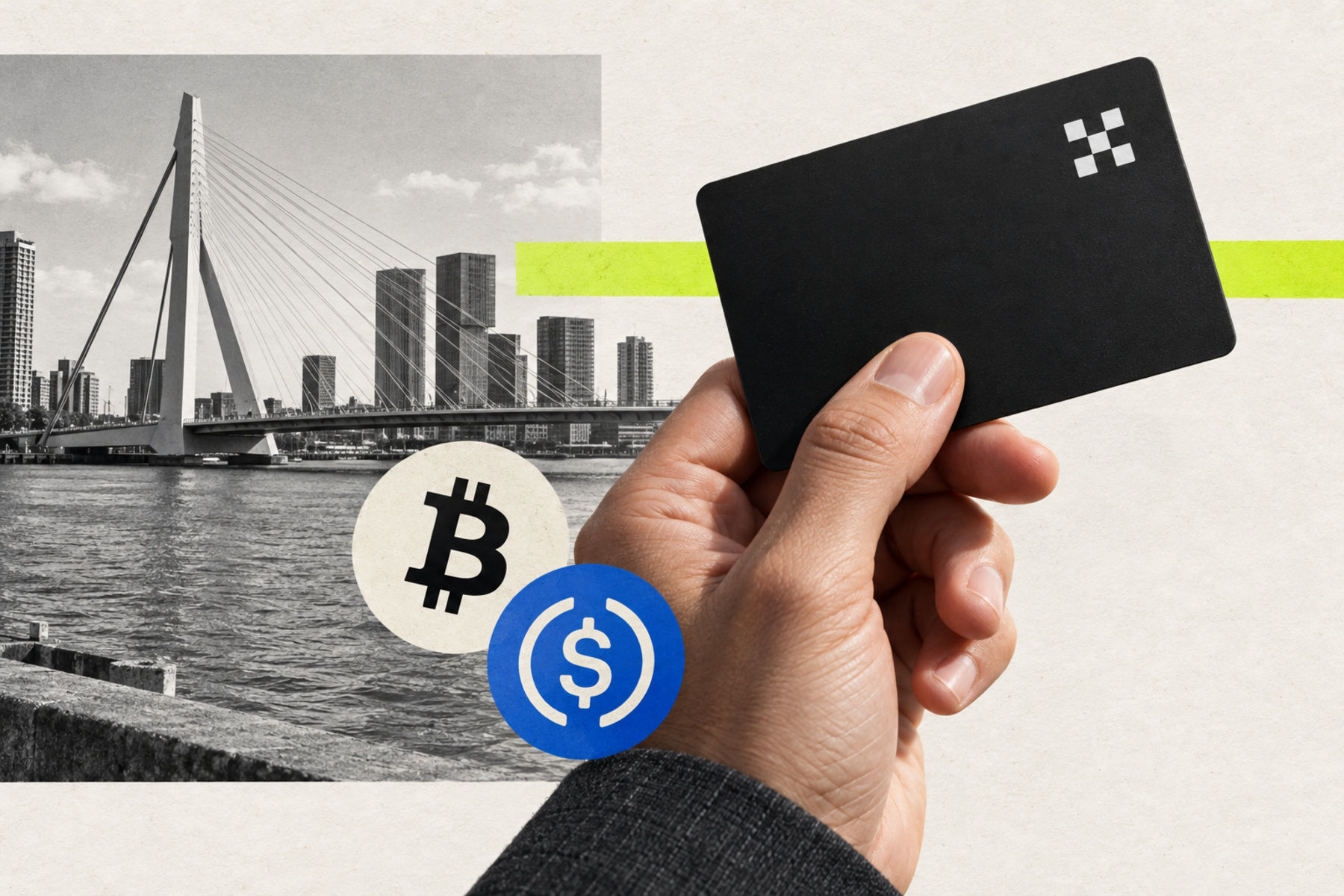
In an October 9 announcement shared with Blockster, the company outlined its European rollout of Flexible Loans, allowing eligible customers to borrow USDC against cryptocurrency held on the platform. The loans have no fixed repayment term, with variable interest charged hourly and partial or full repayment available at any time.
For customers, the appeal is access to liquidity without an immediate sale. For OKX, borrowing adds another reason to keep money—and financial activity—inside its ecosystem.
The move follows OKX’s broader push into digital dollars, stocks and AI agents, which Blockster covered earlier this week. Lending brings that expansion closer to an everyday question: what can someone do with the assets they already own?
“Borrow USDC when you need it, pay for the hours you use it and repay when you’re done.”
Erald Ghoos, CEO of OKX Europe, described the product as a response to customers who want to keep their investments while meeting temporary funding needs.
“A lot of people in Europe hold crypto for the long term and don't want to have to sell it to free up cash temporarily,” Ghoos said in the announcement. “So we've kept this simple. Borrow USDC when you need it, pay for the hours you use it and repay when you're done.”
According to the release, customers can borrow up to 250,000 USDC, rising to 3.25 million USDC for VIP clients. More than 40 collateral assets are supported, including Bitcoin, Ether and Solana, with borrowing available up to 80% of collateral value, subject to applicable limits.
The proceeds arrive in USDC, a dollar-linked stablecoin. OKX says borrowers can use them for trading, eligible X Drop Club activities, Earn products or withdrawals for external use.
That gives the product two potential audiences: customers seeking temporary spending liquidity and those looking to put additional capital to work. The second involves taking investment risk with borrowed money, while the original crypto remains pledged against the debt.
What the quoted 2% rate actually means
OKX’s October 9 release quoted a variable interest rate of 0.000229% per hour, equivalent to approximately 2% annually on a simple annualized basis.
At that unchanged hourly rate, a 10,000 USDC loan would accrue about 0.55 USDC in interest over 24 hours, or roughly 16.49 USDC over 30 days. Those figures illustrate the quoted rate; they are not a guaranteed borrowing cost and exclude any separate applicable charges.
The distinction matters because a loan without a fixed term also has no fixed lifetime price. Customers can repay early, but the rate can change while a balance remains outstanding.
OKX directs customers to its live borrowing-rate page and the product interface for current pricing. The approximately 2% figure should therefore be read as the rate cited in the announcement, rather than a locked offer.
Access is also being phased in. Although the press release is dated October 9, OKX’s product notice says availability began October 7 for eligible users with derivatives accounts, with spot-only account access rolling out from October 15.
“Most people have three financial needs in their lives, and we're providing those on one financial platform.”
Ghoos placed the launch within a larger ambition.
“To pay, or get paid, using OKX Card and Pay. To grow their wealth, using trading products across crypto, traditional assets and commodities. And, now, to borrow, when they have a need for it,” he said.
The commercial logic is straightforward. An exchange traditionally earns a customer’s attention when they want to trade. Payments, earning products and borrowing create reasons to return between trades.
Blockster’s crypto exchange comparison guide documents that broader convergence across platforms: investment access, borrowing, rewards and spending increasingly appear within the same customer relationship. The products and regional rules differ, but the competition extends well beyond which cryptocurrencies an exchange lists.
USDC connects those activities. A crypto holding can secure a loan denominated in digital dollars, which can then move into another service or leave the platform. For OKX, that creates a more continuous relationship between holding assets and using them.
Keeping the asset means managing the collateral
Borrowing avoids selling at the outset. It does not eliminate the possibility of a sale later.
The pledged assets remain locked while securing the loan. If their value falls, the debt represents a larger share of the collateral. Accrued interest can also increase that ratio. OKX’s documentation says borrowers may need to add collateral or repay, and that reaching liquidation levels can trigger the sale of some or all pledged assets.
The regulatory distinction also deserves attention. OKX Europe is a licensed crypto-asset service provider, but its European loan terms explicitly state that Flexible Loan falls outside MiCA’s scope and does not carry the protections applicable to MiCA-regulated services.
For customers considering putting borrowed USDC into Earn, the borrowing cost and investment return are separate moving parts. Blockster’s stablecoin yield guide explains why rewards, lending yields and withdrawal conditions need to be understood individually.
OKX’s latest expansion gives crypto holders another way to access the value in their portfolios. Its usefulness will depend on more than the advertised rate: how clearly customers can see their obligations, how much collateral they commit, and how the loan behaves when markets move against them.
Reporting by Lidia Yadlos