
Stablecoins account for nearly three-quarters of the crypto purchases flowing through Mercuryo in Turkey, where the payments company's on-ramp volume has risen 141% in 2026, according to data released November 25.
An on-ramp converts ordinary money into crypto. Mercuryo's figures, recorded through November 19, show Turkey climbing from 56th to 30th among its markets. Stablecoins' share of local volume rose from 62% in 2025 to 74%, while repeat buyers accounted for 94% of volume.
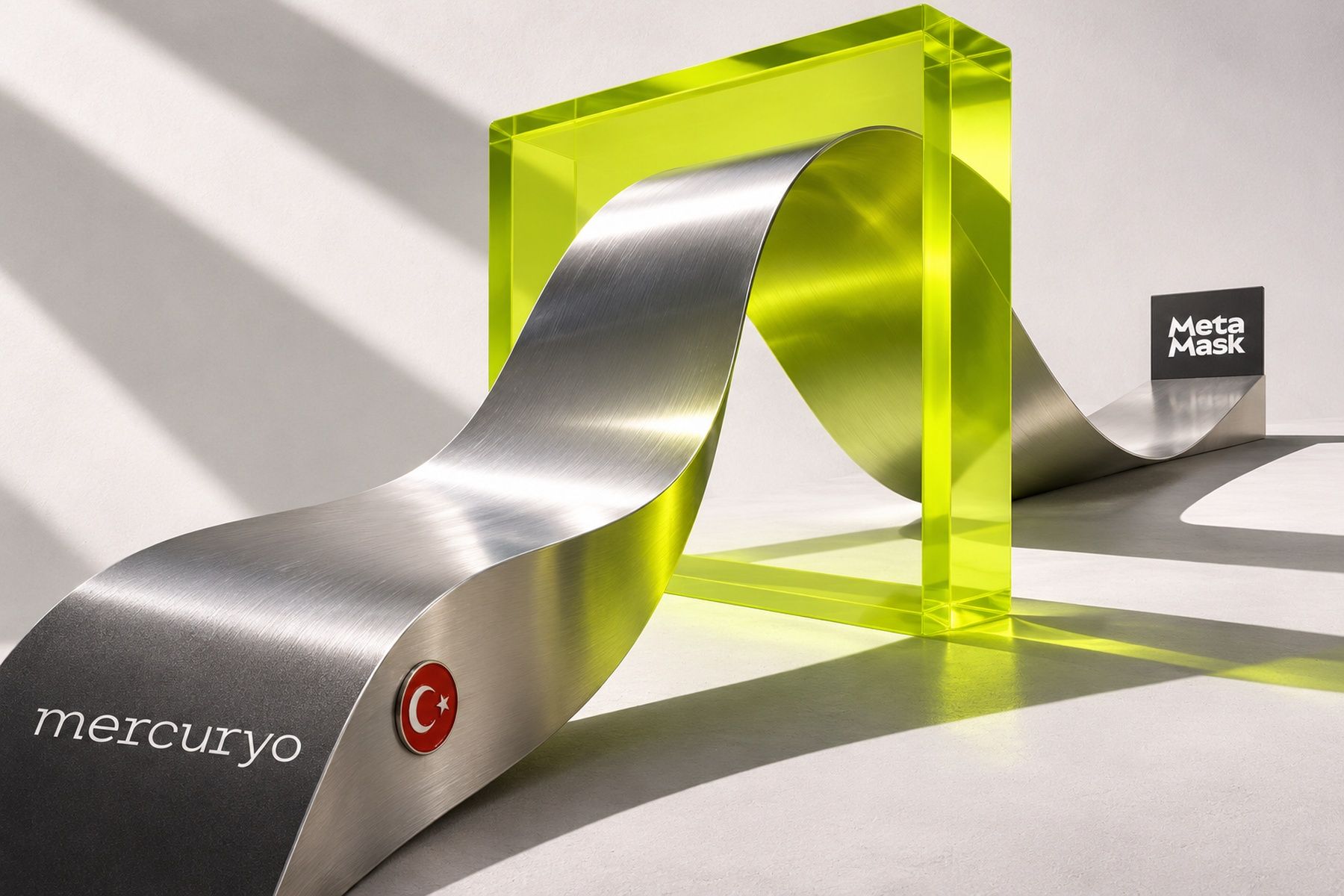
Alongside the data, Mercuryo and MetaMask are waiving Mercuryo's fee on a first eligible purchase of $20–$200 in Turkey and five other markets. The campaign runs through December 18. MetaMask and network fees still apply.
Post from @Mercuryo_ioView the original post on X↗
Returning buyers dominate the volume
The figures describe a market driven heavily by customers coming back to buy again. They also show a shift in what those customers purchase: stablecoins gained 12 percentage points of Turkey's on-ramp volume compared with 2025.
| Mercuryo's Turkey data | Reported result |
|---|---|
| On-ramp volume growth in 2026 | 141% |
| Stablecoin share of volume | 74%, up from 62% in 2025 |
| Repeat buyers' share of volume | 94% |
| Rank among Mercuryo markets | 30th, up from 56th |
These are Mercuryo's platform figures, rather than a measure of Turkey's entire crypto market. The company did not disclose the underlying dollar volume or a breakdown by stablecoin. The 94% figure measures purchase volume, not the percentage of customers who are repeat buyers.
That leaves an interesting commercial split: repeat customers supply almost all the volume, while the new MetaMask promotion targets a first purchase. The offer is an acquisition incentive in a market where Mercuryo already sees sustained buying.
“Turkey stands out in our 2026 data. At a time when the wider digital token industry has faced significant headwinds, Turkey's performance has been particularly impressive, with on-ramp volumes on the Mercuryo platform growing by 141% in 2026.”
— Anton Shamanaev, Chief Product Officer, Mercuryo
What the MetaMask offer covers
The published campaign terms cover users buying through Mercuryo in MetaMask for the first time. They must select Mercuryo in MetaMask's Buy flow and make a qualifying purchase between $20 and $200. The waiver applies once per user; later purchases carry the standard Mercuryo fee.
Turkey supports card payments for the offer. Australia, the UAE, Israel and Switzerland also support Apple Pay, while Canada supports Apple Pay, cards and Interac. The campaign ends on December 18, 2026, and excludes the United States, United Kingdom and European Economic Area.
Zero Mercuryo fee does not mean a fee-free transaction. MetaMask's fee and applicable network costs remain. Buyers should compare the final amount of crypto delivered, rather than only the provider's fee line.
Mercuryo highlighted the importance of local payment methods and the destination of purchased assets in a November 18 post. In this integration, purchases go to the user's MetaMask wallet.
Post from @Mercuryo_ioView the original post on X↗
Stablecoin demand extends beyond dollar tokens
A separate institutional example shows how Turkish stablecoins can serve a settlement role. Reuters reported in June that Zodia Markets processed $3.4 billion in lira-pegged stablecoins in 2025, making them its second-largest stablecoin currency category after dollars. Zodia said clients used them as a faster alternative to sending lira through correspondent banks.
That does not establish which tokens Mercuryo's Turkish customers are buying. It does show why stablecoin demand can reflect the mechanics of moving money, alongside investment and trading activity.
Blockster's recent coverage of Tether's investment in SCRYPT examines the business-payment side of that shift: using stablecoins between local-currency endpoints. Visa's support for Western Union's USDPT addresses settlement infrastructure. Mercuryo and MetaMask are competing at the consumer entry point, where payment choice, fees and a straightforward first purchase can determine which wallet a customer uses.
Reporting by Lidia Yadlos