

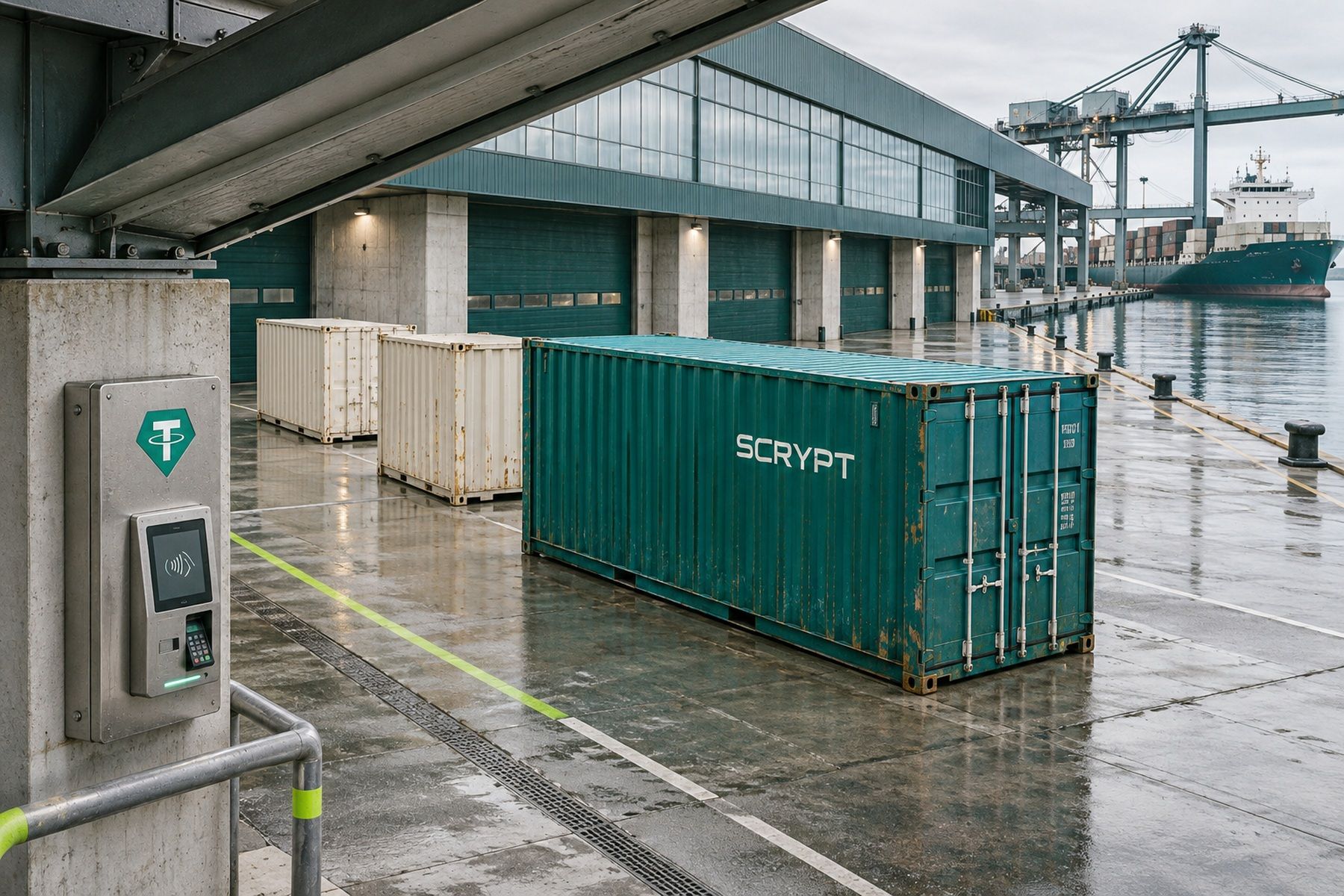
A business can agree a deal in minutes and still spend days waiting for the money to arrive. Tether is investing in SCRYPT to help close that gap, backing a Swiss platform that connects stablecoin liquidity with the currencies companies actually use to pay their bills.
The November 19 announcement says the strategic investment will support SCRYPT’s expansion into third-party payments, building on its trading, foreign-exchange and settlement infrastructure. Neither the investment amount nor the ownership stake was disclosed.
The interesting part is what happens around a stablecoin transfer. Sending a token across a blockchain is only one step. A useful business payment also needs currency conversion, available liquidity, checks on the parties involved and a reliable way for the recipient to receive spendable money.
Post from @tetherView the original post on X↗
The money sitting between transactions
Companies operating across several markets often keep money in different places so they can meet local obligations. Those balances provide certainty, but they also leave capital waiting for the next payment. A faster way to move liquidity could let a business keep less money idle without making suppliers wait.
SCRYPT describes a straightforward intended flow: a client pays in traditional currency, stablecoins carry value across the border, and the recipient receives traditional currency. The companies point to commodity traders settling across time zones and payment firms moving liquidity between markets as potential beneficiaries.
This is a practical business case, rather than a requirement that every supplier become a crypto trader. If the service works as intended, the company receiving payment may care more about the arrival time and exchange rate than the technology used in the middle.
SCRYPT had already been discussing that problem with commodity-market executives before the investment announcement. Its November 18 account of a Geneva event with Fireblocks focused on the difference between settlement measured in days and settlement measured in minutes.
Post from @Scrypt_SwissView the original post on X↗
What Tether’s backing is meant to build
SCRYPT’s existing platform combines trading, custody and asset management across fiat currencies, stablecoins and digital assets. The announcement describes round-the-clock spot, over-the-counter and foreign-exchange trading, alongside segregated custody secured through multiparty computation, or MPC.
The expansion into third-party payments and fiat accounts is the next step described by the companies. The release does not provide a launch schedule, a list of new payment corridors or a published fee comparison. Those details will determine how much of the proposed efficiency reaches customers.
Tether CEO Paolo Ardoino frames the investment around fitting stablecoins into the systems financial businesses already operate. That is a more demanding task than making a transfer demonstration work: the service needs to function repeatedly, across counterparties and time zones, with clear responsibility when something goes wrong.
“When settlement takes minutes instead of days, money moves at the speed of business, not the speed of banks.”
— Paolo Ardoino, CEO of Tether, in the investment announcement
A faster blockchain is only part of the service
A blockchain running through the weekend does not automatically make every bank account or local payout partner available through the weekend. The end-to-end result still depends on the currency pair, liquidity, compliance checks and the institutions at either end. The useful comparison is the total cost and arrival time of a completed payment.
SCRYPT’s regulatory disclosures also distinguish its operating entities and their permissions. Its trading and custody business has Swiss anti-money-laundering supervision through VQF; a separate investment business is authorised by FINMA as a portfolio manager. Those are different scopes of oversight. The company says custody assets are segregated, but they are not bank deposits covered by Swiss depositor protection.
The investment follows Tether’s separate $15 million backing of Brazil’s Nomad, another move toward making digital dollars useful beyond exchange trading. SCRYPT targets the businesses moving money behind the scenes. The next evidence to watch is concrete: where its expanded payment service becomes available, what it costs and how reliably recipients get paid.
Reporting by Sasha Steenkamp