
Your stablecoins could help build your gold holdings.
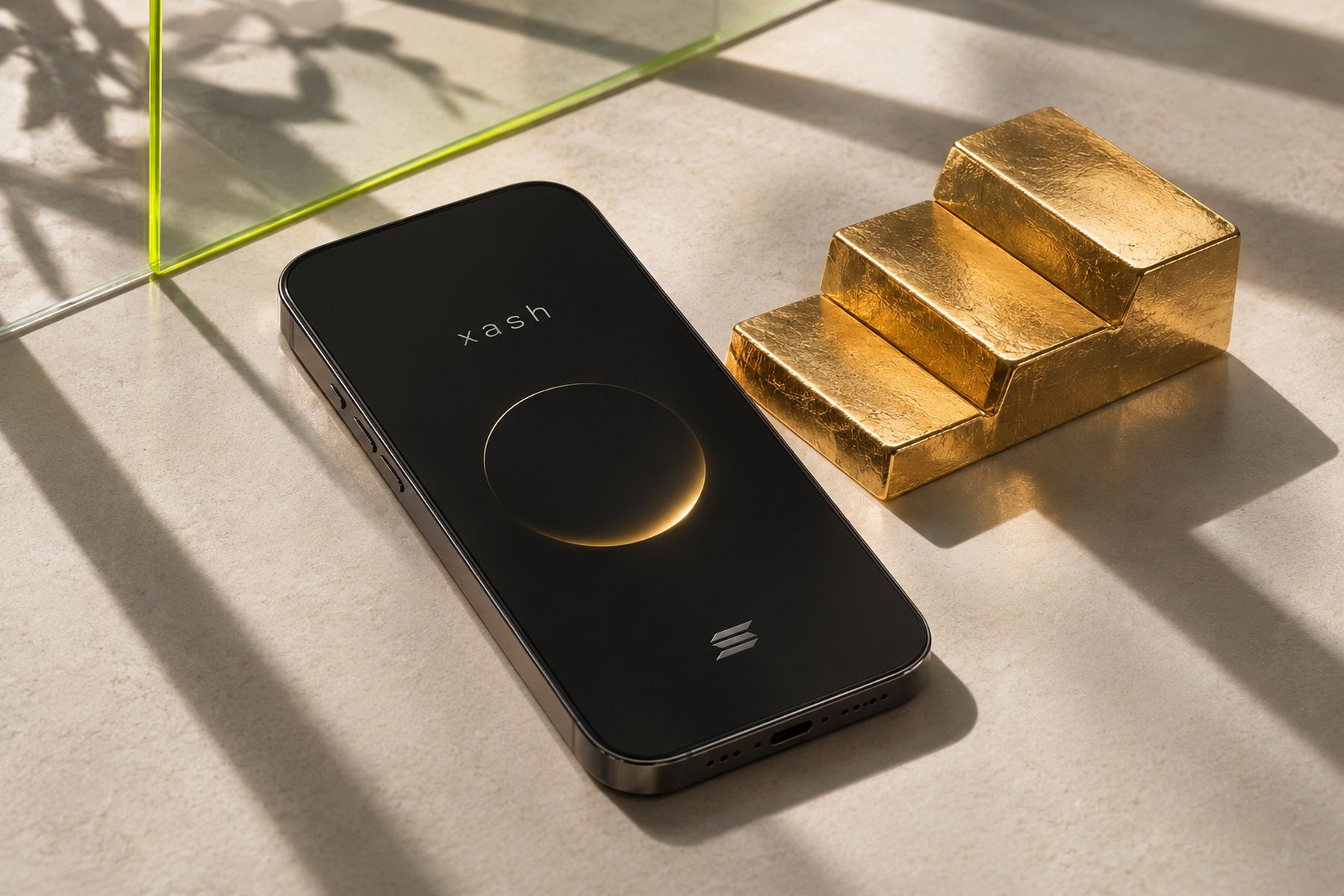
That is the proposition behind Xash, which announced its public launch ahead of Solana Breakpoint in London. The application rewards users in tokenized gold for qualifying stablecoin lending, trading and liquidity provision on Solana.
For users, the attraction is accumulating a different asset while putting stablecoins to work. For the platforms serving them, the question is whether gold can give customers a reason to stay after the initial promotion ends.
Post from @xashView the original post on X↗
What actually earns gold?
Xash brings opportunities from established DeFi platforms into one application. It reviews available activity daily and shows users the associated costs and estimated gold rewards over the next 30 days. Users choose what to do and authorize transactions through their own wallets.
Its current website lists qualifying beta activity involving PayPal USD, or PYUSD, across three platforms:
| Platform | Qualifying activity |
|---|---|
| Kamino | Supply PYUSD to its lending market |
| Orca | Provide liquidity to the qualifying PYUSD/USDC pool or trade that pair |
| Jupiter | Swap into PYUSD through its aggregator |
Only supported activities qualify. The reward asset is Pax Gold, or PAXG, which Xash purchases and credits monthly in ounces of gold. These rewards sit alongside any interest or fees earned from the underlying DeFi position.
The launch announcement also introduces withdrawals of accumulated tokenized gold to users’ wallets and a curated Kamino liquidity vault. The vault is intended to simplify participation into a single stablecoin deposit, reducing the number of individual transactions users need to manage.
A $6 billion market gives gold rewards a bigger backdrop
Xash’s launch comes as tokenized gold is attracting more activity.
An October report from the World Gold Council and Boston Consulting Group put the tokenized-gold market at approximately $6 billion, five times its value in late 2024. Spot trading volume exceeded $90 billion in the first quarter of 2026, surpassing the total for all of 2025.
Those figures describe the wider market, not assets or trading volume on Xash.
Post from @GOLDCOUNCILView the original post on X↗
Blockster has previously covered how tokenized gold could become part of Solana’s validator economy. Xash approaches its usefulness from another direction: making gold the reward for activity conducted with stablecoins.
The distinction matters. Users do not have to begin by buying gold. They earn allocations through qualifying activity, although the value of those rewards still moves with gold prices.
Can gold keep users coming back?
Xash is targeting a familiar problem in DeFi: a platform offers incentives, deposits arrive, and users move on when another offer looks better.
Its bet is that people who want to accumulate gold will be more willing to maintain activity over time. That would give DeFi platforms more consistent participation and stablecoin issuers more actual usage.
“Stablecoins don’t have a supply problem. They have a usage problem. Incentive campaigns rent users for a few weeks, then they’re gone.”
— Kevin Huynh, Co-Founder and CEO, Xash
Huynh co-founded the company with Vinny Lingham, co-founder of Civic and Gyft and a former General Partner at Multicoin Capital; Alen Ribic, co-founder of SweepSouth; and Llew Claasen, former Executive Director of the Bitcoin Foundation.
There is an important funding distinction behind the pitch. Xash’s current FAQ says its beta gold rewards come from its own venture-funded marketing budget. Longer term, it expects revenue from stablecoin issuers, DeFi platforms and fees on positive-yield deployments to support the rewards.
That makes sustained commercial funding part of the model’s next test. The company does not promise a fixed reward rate.
What users should check before depositing
As Blockster’s guide to stablecoin yield explains, understanding who pays a reward is as important as the advertised return.
Xash says its trades do not use borrowed funds or take directional price bets. That does not remove the possibility of losses from platform failures or sharp market changes, including through the new Kamino vault.
Its FAQ also distinguishes wallet control from reward custody: gold credited inside the app remains an unsecured claim against Xash until delivered to the user’s wallet. It currently permits eligible U.S. beta participants but excludes the UK, EU and EEA. The London event should therefore not be read as confirmation of UK availability.
Xash will demonstrate the application at Solana Breakpoint, November 15–17 at Olympia London, at booth WH-046 in West Hall Level 1.
For users, the practical calculation is how much gold remains after costs and what risks they take to earn it. For Xash, the bigger test is whether those users are still participating months after the launch.
Reporting by Eric Spivak