
Japan's next push into onchain finance now has an operating company behind it. SBI Solana Global began full-scale operations on November 25, bringing SBI Holdings, Sumitomo Mitsui Financial Group and the Solana Foundation together around payments, tokenized assets and investment services.
According to the joint announcement, the partners completed the agreements establishing their new joint-venture structure. The existing SBI R3 Japan business now operates as SBI Solana Global.
For investors following Solana, the significance is practical: established financial groups are organizing a business around using the network. The opportunity is to connect the money used to pay for investments with the investments themselves.
Post from @solanaView the original post on X↗
Four businesses that become more useful together
The venture's remit covers four areas:
| Business | Announced focus |
|---|---|
| Payments | Stablecoin transfers at home and across borders, including AI-agent micropayments |
| Financial assets | Issuance and distribution of tokenized bonds, funds and loan receivables |
| Real-world assets | Commodities and other rights, with authenticity and traceability mechanisms |
| Asset management | Developing services using stablecoins and tokenized investments |
Consider a hypothetical investor buying a tokenized fund with stablecoins. A fund token provides the ownership record. Payment infrastructure moves the purchase money. Distribution determines who can access the product, and asset-management services give the investor a reason to stay after the first purchase.
Putting those functions together could reduce the handoffs between separate systems. The difficult work remains: eligibility checks, custody arrangements, redemption terms and the legal rights attached to each product. A fast blockchain cannot settle those questions by itself.
The partners describe their medium- to long-term ambition as an ecosystem in which:
“payments, issuance, distribution, and asset management are interconnected on-chain.”
— SBI Holdings, SMFG and Solana Foundation joint announcement
Institutional scale is a starting point
In its launch post, Solana highlighted $2.3 trillion in combined assets and more than 80 million customers across SBI Holdings and SMFG. Those figures describe the financial groups' scale. They are not assets already moved onto Solana or users already signed up to the venture.
That distinction makes the story more useful to investors. Distribution can give a new financial product access to potential customers, but adoption still depends on whether people use it. The numbers to track next are issuance, payment volume, active customers and recurring revenue.
The company plans to establish use cases in Japan before expanding across Asia and connecting to global markets. The announcement does not quantify an initial asset migration or provide a launch calendar for individual products.
Post from @solanaView the original post on X↗
Solana's institutional story is moving toward utility
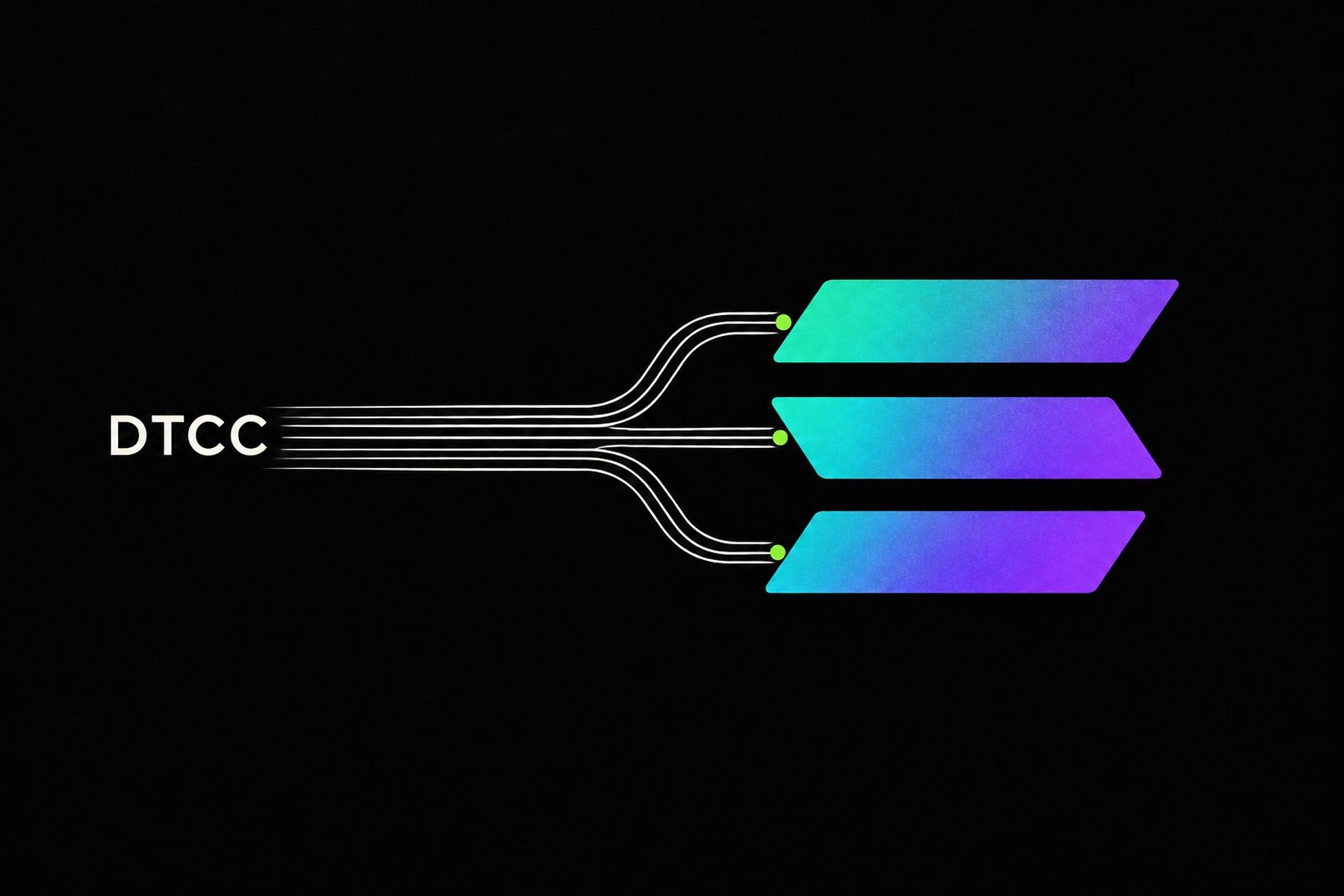
The development fits a broader shift in the network's financial activity. DTCC plans to connect its tokenization service to Solana in the second half of 2027. That project addresses securities infrastructure; SBI Solana Global is assembling a business spanning payments, issuance and investment services.
Meanwhile, Jupiter's planned lending market for tokenized Bullish shares tackles another use case: letting eligible shareholders borrow against an investment they already own.
Together, these developments point to a more demanding test for tokenization. An asset needs buyers, reliable settlement and useful services after issuance. Creating its digital representation is the beginning of that work.
SBI Solana Global gives Japan's onchain ambitions an operating structure and established financial partners. The next milestone will be a service customers can actually use—and enough repeat activity to show that the move onchain improves their experience.
Reporting by Eric Spivak