

Every week now, another major blockchain steps forward with a real-world asset announcement — and the pattern is becoming impossible to ignore.
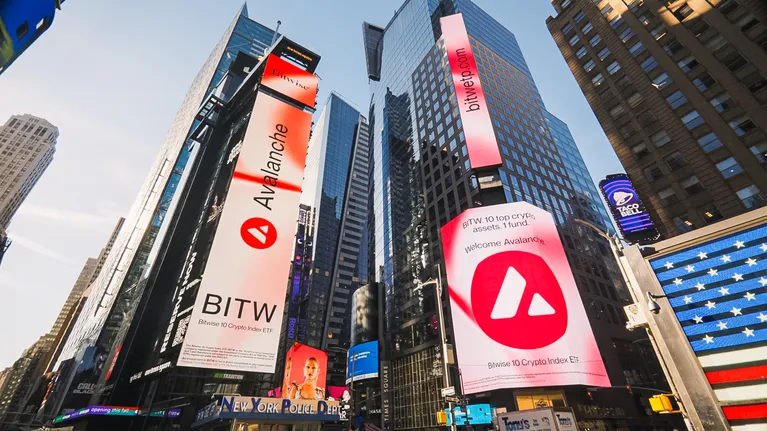
This week’s signal came from Avalanche, highlighted by Bitwise, pointing to accelerating momentum around onchain real-world asset infrastructure. It’s no longer niche experimentation. Large blockchains, asset managers, and institutions are aligning around the same conclusion: traditional assets are moving onchain — fast.
Post from @BitwiseInvestView the original post on X↗
What’s striking isn’t just how often these headlines appear, but who they’re coming from. This isn’t driven by speculative DeFi builders alone. It’s being pushed by the same institutions that manage credit markets, treasuries, commodities, and sovereign assets.
And the data confirms it.
The Growth Curve Most People Still Underestimate
Real world assets have been one of the most talked-about themes in Web3, yet the actual expansion behind the scenes has been far more dramatic than most realize. According to research compiled by IXS Finance, the RWA sector grew from $85 million in April 2020 to over $21 billion by April 2025, excluding stablecoins.
That’s a 245× increase in just five years.
This is not experimental growth. It’s the kind of curve that signals infrastructure migration. What makes it even more notable is what these assets represent: private credit, government debt, real estate, commodities, and institutional funds — some of the most conservative segments of global finance.
These aren’t speculative tokens chasing yield. They’re foundational financial instruments moving onto programmable rails because the efficiency gap has become too large to ignore. Institutions started the shift long before the narrative caught up.
Post from @IxsFinanceView the original post on X↗
Why Private Credit Emerged as the Breakout Winner
One of the most revealing insights from the IXS Finance data is the dominance of private credit, which now represents 61% of all tokenized RWAs.
That leadership isn’t accidental. Private credit is operationally complex, slow to settle, and heavy on intermediaries. Onchain settlement removes layers of friction: fewer delays, greater transparency, and programmable cash flows. When deals that once took weeks can settle near-instantly, adoption becomes a business decision — not a technical experiment.
Government treasuries follow next, accounting for roughly 30% of the market.
These are among the safest instruments in finance, and their presence onchain sends a clear message: the technology has matured enough for serious capital.
Stability is meeting programmability — the combination tokenization was always meant to unlock.
What the Chart Really Reveals
The IXS Finance chart shows more than growth — it shows acceleration. Adoption remains modest through 2021, then steepens sharply after 2022 as institutions begin participating at scale.
That inflection point matters. Financial infrastructure tends to evolve slowly until efficiency gains become undeniable — then migration happens quickly.
The data also shows diversification over time. Commodities, institutional funds, equities, corporate bonds, non-U.S. sovereign debt, and U.S. Treasuries all enter the mix. Tokenization isn’t a single-vertical story — it’s the migration of financial primitives themselves.
Once the pipes exist, capital flows through them.
Post from @BlocksterComView the original post on X↗
Why Tokenization Is Winning Institutional Mindshare
Tokenization is succeeding for a simple reason: it modernizes value transfer without changing the asset itself.
Institutions don’t need new financial models — they need better rails. Blockchain delivers global settlement, programmable compliance, continuous liquidity, and transparent auditability in one environment.
That’s why this shift is happening quietly. It’s not driven by hype. It’s driven by operational efficiency.
As former SEC Chair Paul Atkins recently acknowledged, tokenization is no longer speculative — it’s becoming policy-aligned infrastructure.
Headlines Are Now Matching the Data
The momentum is no longer confined to charts. Here at Blockster, we’ve tracked the same pattern across capital raises, sovereign initiatives, and regulatory signals:
Real Finance secured $29M to tokenize $500M in institutional RWAs, backed by Nimbus Capital and Magnus Capital — a clear sign that serious capital is positioning behind infrastructure, not narratives.
Bhutan launched $TER, a sovereign, gold-backed digital token on Solana — bringing national reserves directly onchain.
Tezos tokenized uranium, a strategic commodity essential for next-generation, AI-powered energy systems — proving RWAs extend far beyond finance.
These aren’t isolated stories. They’re signals of the same structural shift.
Institutional money doesn’t chase innovation alone — it follows innovation that feels legally durable. As regulatory clarity improves and infrastructure matures, tokenization is moving from fringe to foundational.
Post from @BlocksterComView the original post on X↗
When charts and headlines begin telling the same story, the trend becomes very hard to dismiss.
What This Signals About the Future of Finance
The growth highlighted by IXS Finance isn’t just a milestone for Web3 — it’s a preview of how finance will operate over the next decade.
Capital is moving onchain because it’s cheaper, faster, and easier to audit. Once institutions experience those advantages, regression is rare. This isn’t interest — it’s migration.
As consumer platforms, payment systems, and enterprise tools begin integrating tokenized assets more deeply, the curve will likely steepen again. The foundation is already in place.
Post from @solanaView the original post on X↗
Financial transformations rarely announce themselves loudly at first. They start quietly — then suddenly appear everywhere
Reporting by Lidia Yadlos