

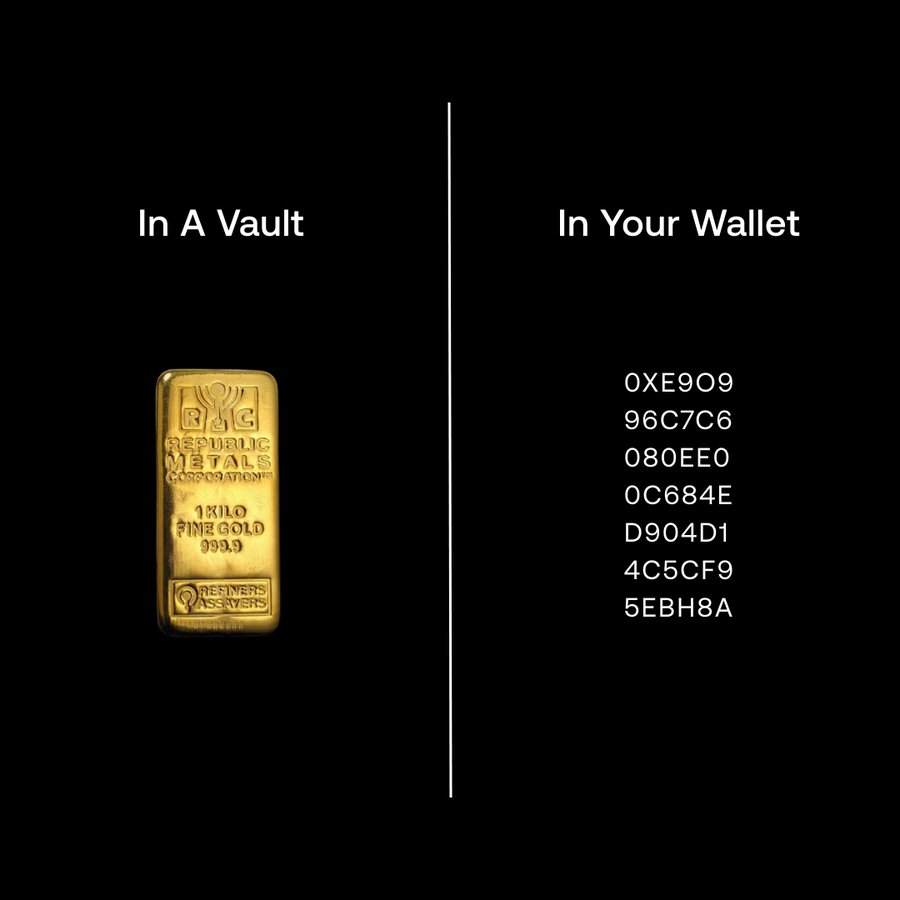
Gold ETFs charge you fees to hold a claim on metal you'll never touch, stored in a vault you'll never visit, managed by a custodian you have to trust. Tokenized gold lets you hold the asset directly onchain, settle peer-to-peer, and move it across borders in seconds. The fact that anyone is still debating which model wins tells you how early we are.
—
But the debate is intensifying. Analysts and investors are actively speculating on whether Gold ETFs or tokenized gold will deliver better returns in 2026, and capital is already migrating toward the tokenized side. This isn't hypothetical anymore — it's a live market rotation happening in real time.
Post from @okxView the original post on X↗
Why Tokenized Gold Is Structurally Superior
The performance comparison is interesting, but it misses the deeper point. Tokenized gold doesn't just compete with Gold ETFs on returns — it competes on architecture. Consider what a Gold ETF actually is: a securitized wrapper around physical gold, managed by a fund company, held through a brokerage, settled through a clearinghouse, and subject to market hours, redemption gates, and counterparty risk at every layer.
Tokenized gold strips most of that away. Products like Paxos Gold (PAXG) and Tether Gold (XAUT) represent claims on allocated physical gold, but they settle onchain.
You can transfer them 24/7, use them as collateral in DeFi lending protocols, or fractionalize them down to tiny amounts. No brokerage account required. No market hours. No middleman taking a cut on every transaction.
Settlement speed: Onchain gold settles in minutes vs. T+1 (or worse) for ETFs
Composability: Tokenized gold plugs directly into DeFi — lending, borrowing, yield strategies
Access: No brokerage gatekeeping. Anyone with a wallet can hold it
Transparency: Onchain reserves are auditable in ways ETF custody never will be
RWAs Are Bigger Than Gold
Gold is just the most visible example of a much larger trend. The entire real-world asset tokenization movement is accelerating, and utility protocols are positioning themselves to be the infrastructure layer. XRP and similar cross-border settlement networks are building the rails for tokenized assets to move globally — not just gold, but bonds, real estate, commodities, and private credit.
Post from @BSCNewsView the original post on X↗
The convergence of DeFi lending with tokenized RWAs is where things get genuinely exciting. Imagine using tokenized Treasury bonds as collateral for a stablecoin loan, or earning yield on tokenized real estate without ever talking to a bank. These aren't futuristic concepts — they're being built right now, and 2026 is shaping up as the year they hit meaningful scale.
The Real Competition
Here's what the "Gold ETF vs. tokenized gold" framing gets wrong: it treats this as a horse race between two investment products. It's not. It's a referendum on whether financial infrastructure should be open or closed. ETFs exist because the legacy system requires intermediaries to function. Tokenized assets exist because blockchain doesn't.
Every asset that moves onchain is one less asset trapped behind custodial walls, brokerage fees, and regulatory gatekeeping.
Tokenized RWAs aren't just a new product category — they're the mechanism through which decentralization reaches the physical world. Gold today, everything else tomorrow.
The question isn't whether tokenized assets outperform their TradFi equivalents. It's whether the next generation of investors will even bother with the old wrappers at all.
Reporting by Blockster Newsdesk