
Wall Street’s move onchain is becoming something banks actually use.
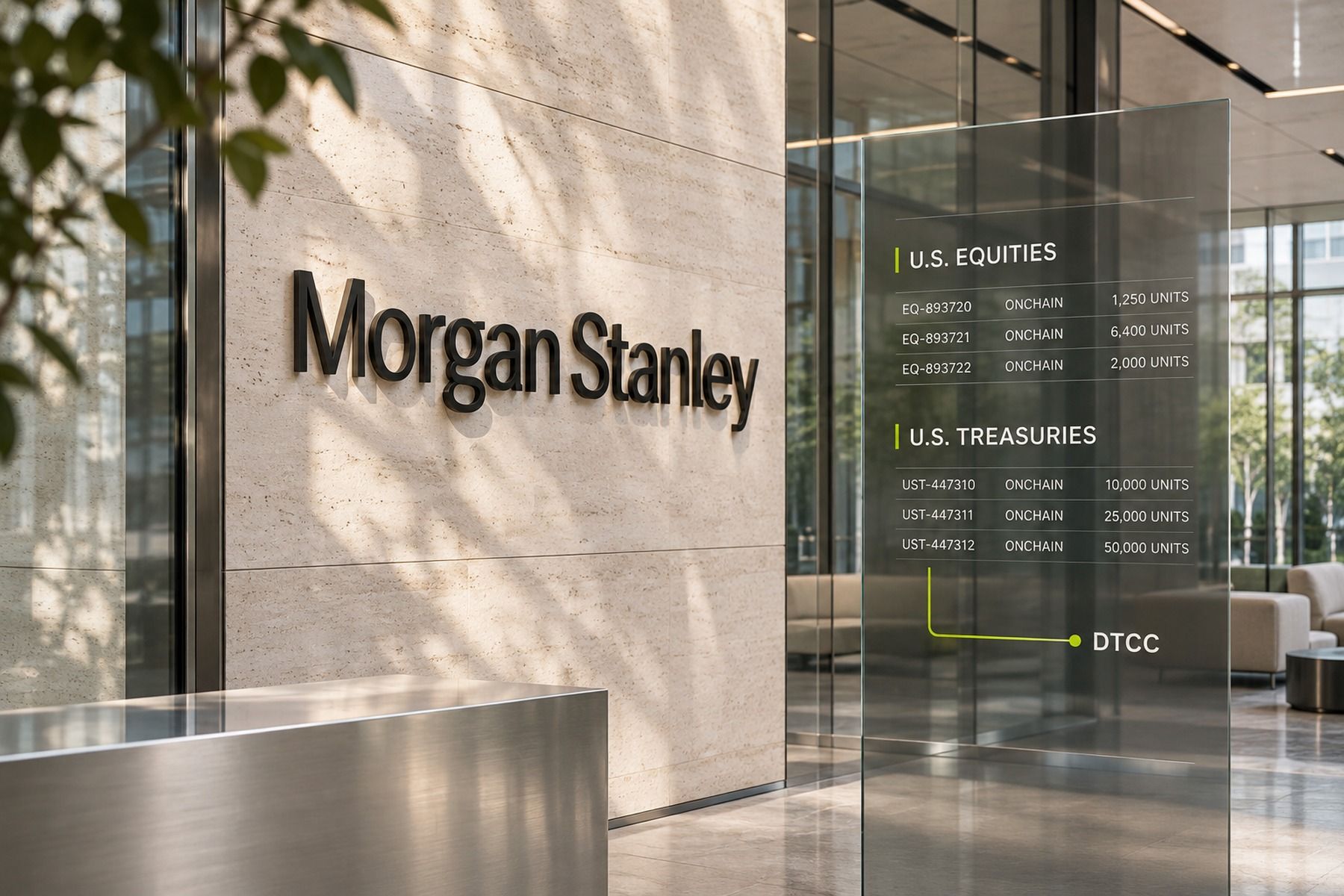
Morgan Stanley says it has converted U.S. equities and Treasuries into tokenized form through the DTCC Tokenization Service. In an announcement posted November 3, the bank described itself as among the first to use the newly launched system.
For investors, the appeal is straightforward: keep the investment and its ownership protections, while making it easier to move and use digitally.
Last week, Blockster covered the launch of DTCC’s tokenization service, with Ondo among its ecosystem collaborators. Morgan Stanley had signed up at launch; now the bank says it has converted U.S. stocks and Treasuries into tokenized form—showing how institutions are beginning to use that infrastructure.
Post from @MorganStanleyView the original post on X↗
What Actually Goes Onchain?
DTCC helps process and settle securities transactions across financial markets. Its depository subsidiary, DTC, holds the securities behind the new service.
Tokenization creates a blockchain-based representation of an eligible position held within that system. DTCC calls these representations digital twins: they retain the ownership rights, investor protections and economic entitlements of the traditional securities. Eligible positions can be converted between traditional and tokenized forms.
Think of it as giving an existing investment another way to move through the financial system. The stock remains exposure to the same company. A Treasury remains exposure to the same government debt.
The service’s eligible asset categories include selected large-company U.S. stocks, major-index ETFs and Treasury bills, notes and bonds. Participation runs through eligible DTC institutions and their clients, with digital wallets registered through DTC.
Why Banks Want Securities That Can Move Around the Clock
One of the clearest uses is collateral—the assets a firm pledges to secure a financial obligation.
Consider a firm holding Treasuries that needs to support another transaction. The bonds have value, but how quickly that value becomes usable depends on the systems connecting the parties.
Tokenized collateral could reduce those delays. DTCC identifies faster access to funding and less need to keep large pools of collateral sitting in separate locations as practical benefits. Whether firms achieve those savings depends on how their systems work together.
DTS supports 24/7 transfers between registered wallets. That is a meaningful operational change, but it does not automatically create an unrestricted, around-the-clock stock exchange for every retail investor. Trading access, available liquidity and the services offered by participating institutions still matter.
Post from @The_DTCCView the original post on X↗
A Major Bank Joins a Much Larger Shift
Morgan Stanley is working within a system built for established financial institutions. Twenty DTC participants had signed access agreements at launch, including J.P. Morgan, Citi, Bank of America, Fidelity Investments and UBS.
The service currently connects to Canton and DTCC’s private Besu network, with additional networks planned for 2027. DTC’s broader custody business holds more than $114 trillion in assets—a measure of its scale, rather than the amount already tokenized.
DTCC’s leadership framed the launch as the foundation for wider institutional use:
“Today marks the culmination of years of work to bring tokenized securities into a regulated framework supported by trusted market infrastructure.”
— Frank La Salla, President and CEO, DTCC
What Changes for Everyday Investors?
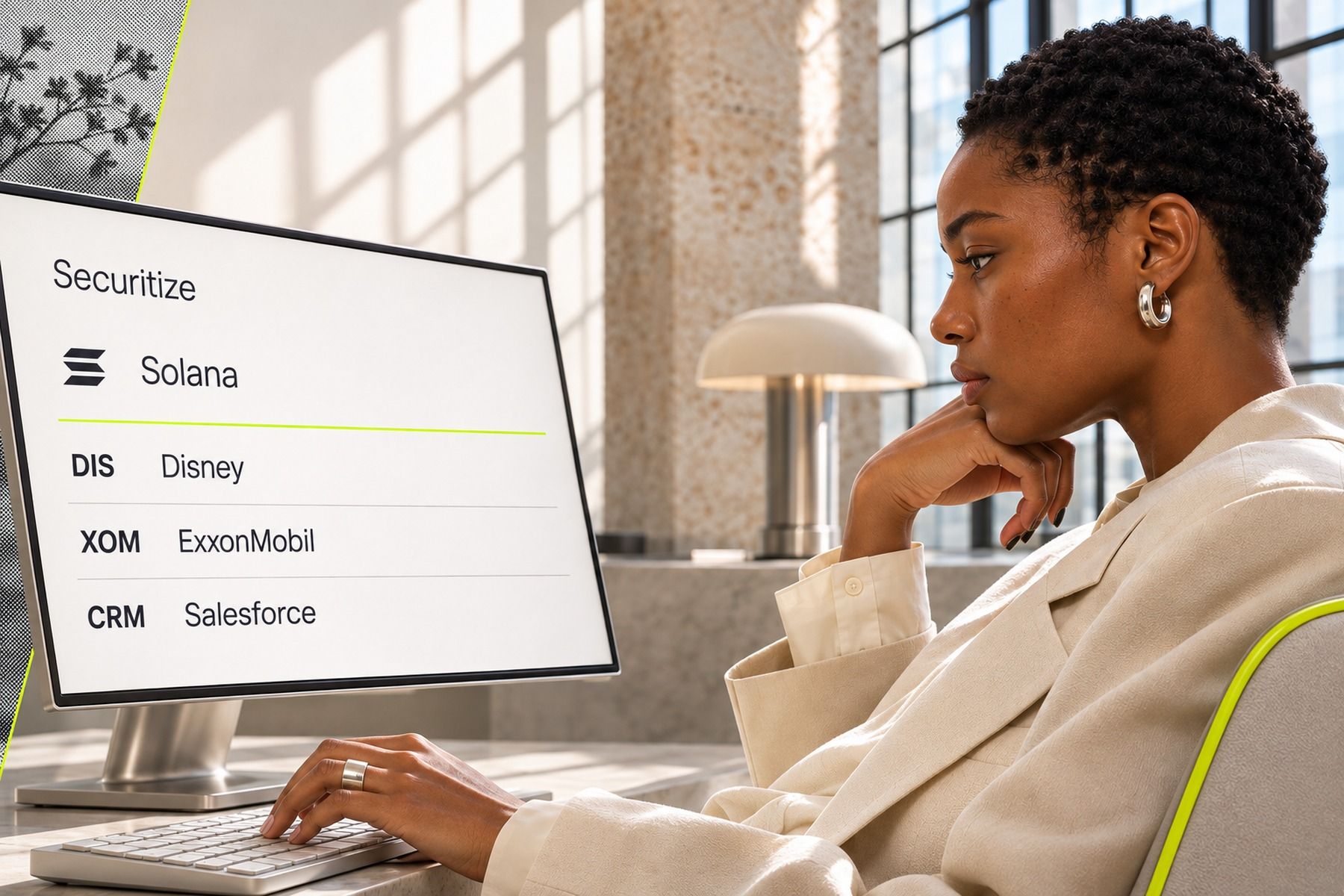
Investors are already seeing a wider range of familiar investments appear onchain. This week, Securitize added Disney, ExxonMobil and 11 other tokenized stocks on Solana. We also recently covered Janus Henderson’s JQQQ fund, which brings Nasdaq-100 exposure onto Stellar for eligible professional investors outside the U.S.
Those stories show the investment products taking shape. Morgan Stanley’s use of DTCC highlights the systems behind them: how established securities can move into blockchain-based accounts while retaining their associated rights. Each offering still has its own eligibility rules, trading arrangements and ownership structure.
The longer-term opportunity is a smoother investing experience: faster access to sale proceeds, easier portfolio movements and potentially longer trading windows.
DTCC has outlined those possibilities in its explanation for everyday investors. Delivering them requires brokers, trading venues and payment systems to support the full transaction—not simply issue a token.
Morgan Stanley’s announcement does not specify a retail rollout, the securities it converted or the transaction values involved.
For now, the development is an institutional milestone. The next test is whether those blockchain-based positions become part of routine financing and investment activity—and whether the efficiencies eventually reach clients.
Reporting by Sasha Steenkamp