A conference can draw 25,000 people and still feel quieter to someone working the floor.
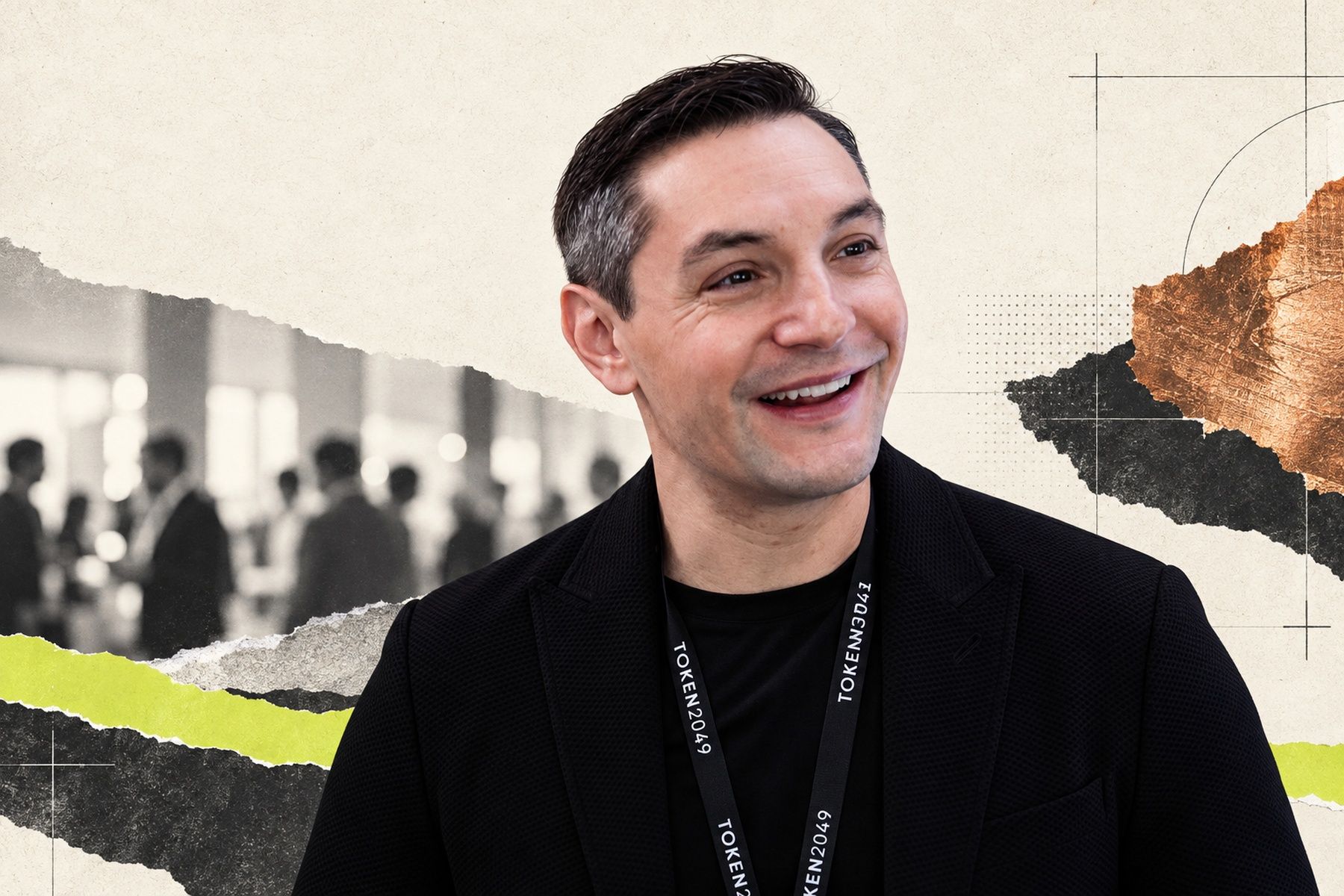
That was the contrast in Sylvan Martin’s account of TOKEN2049 Singapore. The SCRYPT co-founder and chief growth officer described more focused conversations, more relevant prospective clients and a clearer sense of what his company expected to take home: new business.
David Wachsman saw the same week through a wider lens. For the founder and CEO of Wachsman and president of Hawkeye Digital, the gathering reflected an accelerating convergence between blockchain and Wall Street.
Those perspectives capture something of the mood as TOKEN2049 wrapped its October 7–8 edition at Marina Bay Sands. Organizers announced a sold-out event with 25,000 attendees from 160 countries, 500 exhibitors and 250 speakers. Within that scale, the reflections collected here suggest an industry increasingly interested in the details of doing business.
Stablecoin payments. Settlement. Copper. Research tools that help an investor reach a decision.
The ambitions remain expansive. The questions are becoming more specific.
“Wall Street is full-on embracing blockchain.”
For Wachsman, whose firm marked its eighth year as TOKEN2049’s agency of record, the institutional presence was the defining development.
“What we saw across the show floor and main stages is that Wall Street is full-on embracing blockchain,” he said.
His expectations for the coming year are substantial.
“Over the next 12 months, clearance, settlement, tokenization, and 24/7 trading will completely transform the rails of global finance.”
That is his forecast, and an ambitious one. But the conference made space for the people who would have to turn it into reality. TOKEN2049’s separate institutional gathering on October 8 was designed for 200 approved participants, primarily managing-director level and above, from banks, asset managers, sovereign wealth funds, trading firms and regulators.
The attraction is becoming easier to explain in the language of finance. Can an asset and its payment move together? Can markets operate for longer hours? Can institutions introduce digital assets without rebuilding every process around them?
As Blockster explored in its coverage of Solana’s new settlement program, agreeing to a trade and completing the exchange of assets and money are separate steps. Improving that handoff gives blockchain a concrete job inside financial markets.
Singapore offered a meeting point for that discussion: the institutions considering what to adopt and the companies trying to make adoption possible.
Post from @token2049View the original post on X↗
“The event floor felt quieter than in previous editions, but the quality of conversations stood out.”
Martin’s assessment brought the conversation back to the experience of working the event.
“We had more relevant discussions with both prospective clients and existing partners, particularly around payments and stablecoin use cases,” he said.
For SCRYPT, payments were among the clearest themes, spanning collections, payouts and cards. These are activities with recognizable customers and recurring needs. A business receives money, pays someone else or gives a customer a way to spend.
Stablecoins become useful when they improve one of those steps.
“Overall, it’s encouraging to see that the industry is focused on putting stablecoins to work, and the infrastructure that makes these payments practical is becoming a much bigger part of the story,” Martin said.
That emphasis also ran through Blockster’s coverage of stablecoin payments and tokenized bonds during conference week. Circle and Tereina’s plans to bring digital-dollar and digital-euro payments into SAP business software connect blockchain to the familiar work of approving invoices, paying suppliers and keeping accounts.
For a finance team, the appeal lies in getting that work done more efficiently. The underlying technology earns its place through the result.
Making Adoption Feel Ordinary
Andrew Rizkalla, Aquanow’s global head of sales, described a similar emphasis on infrastructure that connects blockchain networks with existing finance.
His takeaways centered on liquidity, dependable routes between traditional money and digital assets, and systems that can work across networks. Payments between AI agents also featured in that discussion.
Taken together, those priorities suggest that the next stage of adoption will depend heavily on the connections between services. A promising product still needs customers to fund it, move money through it and receive the proceeds in a form they can use.
Rizkalla also highlighted a longer-term expectation: stablecoins becoming largely invisible infrastructure behind payments, treasury operations and settlement. Users would experience money moving without needing to think about which network carried it.
His account of the regulatory conversation was similarly practical. U.S. developments, including the CLARITY Act, remained on participants’ minds, while businesses focused on compliance arrangements that could support activity across markets.
The institutional interest was clear in his assessment. The work ahead was making deployment simple, dependable and capable of handling greater scale.
Post from @token2049View the original post on X↗
Tokenization Looks Toward the Physical Economy
For Monty C. M. Metzger, founder and chairman of Toto Finance Inc. and author of Tokenization: Capital for Humanity, the opportunity extends into the materials and infrastructure that support economic activity.
“The original vision of crypto was to democratize ownership, move capital freely and remove unnecessary middlemen,” he said. “We have made progress with money and financial markets, but the real revolution is still ahead of us.”
Metzger’s focus is the physical world: commodities, resources and infrastructure.
“Copper is just the beginning.”
“At Toto Finance, we want to unlock global capital, connect producers directly with buyers and bring commodity markets into the digital age,” he said. “From mine to market.”
It is a useful expansion of the tokenization conversation. Alongside financial securities sits another set of relationships: producers looking for capital, buyers seeking supply and the arrangements that connect them.
Metzger’s vision puts those relationships at the center. The opportunity he describes is to make capital and commodity markets more accessible, with digital infrastructure supporting the connection between production and demand.
His comments also show that crypto’s original ambition remains present in the more commercial conversation. Democratizing access is still the objective. The proposed route now runs through specific industries and transactions.
AI Has to Help Someone Reach a Decision
The same demand for usefulness appeared in Selena Singleton’s reflections on AI.
Longbridge’s U.S. head of business development and partnerships was particularly interested in discussions about agents and their role in financial markets. Her measure of their value starts with the investor’s experience.
“Investors already have plenty of market news, commentary, and opportunities to consider, but connecting those pieces can still be difficult.”
More information does not automatically produce greater understanding. Someone may read a headline, investigate a company and consider a trade while moving between disconnected tools.
Singleton described Longbridge’s effort to bring those activities closer together.
“At Longbridge, we’re building AI into the investing experience so people can explore a question, understand the relevant research and consider their options without losing the thread as they move between education, analysis and trading.”
That concern connects with Blockster’s TOKEN2049 interview with Moca Network CEO Kenneth Shek. His comparison between AI today and crypto’s early MetaMask experience centered on the distance between powerful technology and something people can use comfortably.
Post from @BlocksterComView the original post on X↗
Singleton offered a clear test for the next conference: practical examples of investors using AI to understand a market development, investigate an idea or make a more informed decision.
That would give the industry something more revealing to discuss than the capabilities of another demonstration.
The Next Stop Is New York. The Next Test Is Follow-Through.
TOKEN2049’s expansion gave Wachsman a personal reason to look ahead. The organizer announced its first New York edition for June 16–17, 2027, with 15,000 attendees expected, adding a third flagship destination alongside Singapore and Dubai.
“Seeing TOKEN2049 expand to New York’s Javits Center in June 2027 is a true full-circle moment for me, having founded Wachsman on Wall Street over 11 years ago,” he said.
The geography fits his reading of the week: crypto and established finance moving closer together.
But the most revealing assessment of Singapore may arrive well before the next conference opens. It will come through the meetings that become contracts, the payment services customers use again and the tools that make a financial task easier.
Martin put that measure plainly.
“For us, the real measure of a conference is what happens after the conversations end.”
SCRYPT expects to leave Singapore with new business. Singleton wants useful examples to bring back next year. Metzger wants stronger connections between producers, buyers and capital. Rizkalla sees the need to make institutional deployment easier.
Across these accounts, the optimism has a practical destination.
The next conversation begins with what gets done after Singapore.
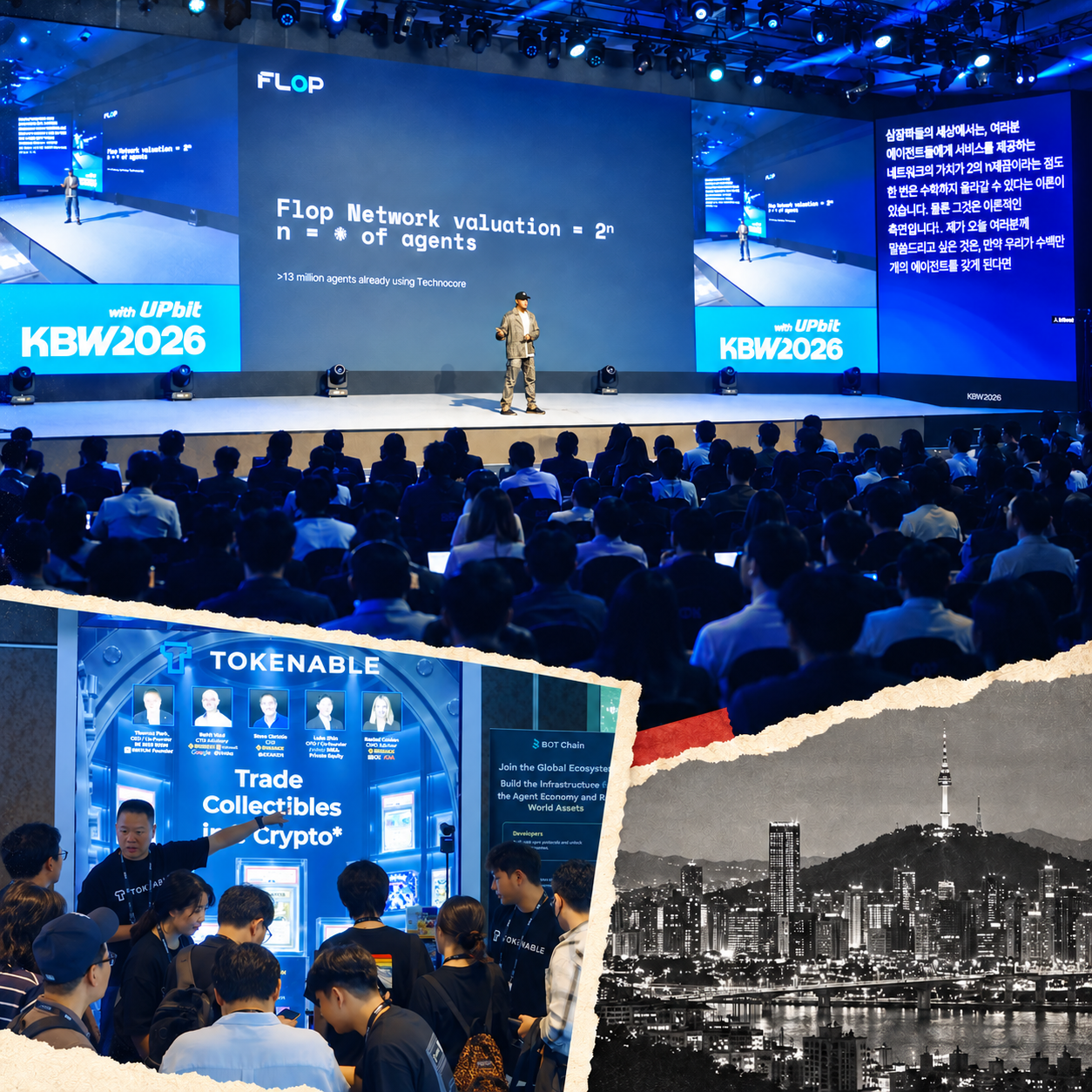
For more industry insight from the conference circuit, catch Blockster’s Korea Blockchain Week recap, where institutional investment, tokenization and AI payments brought a similar set of questions to Seoul.
Reporting by Lidia Yadlos