
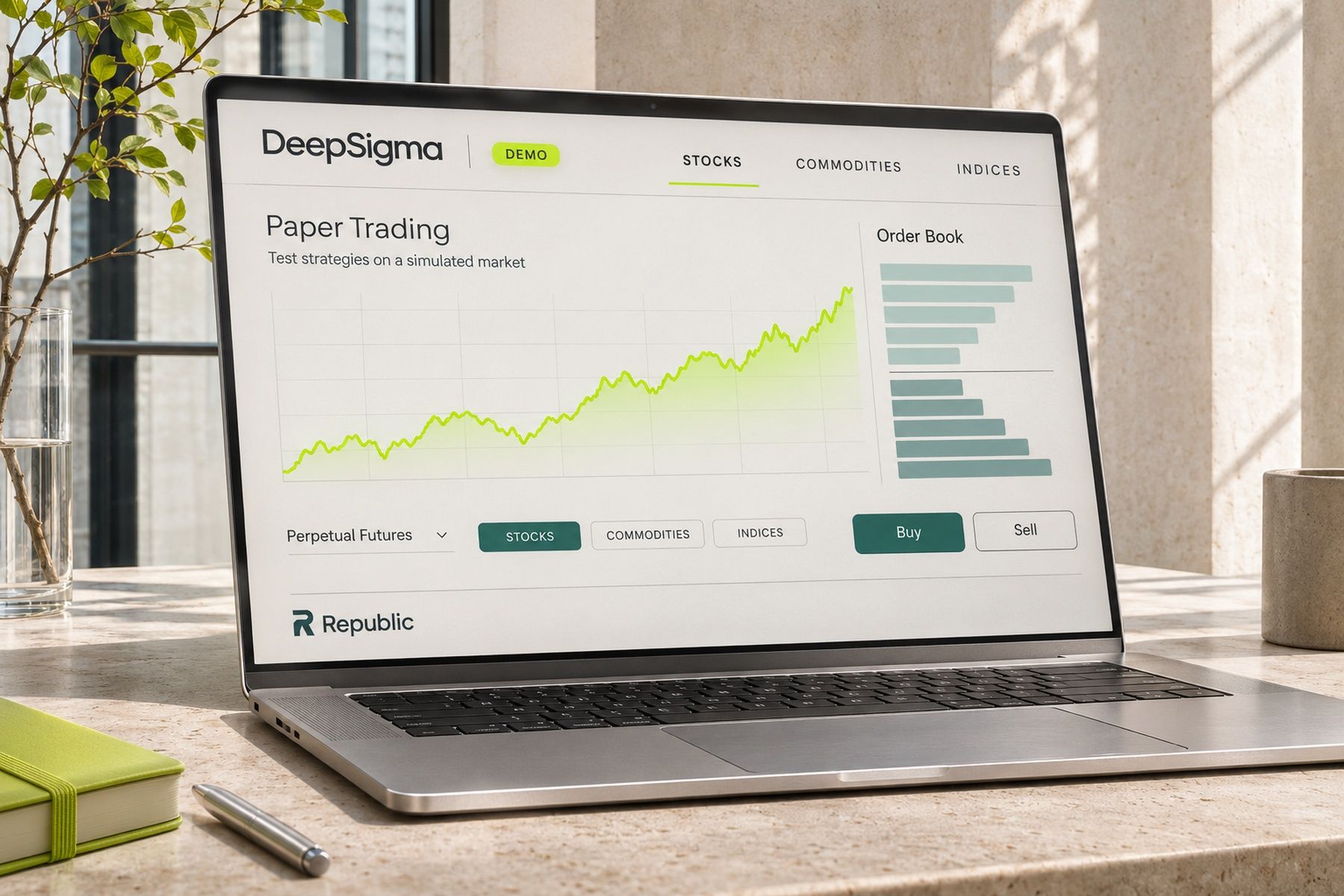
DeepSigma has a demo where users can practise trading 77 markets tied to stocks, commodities, indices and other traditional assets. Now it is seeking up to $10 million through a token offering on Republic to build the infrastructure needed for live trading.
The November 10 announcement puts the company in the growing race to bring traditional markets onchain. Its focus is perpetual futures: contracts that give traders exposure to an asset’s price without owning the underlying stock or commodity.
Live trading is not yet available. The money is intended to help DeepSigma move from simulated trades to a working exchange, with order matching, collateral management, blockchain settlement and eligibility checks.
What investors are buying
The Republic offering lists the DSX token at $0.10, with a $1,000 minimum investment. The instrument is a token purchase agreement—a contractual right to future tokens, rather than shares in DeepSigma.
Republic displayed $100,000 committed from one investor when checked on November 10. That is a snapshot of commitments, not confirmation that the company has received the money or reached its $10 million target.
| Offering term | Details |
|---|---|
| Maximum raise | $10 million |
| Token price | $0.10 per DSX |
| Minimum investment | $1,000 |
| Listed deadline | December 11, 2026 |
| Initial token release | 20% at the token generation event |
| Remaining allocation | 80% vesting linearly over six months |
The announcement limits participation to verified U.S. accredited investors and eligible non-U.S. persons in designated jurisdictions. It identifies Regulation D Rule 506(c) for the U.S. offering and Regulation S for separate offshore sales.
DeepSigma announced the opening of the round on X:
Post from @deepsigmadexView the original post on X↗
Republic describes planned DSX uses including governance votes and trading-fee discounts. Those proposed benefits depend on the platform’s development. A token unlock also does not guarantee a market in which holders can sell: transfer restrictions and liquidity are separate questions.
What the funding would build
The core project is a central limit order book, the system that collects buy and sell orders and matches them by price. A separate clearing layer is intended to track positions, collateral, margin requirements and settlement.
DeepSigma plans to connect that infrastructure to Cypherium and add decentralized identity-based controls to check who is eligible to participate. Independent security audits are also part of the planned spending.
That work matters because the assets being referenced do not all trade on crypto’s timetable. Stocks have market hours; liquidity and pricing conditions can change when their main exchanges are closed. An onchain contract still needs a dependable way to price positions and manage collateral through those periods.
The public demo includes paper trading, AI-powered market analysis and a leaderboard. It gives users a way to explore the proposed experience, while the company’s announcement makes the current operating status explicit:
“The platform currently operates as a demonstration and paper-trading environment, with live trading not yet available.”
— DeepSigma, November 10 announcement
Price exposure is different from owning a stock
DeepSigma’s plans sit alongside another development Blockster has been tracking: infrastructure for trading actual tokenized securities.
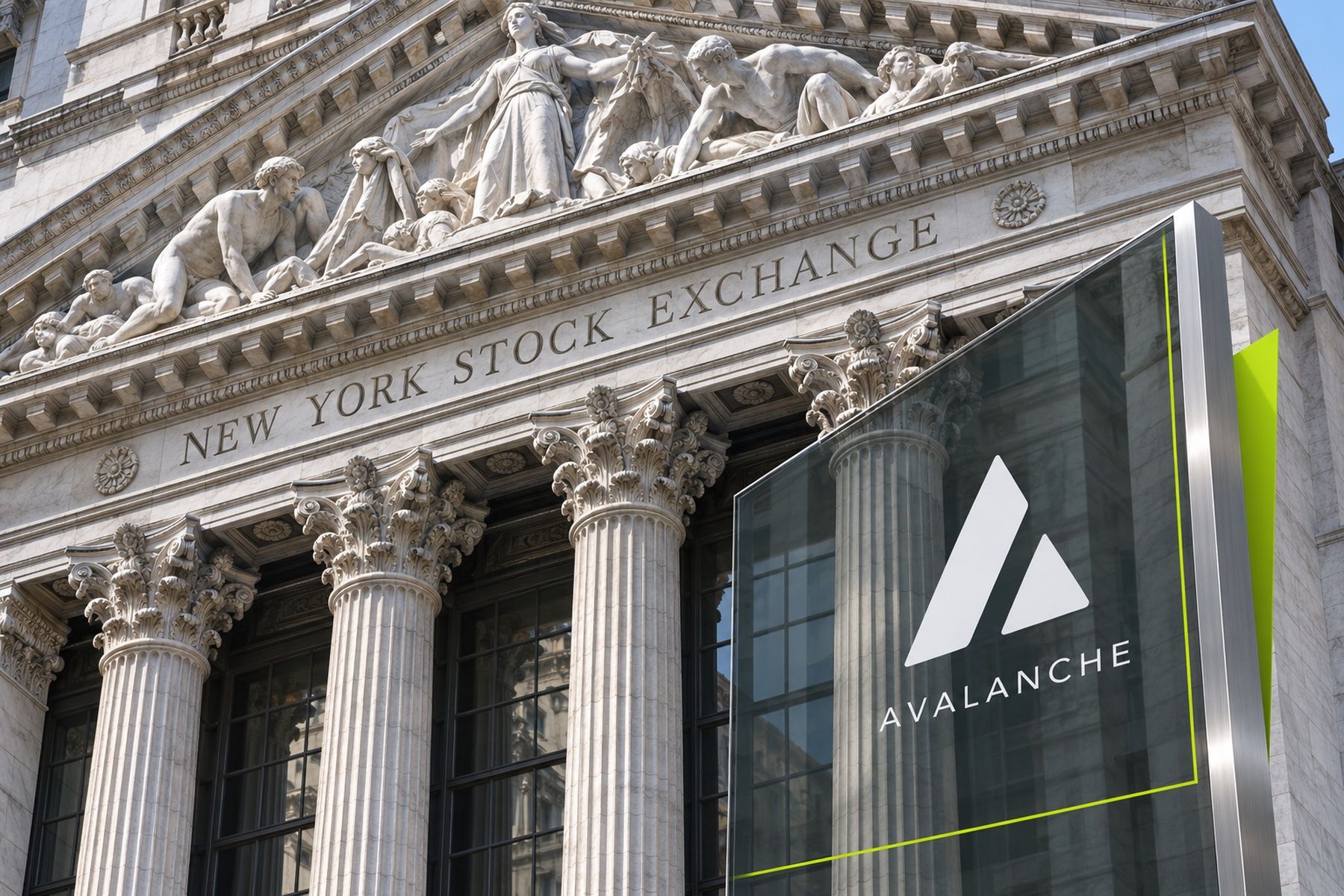
The NYSE recently selected Avalanche technology for the ledger supporting the clearing firm behind its planned tokenized-securities venue. NYSE says that platform is designed for around-the-clock trading, clearing and settlement, subject to regulatory approvals.
Post from @NYSEView the original post on X↗
Hawkeye Digital’s planned Ethereum shares through Securitize illustrate the ownership side: eligible holders would retain the dividend and voting rights attached to the common stock.
A perpetual contract has a different purpose. It lets traders take a position on price movements; it does not make them shareholders in the referenced company. DSX, in turn, is the proposed exchange’s token, separate from the derivatives users may eventually trade.
The next milestone is a working exchange
DeepSigma is targeting mainnet approximately three months after the token sale, subject to development progress and other conditions. That is a target rather than a confirmed launch date.
The company also states that its compliance-focused approach does not constitute SEC or CFTC registration or approval of the exchange. Eligibility to join the token offering should not be read as permission to use future trading services in every jurisdiction.
For prospective participants, the offering documents, including the private placement memorandum, set out the binding terms and risks. The investment can be illiquid and the entire amount invested can be lost.
The practical test now is delivery: completing the matching engine, demonstrating settlement and risk controls, and publishing the results of independent audits. The token round is intended to fund those steps; the demo has not yet established how the exchange performs with real money.
Reporting by Eric Spivak