

DeFi

MetaMask's Crypto Card Hits the U.S. — But Can It Win the Wallet War?

elena_vasquez · Feb 27, 2026
Keep reading to earn more!
BUX
Your Earnings +0.0 BUX
MetaMask's Crypto Card Hits the U.S. — But Can It Win the Wallet War?

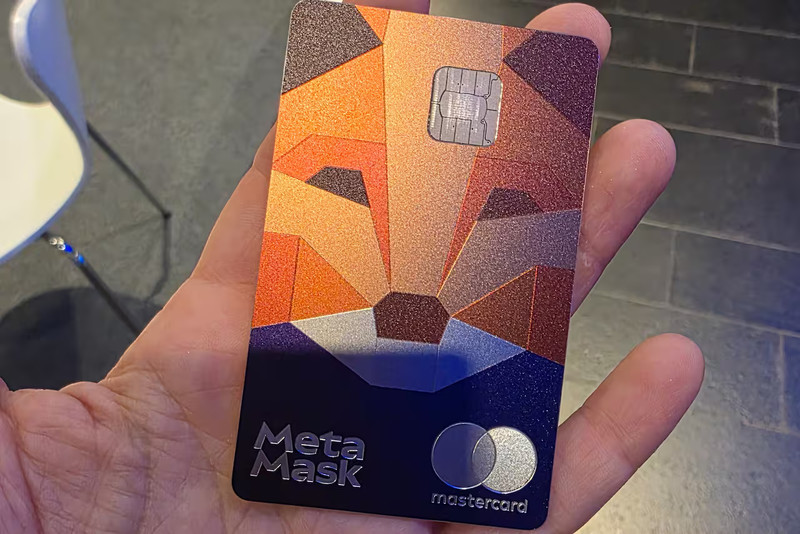
ConsenSys just made its biggest play for mainstream adoption yet. MetaMask, the browser wallet that onboarded millions into DeFi, has officially launched a self-custodial crypto debit card across the United States in partnership with Mastercard.

The pitch is simple: spend your crypto anywhere Mastercard is accepted — without ever handing your keys to a centralized exchange. For anyone who's been in this space long enough to remember the Mt. Gox days, that last part matters more than the card's sleek design.

But let's be honest — MetaMask isn't the first to ship a crypto card. Coinbase, Crypto.com, Binance, and even Gnosis have all been in this game for years. So the real question isn't whether MetaMask can launch a card. It's whether the card is actually competitive, and whether self-custody is enough of a differentiator to move the needle.

What Makes the MetaMask Card Different

The core value proposition here is self-custody. Unlike the Coinbase Card or the Crypto.com Visa, which require you to hold funds on their platforms (read: their custody, their rules), the MetaMask card lets you spend directly from your MetaMask wallet. Your keys, your crypto, your spending. The card converts crypto to fiat at the point of sale via Mastercard's network, meaning merchants never touch a token — they just see dollars.

This is a meaningful architectural distinction. When you use a Coinbase Card, you're trusting Coinbase to hold your assets and process the conversion. When you use the MetaMask card, the funds sit in your wallet until the moment of transaction. For the self-sovereignty crowd — and frankly, for anyone who watched FTX collapse — this isn't a minor feature. It's the whole thesis.

Self-custody isn't just a philosophy — it's a risk management strategy. Every centralized custodian is a single point of failure.

The Competitive Landscape: Card vs. Card

Let's break down where MetaMask sits against the major players. Because in 2026, crypto cards are no longer novel — they're a feature war.


Coinbase Card

Coinbase's debit card has been the default for U.S. users for a while now. It offers up to 4% back in crypto rewards on purchases, paid in select tokens. The catch? Your funds live on Coinbase. You're spending from a custodial balance, and Coinbase handles the conversion. It's convenient, sure, but it's essentially a traditional fintech product wearing a crypto hoodie. Plus, it's been getting a lot of complaints about its support.

Crypto.com Visa

Crypto.com built its entire brand around its metal Visa cards with tiered rewards — up to 5% cashback depending on how much CRO you stake. The higher tiers require locking up significant capital in CRO, which introduces token-price risk on top of custody risk. The rewards are generous on paper, but you're essentially making a leveraged bet on CRO to unlock them. After their 2022 reward slashing, trust took a hit.

Gnosis Pay

Gnosis Pay is probably the closest philosophical competitor to MetaMask's card. It's also self-custodial, built on Gnosis Chain, and uses a Visa network. However, it's been primarily focused on the European market and hasn't made significant inroads in the U.S. yet. For American users, MetaMask is essentially claiming that self-custodial territory first.

MetaMask Card

MetaMask's card leverages Mastercard's infrastructure and keeps funds in the user's wallet. As of launch, the rewards structure appears more modest compared to Coinbase or Crypto.com — the emphasis is clearly on sovereignty over incentives. There are no staking requirements, no tiered lockups, and no custodial middleman. What you trade in cashback percentage, you gain in control.

Quick Comparison

  • Coinbase Card — Custodial, up to 4% crypto rewards, U.S. focused, Visa network

  • Crypto.com Visa — Custodial, up to 5% (with CRO staking), global, tiered system

  • Gnosis Pay — Self-custodial, Visa, Europe-focused, modest rewards

  • MetaMask Card — Self-custodial, Mastercard, U.S. launch, sovereignty-first design

The Userbase Question

MetaMask has a massive built-in advantage that none of the exchange-issued cards can match: over 30 million monthly active users as of its last reported figures. That's 30 million wallets already connected, already onchain, already comfortable with the MetaMask interface. ConsenSys doesn't need to onboard users from zero — it needs to convert existing wallet holders into card users.

The conversion rate is the big unknown. Crypto-native users who live in DeFi may love the self-custody angle, but the average MetaMask user who swaps tokens once a month might not see enough reason to ditch their existing card. If even 5-10% of MetaMask's active userbase adopts the card, that's 1.5 to 3 million users — which would make it one of the most-used crypto cards in the U.S. overnight.

For context, Crypto.com reportedly has around 80 million users globally but hasn't disclosed active card users. Coinbase's card adoption numbers are similarly opaque. The crypto card market is still surprisingly early, and MetaMask's brand recognition in the wallet space gives it a legitimate shot at capturing meaningful share.

The Bigger Picture: Onchain Spending Goes Mainstream

What excites me about this launch isn't the card itself — it's what it represents. We've spent years building decentralized infrastructure, and the bridge to everyday spending has always been the weakest link. You can earn yield onchain, swap tokens permissionlessly, and self-custody your wealth — but the moment you want to buy a coffee, you've historically had to route through a centralized exchange.

MetaMask's card starts to close that loop. Earn onchain, spend onchain, custody onchain. The fiat conversion still happens at the point of sale — we're not living in a hyperbitcoinized world yet — but the user's relationship with a centralized entity is reduced to a momentary transaction rather than an ongoing custodial arrangement.

The real competition isn't between crypto cards. It's between self-custody and the legacy financial system's insistence that someone else should hold your money.

The Verdict

If you're optimizing purely for cashback rewards, MetaMask's card probably isn't going to win that race — at least not at launch. Coinbase and Crypto.com have more aggressive incentive structures. But if you believe that self-custody is non-negotiable — that the entire point of crypto is removing intermediaries — then MetaMask just delivered the most philosophically consistent spending tool on the market.

The card market in crypto is about to get a lot more interesting. MetaMask has the userbase, the brand, and now the Mastercard infrastructure to make a serious run. Whether the masses care more about 4% cashback or financial sovereignty will tell us a lot about where this industry actually stands. My bet? Sound money wins — eventually. It always does.