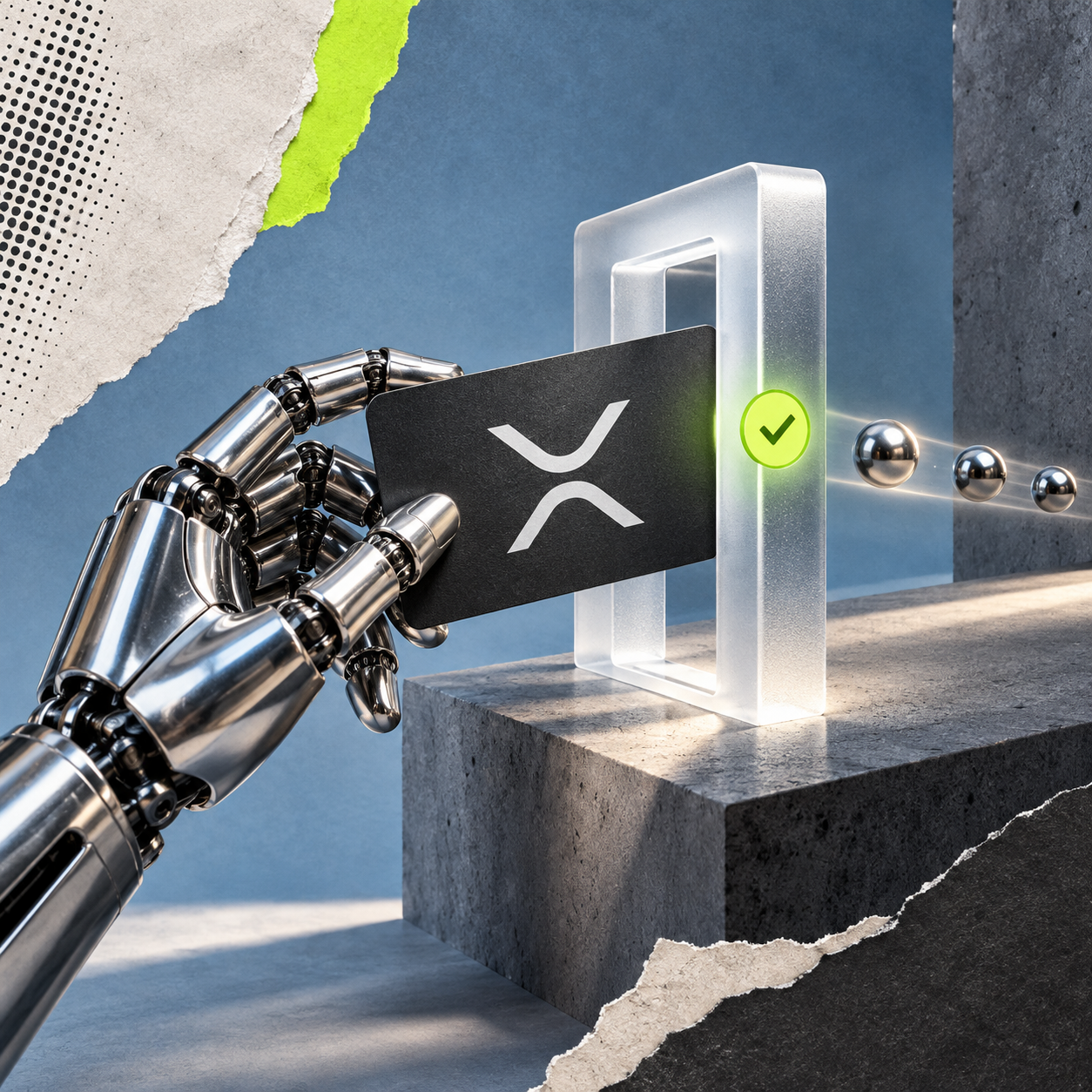


AI is evolving rapidly in 2026, and the latest wave goes far beyond simple chatbots or automated trading scripts. Agentic AI — autonomous software agents that can reason, plan, and execute tasks independently — is becoming the backbone of a new generation of onchain applications.
—
From AI agent social networks to coordinated swarms and modular skill sets, the space is moving fast, and the companies leading the charge may not be the ones you'd expect.
Social Networks — But for AI Agents
One of the most notable trends is the emergence of social networks purpose-built for AI agents. Platforms like MyShell and Virtuals Protocol are creating environments where agents can discover each other, share context, negotiate tasks, and form working relationships — all onchain.
Think of it as LinkedIn for autonomous programs: agents post their capabilities, find collaborators, and build reputations based on verifiable performance history stored on a blockchain.
As the number of deployed AI agents explodes — handling everything from DeFi yield optimization to content creation to supply chain logistics — they need a way to find and interact with each other without human intermediaries. Social layers give agents the coordination infrastructure to do exactly that, and crypto rails provide the trust and payment mechanisms.
Post from @myshell_aiView the original post on X↗
Skills and Swarms: The New Agent Architecture
The concept of agent skills is gaining traction as a modular approach to AI capabilities. Rather than building monolithic agents that try to do everything, developers are creating agents with specialized, composable skill sets — one agent might excel at onchain data analysis, another at natural language summarization, and a third at executing multi-step DeFi transactions. These skills can be mixed, matched, and even traded.
This modularity feeds directly into the rise of AI swarms — coordinated groups of agents that work together on complex tasks no single agent could handle alone.
A swarm might include a research agent, a strategy agent, and an execution agent, all communicating in real time to accomplish a goal like optimizing a treasury portfolio or auditing a smart contract. Frameworks like CrewAI and LangGraph are making it increasingly simple to orchestrate these multi-agent workflows.
"The future isn't one super-intelligent agent. It's thousands of specialized agents working together in swarms, each bringing a unique skill to the table." — Chris Lattner, co-founder of Modular AI
Lean Startups Are Winning the Agentic AI Race
Perhaps the most striking dynamic in the agentic AI space is who's building it. Small, nimble startups — many with teams of fewer than 20 people — are consistently outpacing large incumbents. The reason is structural: AI agents are force multipliers that reward speed and experimentation over headcount.
Cognition Labs, the San Francisco-based startup behind the AI software engineer Devin, reportedly operates with a small team yet has attracted significant venture capital and enterprise interest. Imbue (formerly Generally Intelligent), another lean operation, is building agents that can reason and code autonomously.
OpenClaw is another standout — a compact team focused on building open-source agentic frameworks for onchain applications, giving developers plug-and-play tools to deploy autonomous agents without reinventing the wheel.
Post from @openclawView the original post on X↗
Relevance AI has scaled its agent-building platform to thousands of enterprise users with a compact team. These companies move fast, iterate daily, and use their own AI agents internally to accelerate development — a compounding advantage.
On the other side, large tech incumbents are struggling to adapt. Google has faced well-documented internal friction integrating agentic AI into its sprawling product suite, with reports of slow decision-making and competing internal teams. IBM has pivoted its Watson brand multiple times without gaining meaningful traction in the agent economy.
Even Meta, despite massive AI investment, has been slower to ship autonomous agent products compared to startups operating at a fraction of the budget. Legacy organizational structures, approval chains, and risk aversion create drag that small teams simply don't have.
What This Means for Crypto
The convergence of agentic AI and blockchain is forming entirely new market layers. Agent-to-agent payments, onchain identity and reputation systems, decentralized compute markets, and tokenized skill registries are moving from theory into production.
With MoonPay recently announcing MoonPay Agents—a non-custodial financial layer that gives AI agents wallets, funding access, and autonomous onchain execution—the missing economic rail for this ecosystem is now in place. By enabling agents to custody value, transact across chains, and off-ramp back to fiat without continuous human approval, MoonPay turns agents from analytical tools into economic participants.
Post from @BlocksterComView the original post on X↗
Projects building at this intersection—including Fetch.ai, Autonolas, and SingularityNET—are increasingly positioning themselves as core infrastructure for an agent-native economy, where intelligence, capital, and execution operate autonomously onchain.
Takeaway
The takeaway is that agentic AI isn’t a feature upgrade — it’s a structural shift. As agents gain the ability to discover each other, coordinate, execute, and move value autonomously, crypto becomes less about speculation and more about infrastructure for machine-driven economies. The next wave of adoption won’t be led by louder narratives, but by systems that quietly enable agents to operate at scale.
Reporting by Blockster Newsdesk