

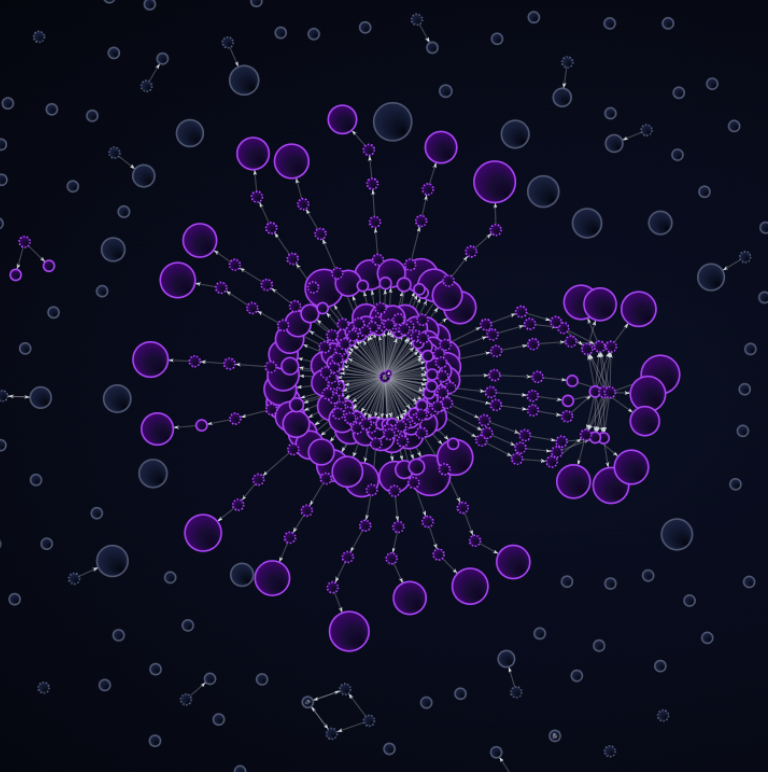
Blockchain analytics firm Bubblemaps has identified a likely insider who made approximately $1 million betting on U.S. and Israeli military strikes over a two-year period, using seven separate accounts with near-perfect accuracy.
—
The findings, published by the onchain analysis firm, raise serious questions about information asymmetries in crypto-native prediction markets.
Seven Accounts, Near-Perfect Accuracy
According to Bubblemaps' analysis, the individual operated across seven distinct accounts, placing bets tied to geopolitical military events — specifically U.S. and Israeli strikes. The accounts demonstrated a pattern of near-perfect accuracy over the two-year window, a statistical anomaly that strongly suggests access to non-public information rather than skilled forecasting.
The use of multiple accounts is a common tactic to obscure trading patterns and avoid detection. However, onchain analysis tools like Bubblemaps are designed to trace wallet clusters and identify coordinated activity, making it increasingly difficult for bad actors to operate undetected on public blockchains.
Post from @bubblemapsView the original post on X↗
Prediction Markets Under Scrutiny
The case highlights a growing concern around prediction markets — platforms that allow users to bet on real-world outcomes using crypto. While proponents argue these markets serve as efficient information-discovery tools, critics have pointed to the risk of insider trading, particularly on events where a small number of individuals may have advance knowledge.
Prediction markets have surged in popularity since 2024, with platforms like Polymarket processing billions of dollars in volume around elections, geopolitical events, and economic data releases. The sector's rapid growth has outpaced the development of robust market surveillance mechanisms.
Bubblemaps said the likely insider had a near-perfect accuracy using seven accounts, raising questions about whether prediction markets have adequate safeguards against information asymmetry.
Regulatory and Integrity Implications
The findings arrive at a time when regulators globally are evaluating how to classify and oversee prediction markets. In the United States, the Commodity Futures Trading Commission (CFTC) has historically taken a cautious approach to event contracts, particularly those tied to geopolitical or military outcomes, arguing they may not serve a legitimate hedging purpose.
Cases like this could strengthen the regulatory argument for stricter oversight. If individuals with privileged access to military or intelligence information are exploiting prediction markets for profit, it raises legal questions that extend well beyond market manipulation — potentially touching on national security.
What to Watch
The key question now is whether prediction market platforms will implement stronger surveillance tools to detect coordinated multi-wallet activity, and whether regulators will use cases like this to push for tighter controls. As onchain forensics firms continue to improve their capabilities, the transparency of public blockchains may ultimately serve as both the vulnerability and the solution.
Reporting by Blockster Newsdesk