In a year when digital art continued to mature beyond speculation, the Tezos art ecosystem quietly delivered one of its strongest performances yet. Across museums, global art fairs, education programs, and primary sales, 2025 marked a shift from experimentation to sustained cultural relevance—proving that blockchain can support artists at institutional scale.
Over the course of the year, more than 500,000 NFTs were sold on Tezos, reflecting steady demand driven not by hype cycles, but by long-term artist engagement, collector trust, and curatorial credibility.
Museums as Onramps, Not Afterthoughts
One of the clearest signals came from museums.
The Tezos Foundation expanded its collaboration with the Museum of the Moving Image (MoMI), turning the Herbert S. Schlosser Media Wall into a living canvas for blockchain-native art. Since the partnership began in mid-2024, more than 243,000 visitors have encountered on-chain artworks—many minting their first NFT through MoMI’s free minting stations.
In 2025, the program evolved into a year-long commissioning initiative, inviting 12 artists to integrate Tezos FA2 smart contracts directly into their creative process. Alongside it, the newly launched FA2 Fellowship began training artists and developers on how blockchain standards can function as artistic tools, not just technical infrastructure.
Rather than treating NFTs as an add-on, the program embedded blockchain into the medium itself.
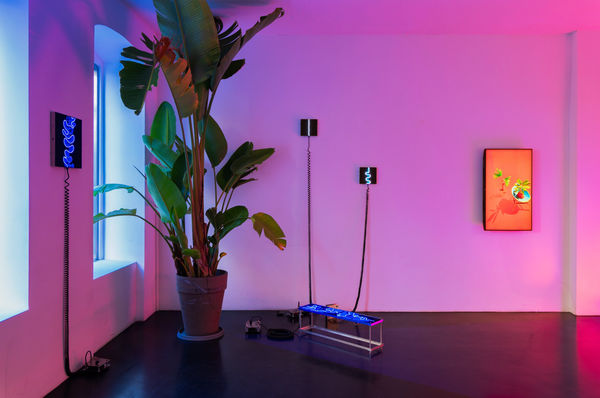
MÆANDER by Spøgelsesmaskinen and Matisse.V.5 by Claudia Hart, bitforms booth, Art on Tezos: Berlin. Credit: Trilitech
Global Art Fairs, Real Context
Tezos’ presence at major art events throughout the year reinforced its position within the broader art world.
At NFT Paris, digital art pioneer Kiki Picasso revived an original 1980s Quantel Paintbox—the same six-figure machine used to create the MTV logo—bridging early digital art history with contemporary on-chain practice. That activation evolved into the “Paintboxed – Tezos World Tour,” which traveled through New York, Miami, Paris, and Basel, introducing thousands to both the roots of digital art and its current evolution on blockchain.
The year’s largest moment came with Art on Tezos Berlin, a three-day festival that turned the city into a focal point for global digital art. The event drew more than 700 international visitors, showcased 500+ artists, and featured live performances that blended generative art, poetry, AI, and sound.
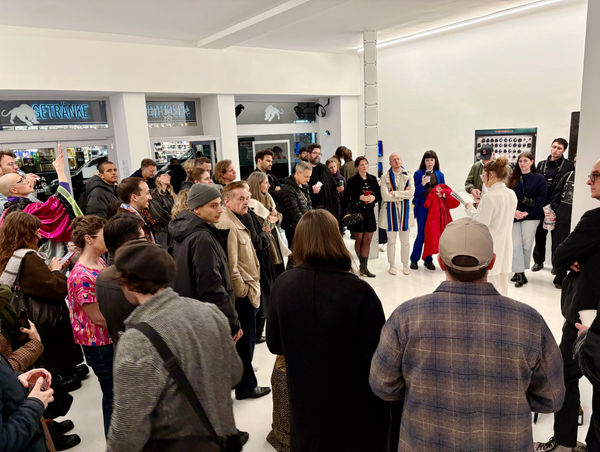
Franziska Ostermann performs at Art on Tezos: Berlin’s Opening Party, The Second Guess booth. Credit: Anika Meier.
Artists like p1xelfool, OONA, and Franziska Ostermann pushed live digital performance into new territory, while the exhibitions spanned everything from code-based works to immersive interactive pieces.
First-Time Buyers, Real Sales
Beyond exhibitions, Tezos saw meaningful market traction.
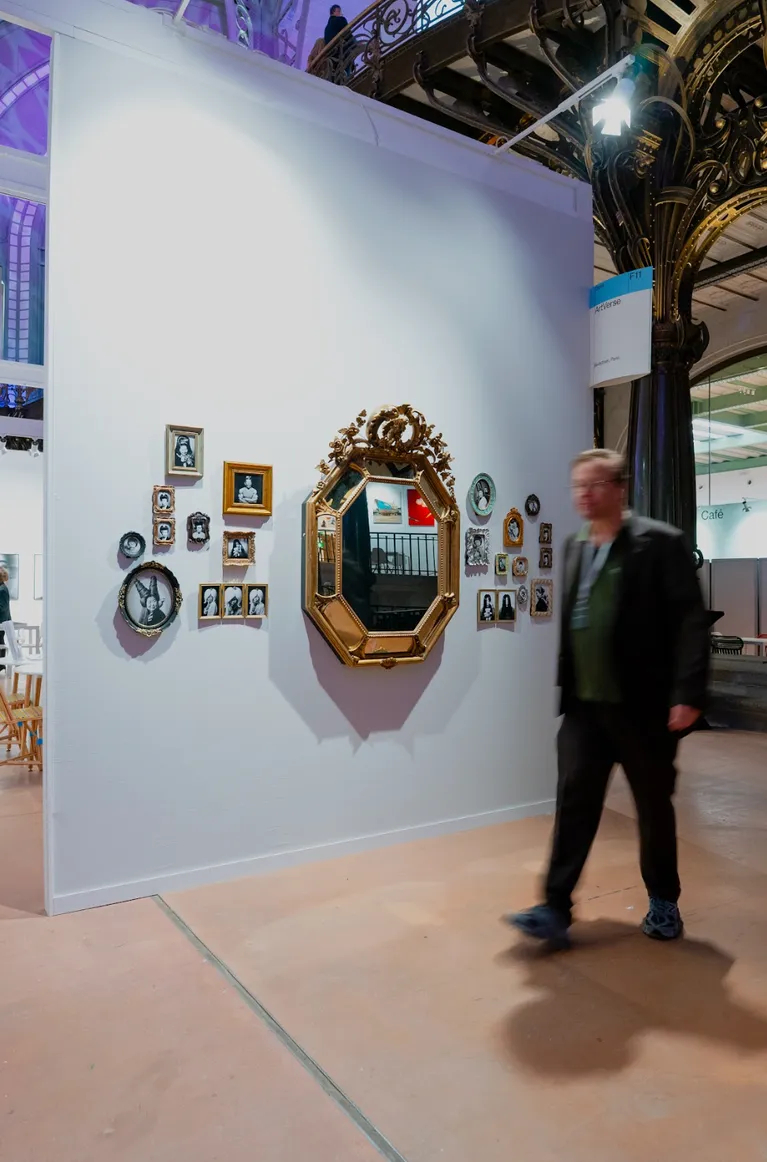
At Paris Photo, Artverse curated a booth featuring artists including Niceaunties, Grant Yun, Reuben Wu, Shavonne Wong, Emi Kusano, and Genesis Kai—several of whom released work on Tezos for the first time. Sales were handled via objkt, bringing in a wave of first-time collectors and reinforcing Tezos as a credible entry point for fine-art NFTs.
Institutional recognition followed.
Works first shown at Art on Tezos Berlin were later acquired by the Francisco Carolinum, marking a significant museum acquisition of fully onchain digital art.
Individual artist milestones stood out as well. qubibi’s live-coded generative work hello world sold for 62,000 tez following its debut in Berlin, while Mario Klingemann’s early AI-driven piece Triggernometry sold for 43,000 tez at the Digital Art Mile—both underscoring sustained demand for generative and AI-based art on Tezos.
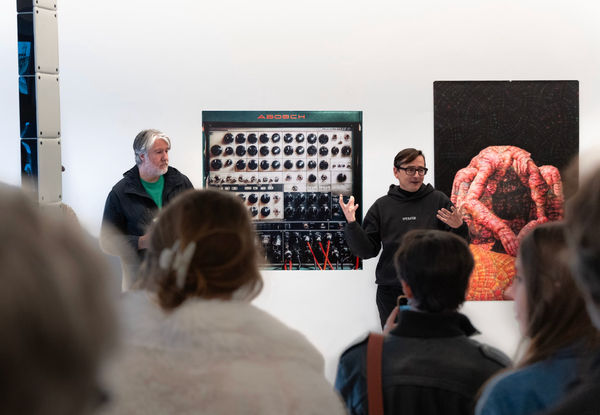
Kevin Abosch and Mario Klingemann speak at Art on Tezos: Berlin. Credit: Trilitech
Education as Infrastructure
Education remained a central pillar throughout the year.
Beyond the MoMI fellowship, Tezos partnered with the Processing Foundation to launch a global tutorial series for p5.js 2.0, expanding access to creative coding education worldwide. This built on earlier initiatives like WAC Labs, which reached professionals across 40+ institutions, and Newtro in Argentina, which focused on hands-on artist onboarding.
Rather than chasing short-term adoption, the ecosystem invested in skills, literacy, and long-term creative capacity.
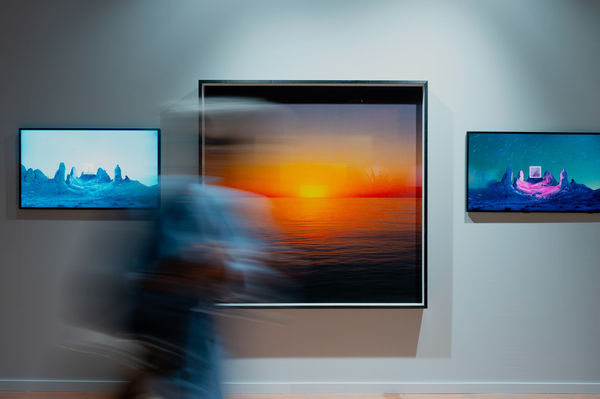
Reuben Wu works on display at the ArtVerse Paris Photo booth, credit: Bryan Piekolek
Looking Ahead
As 2025 closes, the trajectory is clear. Tezos’ museum partnerships extend into 2027, new artist commissions are already underway, and the ecosystem continues to attract both emerging and established creators.
In an NFT market that has learned some hard lessons, Tezos’ art ecosystem stands out not for volume alone, but for consistency. It has positioned blockchain not as a novelty, but as a durable cultural tool—one capable of supporting artists, institutions, and collectors at scale.
Reporting by Lidia Yadlos