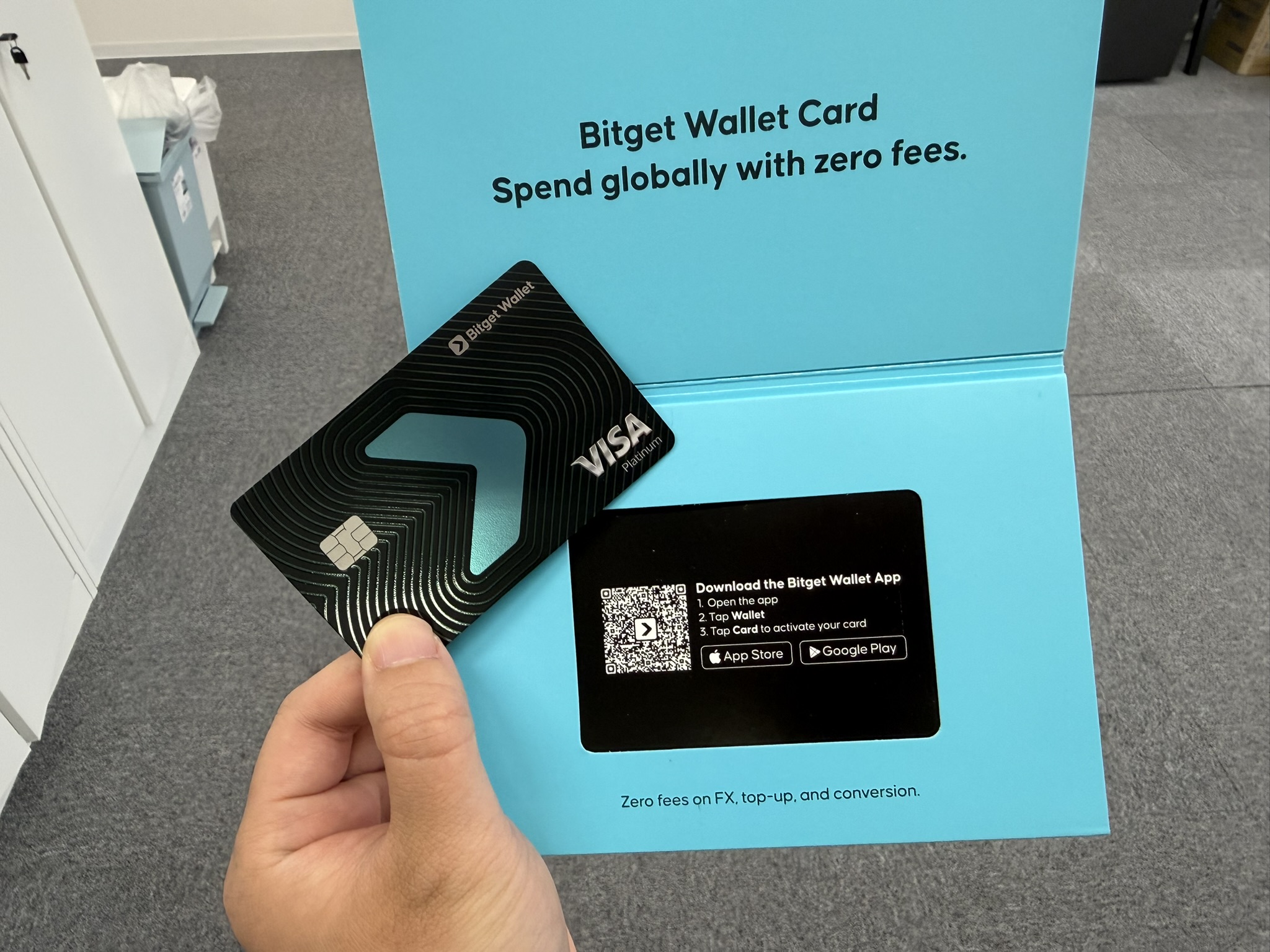



As the crypto industry heads into 2026, few executives have a clearer vantage point than Gracy Chen, CEO of Bitget.
Founded in 2018 during a bear market, Bitget has grown into one of the world’s largest digital asset platforms, serving 120 million users globally, processing $20B+ in daily trading volume, and operating the largest crypto copy trading platform in the market. Built by early believers who stayed through multiple cycles, Bitget’s evolution mirrors the broader maturation of the crypto industry itself — from speculation to infrastructure.
That scale gives Chen’s outlook real weight. Leading a platform used daily by millions of traders, institutions, and communities worldwide, she’s seen firsthand how market structure, payments, regulation, and capital flows have shifted over time — and where they’re heading next.
Post from @MITSloanAlumniView the original post on X↗
After a challenging end to 2025, sentiment across the industry has turned more constructive and opportunity-driven. Rather than chasing short-term hype, attention is moving toward durable systems, real utility, and global coordination.
Below, Chen outlines five structural shifts she believes will define crypto markets in 2026 — and why the next phase of digital assets will be shaped less by cycles, and more by convergence.
1. Crypto and TradFi Merge Into a Single Market Structure
By 2026, the line between crypto markets and traditional financial markets largely disappears at the infrastructure level.
Crypto exchanges are expanding into equities, ETFs, and commodities, while banks and fintech platforms integrate crypto trading and custody. What emerges is Digital Asset Trading (DAT) — a unified market where assets are judged by liquidity, settlement speed, and global access, not by origin.
“Assets are no longer defined by whether they come from crypto or traditional finance,” Chen explains.
The result: 24/7 global trading becomes standard, not innovative.
Post from @bitgetView the original post on X↗
2. Stablecoins Become Global Payment Infrastructure
Stablecoins are quietly becoming one of crypto’s most important real-world use cases.
“Stablecoins already offer faster, cheaper, and more transparent settlement than traditional systems,” she notes, expecting them to operate across multiple fiat references by 2026.
Chen sees them evolving beyond dollar proxies into programmable settlement layers for remittances, payroll, treasury operations, and cross-border commerce — especially in emerging markets where legacy banking rails are slow and costly.
3. The Altseason Era Gives Way to Community-Led Capital
The long-anticipated altseason never truly arrived — and Chen believes that’s structural, not cyclical.
“Projects will need to prove traction and sustainability, not just narratives,” she says.
Institutional capital doesn’t rotate into early-stage altcoins at scale. By 2026, she expects decentralized startups to shift toward community-funded, revenue-backed token models, reviving ICO-style fundraising in more transparent and accountable forms.
4. Regulation Becomes Market Infrastructure
Rather than acting as friction, regulation is increasingly functioning as infrastructure.
Clear frameworks around custody, stablecoins, and tokenized assets are enabling institutional participation while legitimizing onchain markets. By 2026, Chen expects regulated access points and decentralized rails to operate together inside a unified global system.
This convergence allows capital to move efficiently without sacrificing compliance.
Post from @GracyBitgetView the original post on X↗
5. Crypto’s Next Phase Is Structural, Not Speculative
Chen’s final outlook moves beyond price cycles. The next phase of crypto isn’t defined by hype, but by how capital moves, how markets settle, and how payments scale globally.
“As markets converge, payments scale, and capital becomes truly global,” Chen writes, “the future of finance will be unified, borderless, and built on interoperable digital rails.”
By 2026, crypto won’t sit alongside the financial system. It will be the infrastructure quietly running underneath it.
Here are related forecasts to expand your view beyond Gracy Chen’s outlook:
Cardano’s Thomas Mayfield on AI’s Next Phase — Why 2026 will be the year AI moves from assistance to being trusted to act on our behalf, and how identity and decentralization underpin that shift.
https://blockster.com/cardanos-thomas-mayfield-2026-marks-ais-shift-from-assistance-to-authorityHow AI, Productivity & Crypto Converge — Nvidia’s $65B forecast signals a new phase where AI infrastructure and blockchain rails come together to reshape productivity, capital, and markets.
https://blockster.com/how-ai-productivity-crypto-converge-nvidias-65b-forecast-signals-the-next-phaseOpinion: Trump’s Venezuela Power Move — A macro look at how geopolitical shifts in energy and policymaking could influence AI, finance, and Bitcoin narratives in 2026.
https://blockster.com/opinion-trumps-venezuela-power-move-changes-everything-energy-ai-and-bitcoin
Reporting by Lidia Yadlos