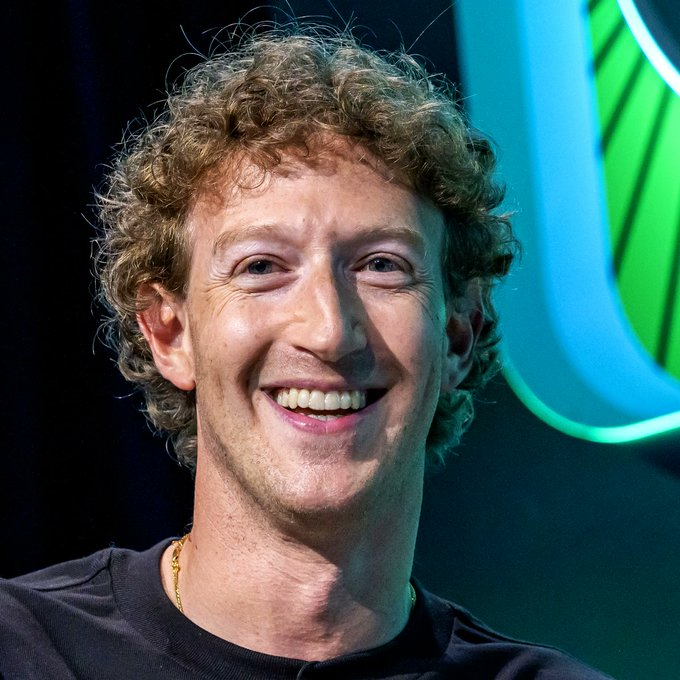
Mark Zuckerberg wants to build an AI agent that helps him run Meta — essentially a digital proxy that can bypass layers of management and make decisions on his behalf.
—
If you're keeping score at home, that's one man building a tool to consolidate even more control over a company that already shapes the information diet of three billion people.
According to reports from CoinTelegraph, Zuckerberg is personally developing this AI agent while simultaneously pushing Meta employees to adopt agentic AI tools across the organization. The message is clear: AI is coming to corporate management, and at Meta, it flows from the top down.
The Architecture Tells You Everything
Here's what's fascinating about this from a systems design perspective. Zuckerberg's AI agent is architecturally centralized by default. One person trains it. One person sets its objectives. One person benefits from its optimization.
The agent's entire purpose is to amplify the reach and decision-making speed of a single human at the top of a hierarchy. It's command-and-control on steroids.
Now contrast that with how decentralized autonomous organizations (DAOs) approach the same problem. DAOs don't try to make one person faster — they try to make the organization smarter by distributing decision-making across token holders, delegates, and onchain governance mechanisms. The bottleneck isn't middle management. The bottleneck is having a single point of failure at the top.
These are two fundamentally different philosophies of power. Zuckerberg's approach says: the problem with corporations is that the CEO doesn't have enough leverage. The DAO approach says: the problem with corporations is that CEOs have too much.
Post from @exec_sumView the original post on X↗
Why This Matters Beyond Meta
The real concern isn't Zuckerberg specifically — it's the template this sets. Every Fortune 500 CEO watching this will want their own AI agent. And each one of those agents will be optimized for the interests of whoever sits at the top, not for employees, users, or the public. AI-augmented corporate leadership, without structural accountability, is just autocracy with better analytics.
Meanwhile, crypto-native organizations are experimenting with AI in the opposite direction. Onchain governance systems are exploring AI-assisted proposal analysis, automated treasury management with multisig oversight, and agent-based systems that serve the collective rather than the king.
The difference? Transparency and verifiability. When a DAO's AI agent acts, the logic and the outcome are visible onchain. When Zuckerberg's agent acts, it's a black box inside a walled garden.
The question isn't whether AI will reshape organizational management — it will. The question is whether that reshaping concentrates power or distributes it.
The Fork in the Road
Meta pushing employees to adopt agentic tools while the CEO builds his own super-agent is a perfect microcosm of the broader tension in tech right now. Workers get AI tools that make them more productive (and more replaceable). Executives get AI tools that make them more powerful (and less accountable). The productivity gains flow up; the displacement risk flows down.
Post from @StockSavvyShayView the original post on X↗
Decentralized systems offer a genuinely different path — one where AI amplifies collective intelligence instead of individual authority. It's early, it's messy, and DAO governance is far from perfect. But the architectural choice matters. Who the AI serves is determined by who controls it. And right now, the crypto ecosystem is the only place seriously building AI systems where that control is shared.
Zuckerberg is building the future of corporate AI. Crypto is building the alternative. Choose your architecture carefully — it determines who ends up with the power.
Reporting by Blockster Newsdesk