

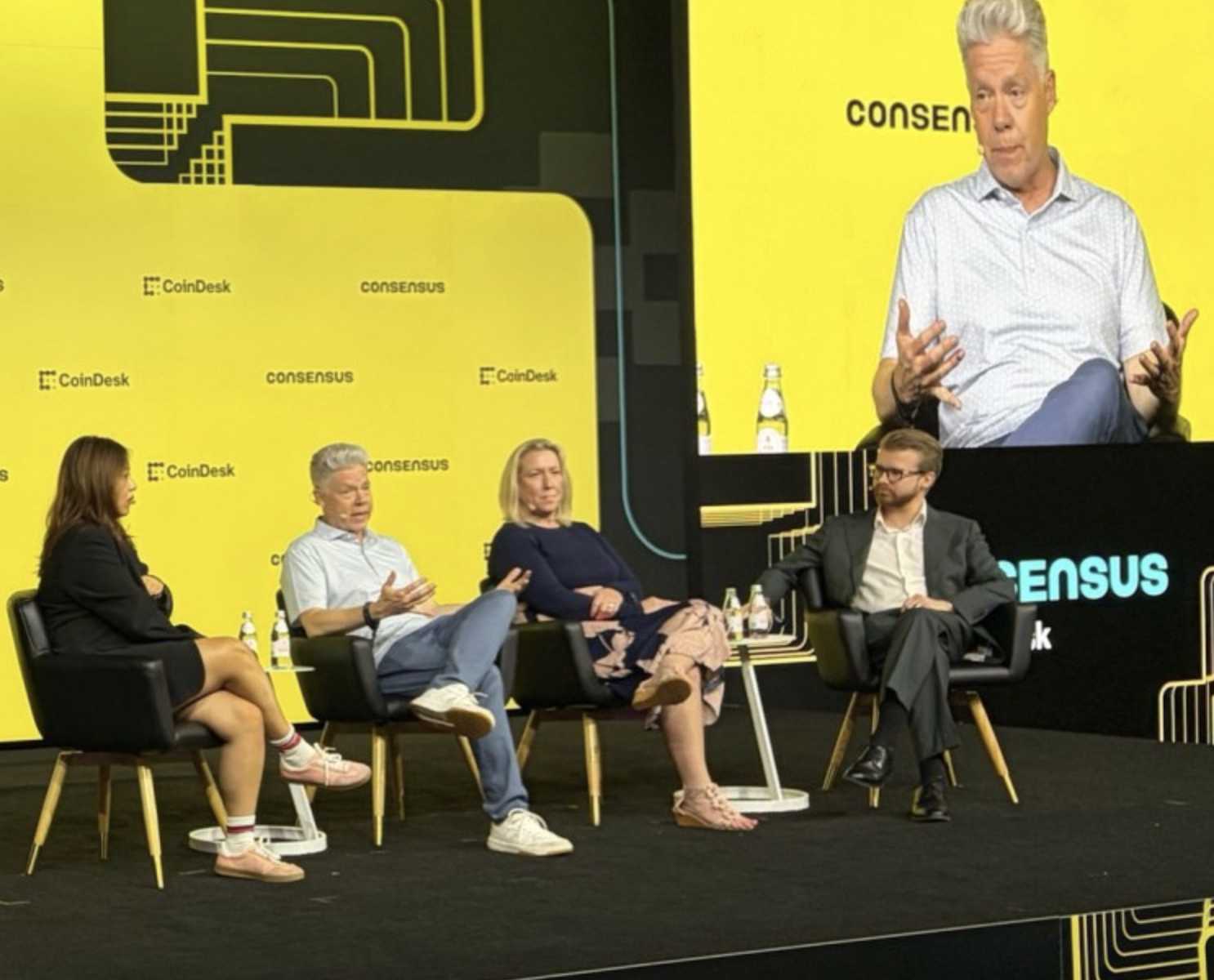
For years, Web3 gaming has struggled with the same contradiction: the technology promised ownership, open economies, and direct participation, but the games themselves rarely reached mainstream players.
At Consensus 2026, Xsolla argued that the next wave of adoption may not come from building entirely new Web3 games at all. Instead, it may come from quietly adding blockchain functionality into the games people already play.
“The real opportunity for Web3 to go mainstream is to tap into the massive ecosystems that already exist,” said Xsolla President Chris Hewish.
He continued, "With more than 3 billion gamers worldwide, gaming already has the scale crypto has spent years trying to build toward. The challenge now is reducing friction enough that users benefit from blockchain technology without needing to think about wallets, seed phrases, or tokens.
From Speculation to Utility
Hewish argued that early Web3 gaming failed because too much of the industry focused on speculative ecosystems instead of great gameplay.
“Forget about trying to build a Web3 game,” he said. “Just add Web3 functionality to existing games.”
That distinction sits at the center of Xsolla’s strategy. According to Patty Wang, Xsolla ZK is not being positioned as another gaming blockchain searching for users. Instead, it acts as an extension of the company’s existing commerce infrastructure, built on top of the developer tools, APIs, payment systems, and distribution channels already used across the gaming industry.
The goal is to make onboarding nearly invisible. Players can sign in with an email or phone number, automatically receive a wallet through Xsolla Backpack and Xsolla ID, and access both fiat and crypto balances inside a familiar interface. Stablecoin rewards, digital items, and NFTs become part of the experience without requiring players to navigate traditional crypto complexity.
For Hewish, the bigger shift is philosophical as much as technical.
“The players are at the bottom of the chain right now,” he said. “They’re just products.” Bringing rewards, identity, and engagement onchain, he argued, allows players to become participants in the value they help create.
Gaming’s $30 Billion Advertising Problem
One of the clearest use cases discussed during the panel was advertising. Lauren Baca described the current user acquisition market as deeply inefficient, with game developers spending roughly $30 billion annually to acquire players while large intermediaries absorb much of the value.
“At the end of the day, every dollar they invest, they get 22 cents,” Baca said.
Xsolla’s approach centers around rewarded advertising and “offer walls,” where users opt into actions in exchange for rewards instead of being interrupted by intrusive banners or forced video ads. The company claims developers can retain closer to 90% of the value through this model while players receive rewards tied to engagement.
Post from @XsollaView the original post on X↗
The opportunity matters because most gamers never spend money directly. The panel cited monetization rates of only 3% to 5% across many free-to-play games, leaving the overwhelming majority of players difficult to monetize through traditional in-game purchases.
Xsolla’s argument is that stablecoin rewards, quests, NFTs, and portable digital identity could change that equation. Hewish used the example of a player completing activities across multiple games and earning enough rewards to pay for a Fortnite Battle Pass — a model where engagement itself becomes a form of currency.
Why Gaming Could Bring the Next Billion Users Onchain
A recurring theme throughout the discussion was friction. Web2 developers have historically resisted Web3 because wallets, seed phrases, and token mechanics created unnecessary complexity for both developers and players.
“When we first went out and said, ‘We’re looking at this Web3 blockchain thing,’ they were allergic to it,” Hewish admitted. But when we shifted the narrative to: here is some cool new functionality that you get in products you’re already using — your payment stack, your advertising stack — they were like, sign us up.”
That shift already appears to be gaining traction. Beckin revealed that Xsolla has onboarded two major mobile game developers under NDA, while Wang confirmed the company is preparing for a broader rollout tied to its XLA token, which functions as a gas token connected to real platform activity rather than speculative demand.
Xsolla’s testnet went live on March 20, with the company now focused on migrating core products onchain, increasing activity, and preparing for mainnet and exchange listings.
The broader thesis, however, extends beyond a single token or platform. Gaming already represents one of the largest digital ecosystems in the world, and historically, games have often been the environment where new technologies first scale.
Hewish closed with a direct prediction: “Gaming will bring the next billion users onchain.”
But perhaps the more important takeaway from the panel was that many of those users may never think of themselves as crypto users at all. They may simply earn rewards, move value between games, spend stablecoins, and participate in digital economies without ever noticing the blockchain underneath.
If Xsolla is right, mainstream Web3 gaming may not arrive through a sudden shift toward “crypto games.” It may arrive quietly — embedded inside the games billions of people already play every day.
Reporting by Lidia Yadlos