

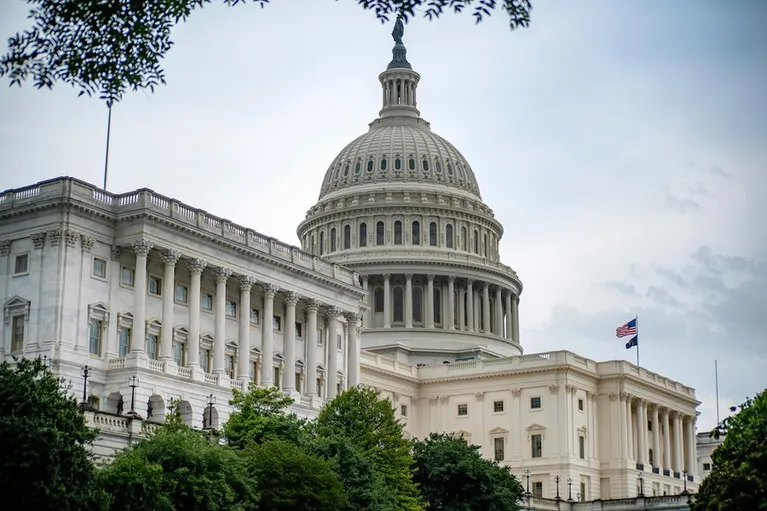
According to Reuters, the Trump administration will host a closed-door meeting next week with senior executives from both the banking and cryptocurrency sectors, aiming to broker a compromise on the long-stalled Senate crypto bill known as the Clarity Act.
—
The meeting, organized by the White House’s crypto council, comes after months of gridlock between banks and crypto firms — particularly around how stablecoins should be treated under federal law.
At the center of the dispute: whether crypto platforms should be allowed to offer interest or rewards on dollar-pegged stablecoins, a feature crypto companies argue is essential for adoption, and banks warn could pull deposits out of the traditional system.
Why the White House Is Stepping In Now
The Senate Banking Committee was expected to advance the Clarity Act earlier this month, but the vote was postponed amid disagreements over stablecoin provisions and internal Republican concerns about vote counts. With the House already passing its version last year, pressure has been building to get a deal done.
The negotiations focus on the Clarity Act, a broader crypto market-structure bill, and should not be confused with the GENIUS Act, which was passed in July 2025 and established a federal framework specifically for stablecoins.
The White House’s involvement underscores a broader shift: crypto market structure is no longer being treated as a niche issue, but as core financial infrastructure policy.
As Summer Mersinger, CEO of the Blockchain Association, told Reuters, the industry sees the meeting as a step toward “lasting market structure legislation” — language that reflects how high the stakes have become.
Banks, meanwhile, are wary. A recent Standard Chartered estimate cited by Reuters suggests stablecoins could pull up to $500 billion in deposits out of U.S. banks by 2028, raising concerns about funding stability in the traditional system.
Post from @RWAwatchlist_View the original post on X↗
Politico: Crypto Policy Meets Political Reality
Coverage from Politico adds another layer to the story: the growing tension between crypto regulation, political power, and conflicts of interest.
Politico reports that World Liberty has applied to launch a federally regulated trust bank — a move that would place a Trump-affiliated stablecoin issuer under direct federal oversight.
The proposal would give the company control over issuing USD1, a dollar-pegged stablecoin backed by billions in customer assets. Supporters argue this would increase transparency and consumer protection.
The Office of the Comptroller of the Currency (OCC), however, has stated its process is “inherently apolitical” and based solely on statutory requirements — a reminder that crypto’s path into the U.S. financial system is now happening inside the regulatory apparatus, not outside it.
Post from @WatcherGuruView the original post on X↗
The Bigger Signal for Markets
Stripped of politics, the takeaway is simple: Washington is no longer debating whether to regulate crypto. The debate is now about how, who benefits, and what rules apply at scale.
Stablecoins sit at the center because they blur the line between banking, payments, and onchain finance. If allowed to offer yield-like incentives, they compete directly with deposits. If restricted too tightly, they risk losing their utility advantage.
That’s why this meeting matters — not just for lawmakers, but for payments, DeFi, tokenized dollars, and AI-driven finance.
An always-on economy — where money moves globally, instantly, and programmatically — cannot function on banking hours or regional rails. Stablecoins already operate as always-on money. Policy is now racing to catch up.
Editor's Note
Banks are right to be worried. If stablecoins can offer yield, capital will move — potentially billions of dollars — from traditional banks into onchain dollars like USDC, USDT, and USD1. That would be disruptive.
But disruption doesn’t equal damage.
Much of the banking sector has been surviving, not thriving, for years — supported by backstops, emergency programs, and federal intervention. Crypto exposes that reality by offering faster, more transparent, 24/7 financial rails.
Post from @CryptoHayesView the original post on X↗
This is why the moment feels different.
Unlike past administrations, the Trump administration appears willing to embrace drastic change — even if it’s disruptive. Crypto is a once-in-a-generation opportunity to reset the financial infrastructure.
Even at Davos 2026, economists weren’t debating if the fiat system is under strain — they were openly discussing what comes next.
A compromise is likely — Trump is a negotiator afterall — and stablecoins may just emerge with the ability to offer rewards.
From Blockster’s view, the issue isn’t banks losing. It’s whether they’re willing to compete.
Competition forces better products, better yields, and real modernization. That’s not a threat to the system — it’s how systems improve.
Reporting by Lidia Yadlos