
 Interviewed by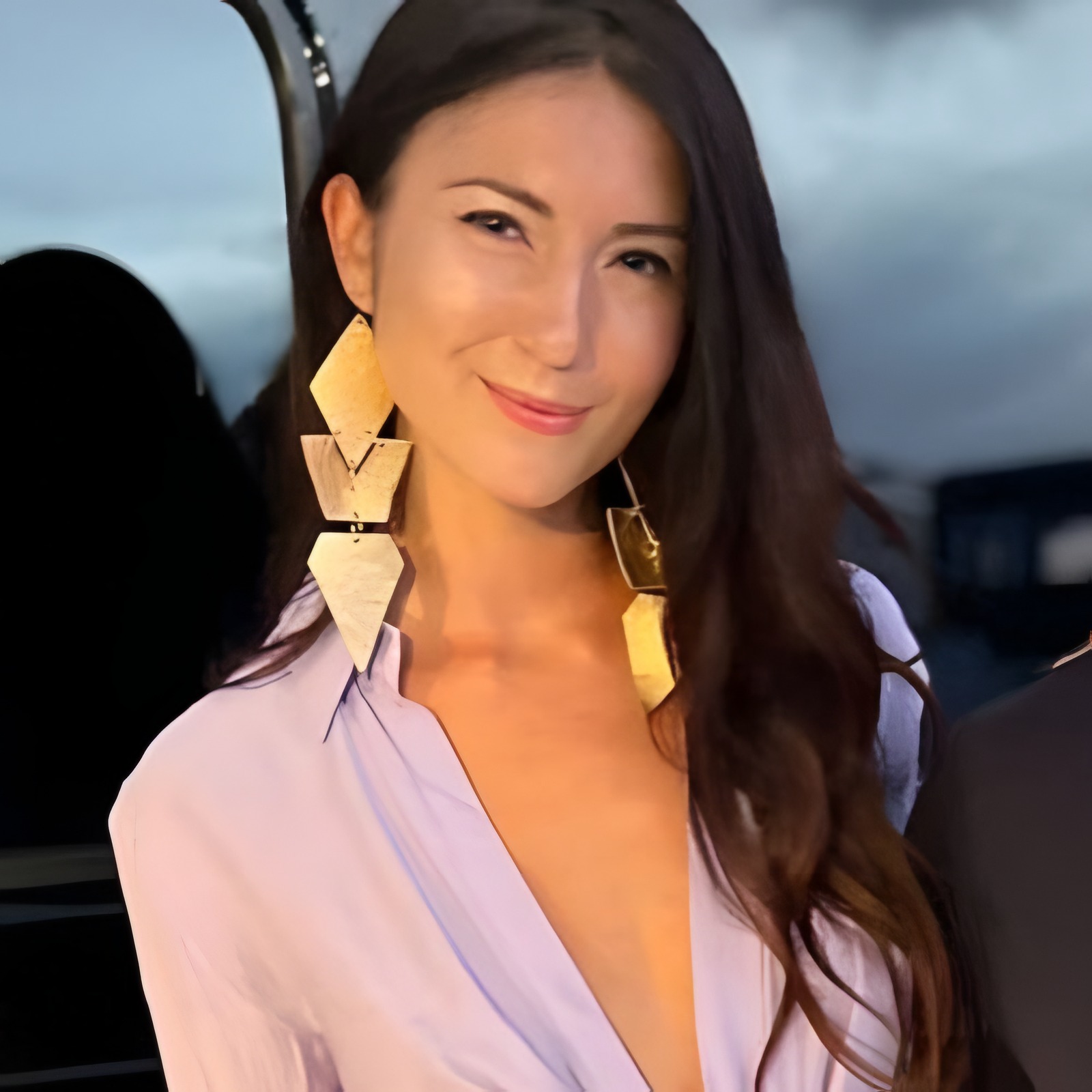
For most of crypto's history, adoption has been treated as an infrastructure problem.
Build a faster blockchain. Create a better wallet. Reduce fees. Improve onboarding.
Yet after more than a decade of innovation, the industry's biggest question remains remarkably simple: how do you reach everyday users?
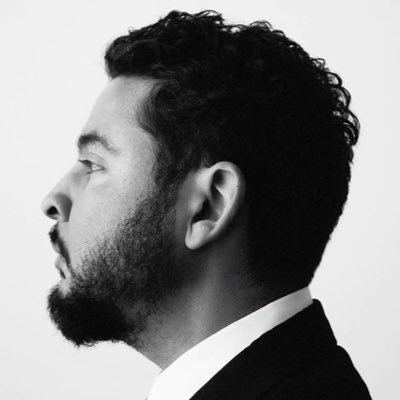
During an interview hosted by Eric Spivak, founder of New Friendship Tech and contributor to Blockster, at Consensus 2026 in Miami, TON Foundation Head of Growth Martin Masser believes the answer may already exist.
"We all use Telegram," Masser said.
The statement sounds almost too obvious. But that's precisely the point.
While many crypto projects continue trying to attract users into new applications, Telegram already sits at the center of global crypto culture. Traders, founders, investors, developers, communities, and entire ecosystems communicate there every day.
More importantly, Telegram is no longer just a messaging platform.
The app now has more than 1 billion monthly active users globally and has evolved into one of the largest independent technology platforms in the world. Telegram has also reportedly explored valuations exceeding $30 billion as it continues expanding its business and ecosystem.
For TON, that scale represents something few blockchain networks possess: distribution.
And recently, that story became even more significant.
Earlier this month, Telegram founder Pavel Durov announced that Telegram would replace the TON Foundation as the primary driving force behind The Open Network and become the blockchain's largest validator, marking the company's most direct involvement with TON since the network's creation.
Post from @MSBIntelView the original post on X↗
The announcement sent Toncoin sharply higher and reignited investor interest across the ecosystem.
Against that backdrop, Masser's message at Consensus was straightforward. The future of crypto adoption may not come from convincing people to use another blockchain. It may come from meeting them where they already are.
The Wallet Is Already There
One of the biggest misconceptions surrounding Telegram, according to Masser, is that many users still don't realize crypto functionality already exists inside the app.
"I can just send you USDT or TON very easily just over one message," he said.
The simplicity matters. Most people still move money through a fragmented collection of payment applications depending on geography and circumstance. Venmo in one country. Cash App in another. Bank transfers elsewhere.
Crypto promised borderless payments years ago. Telegram allows users to experience that promise without leaving the conversation.
"The things that people don't actually fully know is there's a wallet directly in Telegram," Masser explained. "You can go directly in Telegram. There's a wallet straight away there."
The significance isn't necessarily that Telegram has a wallet. It's that the wallet exists inside a platform people are already using.
For years, crypto onboarding has required users to learn new interfaces, manage seed phrases, and navigate unfamiliar applications. Telegram removes much of that friction by embedding those capabilities directly into an existing user experience.
That distinction could prove critical as the industry pushes toward mainstream adoption.
Post from @s0meone_u_knowView the original post on X↗
Distribution Is the Product
As the conversation shifted toward growth, Masser repeatedly returned to a theme that surfaced across Consensus this year.
Technology is no longer the primary bottleneck. Distribution is.
The crypto industry has built exchanges, lending markets, stablecoins, tokenization platforms, AI agent frameworks, and increasingly sophisticated financial infrastructure.
The challenge is getting people to use them. For Masser, Telegram's greatest advantage isn't the blockchain. It's the communities.
"Imagine you had this killer Mini App," he said. "You put it in one of your communities."
That is where Telegram becomes fundamentally different from most blockchain ecosystems. Applications can be deployed directly into communities that already exist.
Users can discover products through conversations, referrals, and social interactions rather than through expensive marketing funnels.
"How quick can you get that out?" Masser asked during the interview.
The answer, he suggested, is almost instantly.
"If you build something that's really good, really exciting, people use it."
That observation may sound simple, but it cuts to one of crypto's recurring weaknesses. Too many products are built around token mechanics rather than user demand.
The products that win are usually the ones people actually want first. The blockchain comes second.
Think WeChat—But Crypto Native
The comparison Masser returned to repeatedly wasn't another blockchain. It was WeChat.
"Think of WeChat, but then the next level of what WeChat can do."
The comparison is increasingly relevant.
Across Asia, super-app ecosystems have demonstrated how messaging, commerce, payments, and services can coexist inside a single platform.
Telegram appears to be moving in a similar direction.
Users can communicate, manage communities, send payments, access wallets, interact with Mini Apps, and increasingly connect to digital services without leaving the application.
TON becomes the infrastructure layer powering those experiences.
The model has already begun producing measurable growth.
TON currently supports millions of daily transactions, more than 160 million on-chain accounts, approximately 340 validators, and over $1.4 billion in authorized USDT issuance on the network.
The blockchain has increasingly positioned itself as a consumer-focused ecosystem built around payments, Mini Apps, and Telegram-native experiences.
Very few blockchain ecosystems can claim direct access to a platform with over a billion users. Even fewer have that platform's founder actively taking control of the network's future.
Post from @durovView the original post on X↗
Consensus Is Looking Different
The discussion eventually broadened beyond Telegram and TON to the mood surrounding Consensus itself.
One trend stood out. Traditional companies are no longer watching from the sidelines.
"It's amazing how many traditional companies now that I'm seeing," Masser said.
That observation mirrored conversations taking place throughout Miami.
From stablecoins and tokenized assets to AI infrastructure and digital identity, large enterprises increasingly appear focused on implementation rather than exploration.
Many are no longer asking whether blockchain matters.
They're asking how quickly they need to move.
Masser believes part of that momentum comes from growing regulatory clarity and increasing confidence in the sector.
But another force is emerging. Fear of being left behind.
"If this company and this company and this company are doing it," he said, "we now need to start doing it."
That sentiment was visible across Consensus.
The skepticism that once defined institutional conversations around crypto has largely given way to something more practical.
Participation.
A Billion-User Opportunity
For years, TON's biggest selling point was its technology. Today, its biggest advantage may be distribution.
Most blockchains spend years trying to attract users. TON begins with access to a platform used by more than one billion people every month.
That doesn't guarantee success. But it creates an opportunity few projects in crypto have ever possessed.
As Telegram deepens its involvement with the network and developers continue building Mini Apps, payments, wallets, and consumer experiences, the question becomes increasingly difficult to ignore.
Post from @durovView the original post on X↗
What happens if even a small percentage of Telegram's billion users begin interacting with crypto without ever leaving the app?
If Masser is right, the next chapter of crypto adoption won't be won by the blockchain with the best technology.
It will be won by the ecosystem with the best distribution.
Reporting by Lidia Yadlos


