 Interviewed by

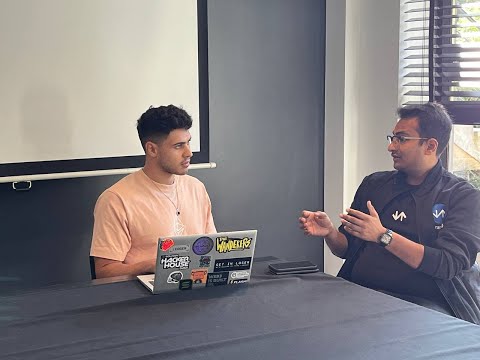
At Consensus 2026, Transak Co-Founder and CEO Sami Start and VP, Partnerships and Strategy, Andy Werner described a future for crypto that looks very different from the industry’s original vision.
Not louder. Not more speculative. But almost invisible.
For years, crypto companies tried convincing consumers to actively "use crypto" — download wallets, manage seed phrases, and navigate increasingly complex ecosystems. But even inside the industry, most people still default to traditional financial systems when given the choice.
During the conversation with Blockster's host Eric Spivak, a recurring theme emerged: most consumers don't care how payments move.
Few people care which banking network processes a debit card transaction, just as most internet users never think about the protocols powering email or web browsing.
That's increasingly how Transak views blockchain.
"Our take is that blockchain and stablecoins are backend infrastructure technology," Start said. "Not really front-end consumer technology."
For Transak, the goal isn't to convince consumers to use crypto. It's to make moving money faster, cheaper, and available around the clock through stablecoin rails that work quietly in the background.
That idea sits at the center of the company's broader vision: the next wave of crypto adoption may happen quietly, embedded underneath payroll systems, remittance apps, neobanks, and payment infrastructure that most users never even think about.
Crypto's Real Killer App May Be Convenience
For years, crypto promised consumers a completely new financial system built around wallets, self-custody, and decentralized applications.
Most people never actually wanted wallets, seed phrases, or blockchain jargon.
What they wanted was money that moved faster, settled instantly, cost less to send, and worked globally without friction.
That shift is increasingly shaping how stablecoins are being integrated across fintech and payments. Rather than pushing users deeper into crypto-native experiences, companies are embedding blockchain infrastructure quietly underneath products people already use.
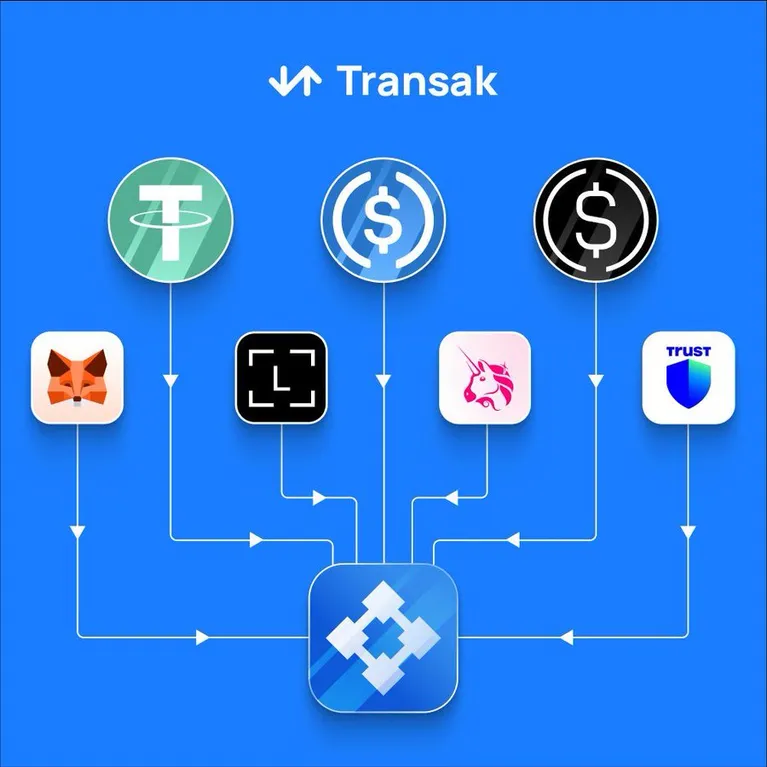
That idea already appears to be spreading quickly. Transak now powers onboarding and payment rails for platforms including MetaMask, Phantom, Ledger, Trust Wallet, and BitPay — companies increasingly behaving less like crypto startups and more like financial platforms.
The company says its infrastructure now supports more than 450 applications across 60+ countries.
"Boring is good in financial services," said Andy Werner. "It might not be exciting, but stablecoins are being adopted very rapidly under the hood."
That perspective increasingly reflects where the broader industry is moving — away from speculation and toward infrastructure most users may never even notice.
Stablecoins Are Starting to Resemble Financial Infrastructure
One of the more interesting points raised during the conversation was how stablecoins may evolve over time.
Rather than a handful of dominant issuers, Sami believes many fintech platforms could eventually launch their own stablecoin systems.
"In a way, every fintech already has its own digital money," he explained. "It just lives inside a database."
The difference is that those balances typically exist inside closed systems. Blockchain allows them to move across interoperable networks instead.
Rather than replacing money, stablecoins may ultimately make existing digital money portable.
If every platform launches its own stablecoin ecosystem, users could eventually find themselves navigating competing digital dollars, isolated liquidity pools, and disconnected financial networks. Sami described the future less as replacing traditional banking outright and more as rebuilding the settlement infrastructure underneath it.
Andy suggested the market may eventually split into two layers: dominant settlement rails used broadly across finance alongside branded stablecoins functioning more like ecosystem currencies or loyalty systems.
A retailer, for example, could eventually issue branded digital dollars directly inside its app — offering discounts, rewards, or yield incentives while reducing payment processing costs behind the scenes.
"It sounds futuristic," Andy said, "but economically it makes a lot of sense."
In Much of the World, Stablecoins Already Matter
The conversation also highlighted how differently stablecoins are viewed outside the United States.
In countries dealing with inflation or unstable banking systems, Andy said stablecoins already function as practical financial tools rather than speculative assets.
"In many parts of the world, people don't need to be told why stablecoins matter," he explained, pointing to markets like Argentina, Turkey, and Nigeria.
That demand is helping drive Transak's expansion across Latin America, the Middle East, India, Canada, Australia, and parts of Asia. The company says its infrastructure now operates across more than 60 countries and over 450 integrated applications globally.
"We go very slow and steady," Andy said. "That's the hard work needed to make this sustainable."
Crypto Is Quietly Starting to Look Like Banking
One of the more revealing moments came when Sami described how crypto wallets are evolving into broader financial platforms.
"MetaMask is now competing with Coinbase," he said. "Which is competing with JP Morgan."
A few years ago, that comparison might have sounded far-fetched. Today, as wallets expand into payments, savings, swaps, remittances, and onboarding, the lines between crypto platforms and traditional financial institutions are becoming increasingly blurred.
Wallets are becoming financial interfaces capable of handling payments, savings, swaps, remittances, and onboarding — while traditional financial companies increasingly adopt blockchain rails to stay competitive on speed and cost.
But according to Sami, moving money itself is no longer the hardest part.
"The money movement is maybe 20% of what we do," he said. "The other 80% is authentication, KYC, risk, and compliance."
And despite crypto's anti-establishment roots, Transak's leadership framed regulation less as friction and more as infrastructure.
"If you've been around long enough, you know what it was like before there was regulation," Andy said. "Compliance is actually a huge unblock."
That shift may ultimately define crypto's next chapter. The industry's loudest years were built around speculation and disruption. Its next phase may look very different.
If Transak is right, crypto's biggest success won't be convincing people to use blockchain. It'll be making sure they never have to think about it at all.
Reporting by Lidia Yadlos