
Gold has served as a store of value for more than 5,000 years. But in 2026, the world’s oldest financial asset is beginning a new transformation—moving from physical vaults into digital markets.
—
Today, the global gold market is estimated to be worth around $35 trillion, according to industry estimates. While the metal has historically been tied to physical storage and slow-moving settlement systems, new digital infrastructure is reshaping how gold is traded, owned, and used in financial markets.
At the center of this shift is a simple reality: the total supply of gold on Earth is both finite and highly concentrated.
A 22-Meter Cube of Wealth
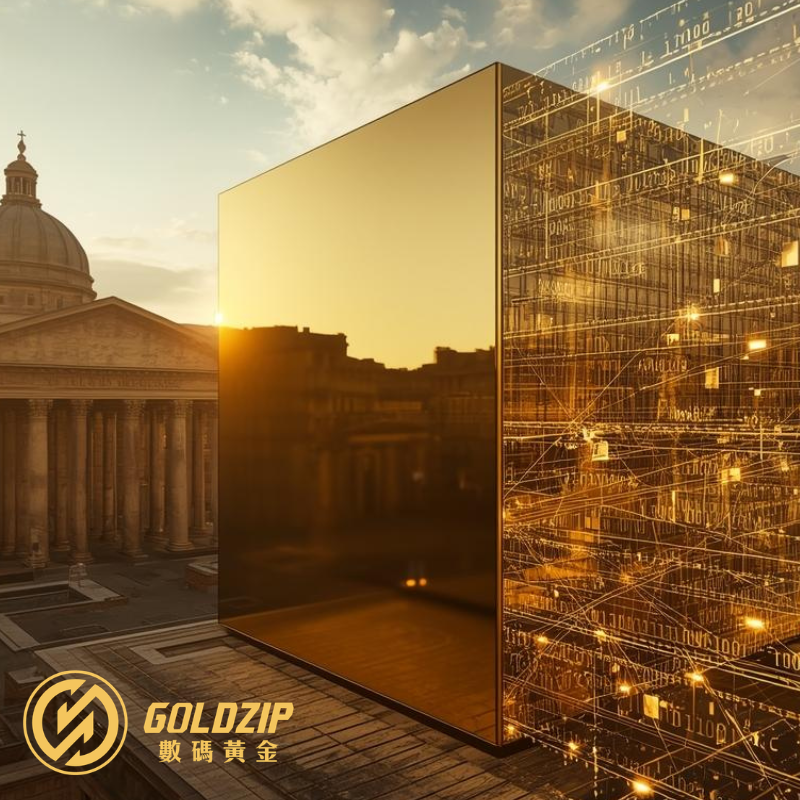
According to the World Gold Council (WGC), humanity has mined approximately 216,265 metric tons of gold throughout history.
If all of that gold were melted down and placed into a single block, it would form a cube measuring just 22 meters on each side—roughly the size of a small building. That cube represents the entire above-ground supply of one of the world’s most valuable assets.
Post from @goldzipxgzView the original post on X↗
How Global Gold Is Held
The global gold inventory is distributed across several major categories:
Jewelry — 45% (~97,000 tonnes)
Jewelry remains the largest store of privately held gold worldwide.Private Investment — 22% (~48,600 tonnes)
This includes gold bars, coins, and gold-backed exchange-traded funds.Central Bank Reserves — 17% (~37,700 tonnes)
Governments hold gold as a strategic reserve asset.Other Uses — 15% (~32,700 tonnes)
Industrial applications, technology, and other uses account for the remainder.
While this 22-meter cube represents the gold already mined, the amount left underground is shrinking. The U.S. Geological Survey (USGS) estimates that only about 64,000 metric tons of economically recoverable gold reserves remain globally.
The Geography of Gold
Gold production and reserves are concentrated in a handful of countries.
According to the USGS:
Russia and Australia hold the largest estimated reserves of unmined gold, with about 12,000 tonnes each.
China leads annual production with roughly 380 tonnes per year.
Russia follows with around 330 tonnes, while Australia produces roughly 290 tonnes annually.
At current extraction rates, analysts estimate that proven reserves could be depleted within roughly two decades, highlighting the long-term scarcity of the asset.
The Digital Shift
While the physical supply of gold remains limited, the way it is traded is changing rapidly. A growing number of financial platforms are beginning to tokenize gold, representing physical bullion as digital tokens on blockchain networks. These tokens remain backed by real gold stored in vaults but can be traded instantly on digital markets.
The shift is partly driven by generational wealth changes. The World Gold Council estimates that more than $100 trillion in wealth will transfer to younger generations over the next two decades, many of whom are more comfortable with digital financial assets.
Post from @goldzipxgzView the original post on X↗
Why Tokenization Matters
Tokenized gold attempts to solve a long-standing challenge in gold markets: the trade-off between security and liquidity. Physical gold is secure but difficult to move quickly. Digital assets are highly liquid but often lack tangible backing.
By combining physical reserves with blockchain infrastructure, tokenized gold can offer both. Potential advantages include:
Instant global trading without physical transport
24/7 settlement through blockchain networks
Integration with decentralized finance (DeFi) systems
Fractional ownership, allowing smaller investors to access gold markets
In effect, tokenization transforms gold from a static asset stored in vaults into a programmable financial instrument that can move through global markets at digital speed.
The Next Phase of Gold Markets
The math behind gold remains simple: a 22-meter cube represents the entire supply humanity has ever mined, while the amount left underground continues to shrink.
But the infrastructure surrounding gold is evolving quickly.
As digital markets expand and financial systems increasingly operate on blockchain-based rails, the world’s oldest store of value is beginning to take on a new form—one that blends ancient scarcity with modern financial technology.
Reporting by Lidia Yadlos