

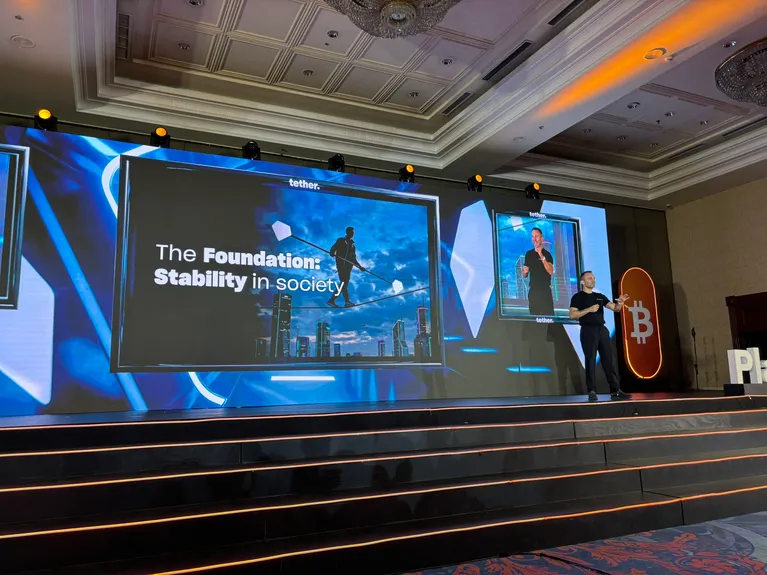
This week, Tether announced the release of Mining OS (MOS), an open-source Bitcoin mining management platform designed to replace the proprietary, vendor-locked systems that dominate the industry today. The software is fully open-source and built to scale from home miners to industrial operations.
—
At its core, MOS is a modular framework that lets miners manage hashrate, energy usage, hardware health, and site infrastructure from a single operational layer. Instead of relying on fragmented dashboards and third-party services, operators can monitor mining pools, cooling systems, and power distribution units in real time.
Tether has been blunt about its motivation: the existing mining software stack looks outdated compared to other industrial sectors — and too often traps operators inside closed ecosystems.
By open-sourcing MOS, Tether is betting that standardized, transparent tooling lowers barriers to entry and makes Bitcoin mining more competitive and resilient.
Post from @paoloardoinoView the original post on X↗
Built for Scale — and for Independence
MOS is designed around a modular, peer-to-peer architecture, meaning miners don’t need centralized services to coordinate operations. The platform supports custom analytics dashboards, integrations, and automation workflows, allowing developers and operators to tailor the system to their specific needs.
Mining OS is built to make Bitcoin mining infrastructure more open, modular, and accessible. It can scale from individual machines to industrial-grade sites across multiple geographies — without locking operators into third-party platforms.
Paolo Ardoino, CEO of Tether
The software is hardware-agnostic and released under an Apache 2.0 license, signaling that Tether expects — and wants — outside contributors to help shape its evolution. Alongside MOS, Tether also announced a Mining SDK that will be developed further with the open-source community.
Post from @MrIPalomeraView the original post on X↗
Why This Matters for Bitcoin — and Tether
The launch comes as Bitcoin mining continues to professionalize, even as margins tighten and energy efficiency becomes critical. Open tooling that improves visibility into power consumption and infrastructure health isn’t just a developer convenience — it’s an economic edge.
For Tether, MOS fits into a broader diversification strategy.
After reporting over $10 billion in net profit in 2025, largely driven by reserve income, the company has been steadily expanding into mining, payments, and tokenized real-world assets — including gold and other commodities.
It’s a familiar pattern in crypto right now. As seen recently with public companies pivoting into infrastructure plays — like the market reaction when Opera announced deeper crypto integrations earlier this year — investors are rewarding firms that build foundational rails, not just consumer-facing products.
Post from @tetherView the original post on X↗
From Stablecoins to System Software
MOS reinforces a larger theme: stablecoin issuers are no longer content to sit at the edge of the ecosystem.
By open-sourcing mining infrastructure, Tether is positioning itself closer to Bitcoin’s base layer — influencing not just liquidity and payments, but the operational mechanics of network security Itself
Reporting by Lidia Yadlos