

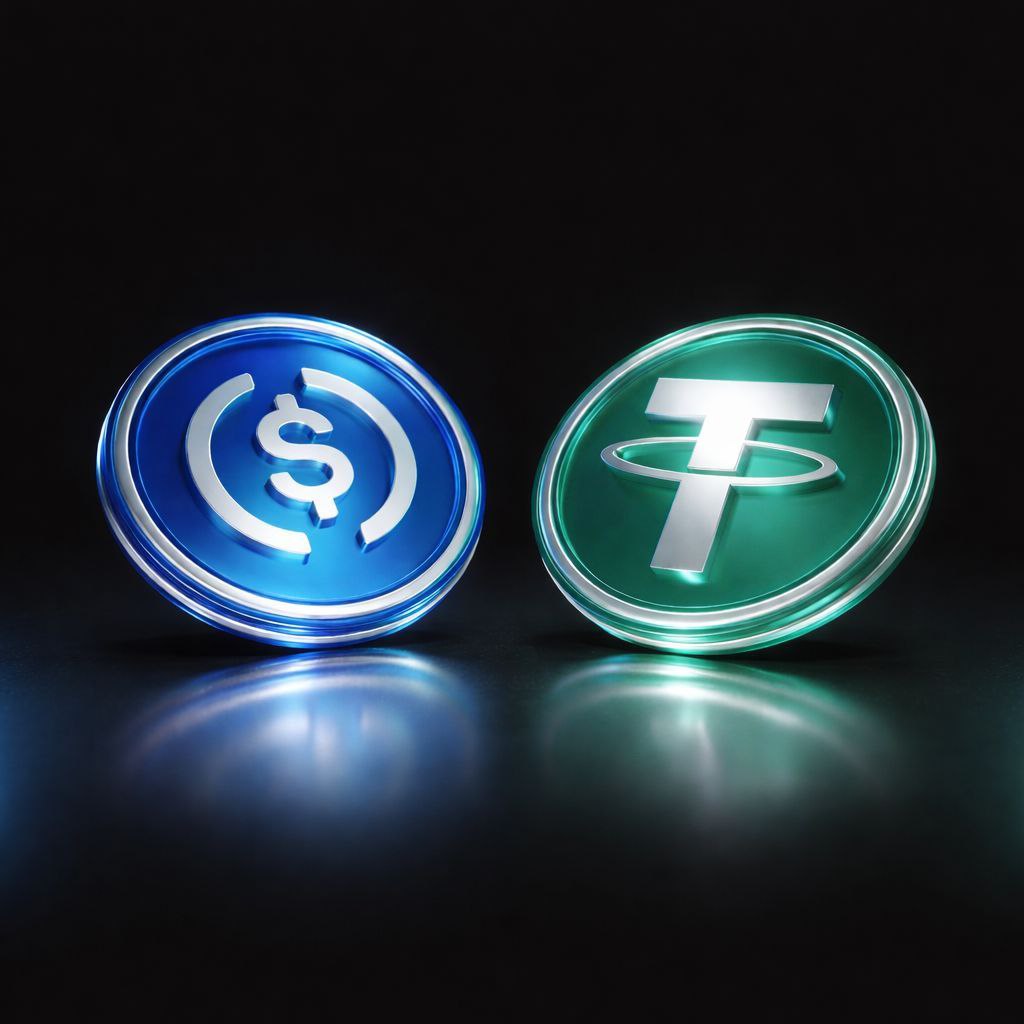
Every time Bitcoin stumbles, the same question resurfaces: where does the capital go? In March 2026, the answer is increasingly clear — it's flowing into stablecoins. Not back to bank accounts, not into treasuries, not into gold ETFs. Into digital dollars. And that shift tells us something profound about how crypto markets have matured.
—
According to CoinDesk's March 19 market briefing, capital is actively rotating out of Bitcoin and into digital dollar instruments as BTC experiences persistent volatility and price weakness. The framing from CoinDesk — "Bitcoin wilts" — is dramatic but not wrong. What's more interesting is the destination of that capital.
The Stablecoin Safety Net Is Real
Let's talk about what's actually happening here. During previous crypto downturns — 2018, 2022 — spooked investors cashed out to fiat. They sold their BTC, withdrew to Coinbase or Binance, and wired dollars back to their bank accounts. The onramp was a two-way street, and when fear hit, capital left the ecosystem entirely.
That pattern is breaking. In 2026, when Bitcoin gets choppy, a growing share of capital doesn't leave crypto at all. It rotates into USDT, USDC, DAI, and a growing roster of yield-bearing stablecoin products. The money stays onchain. It stays in DeFi wallets. It stays composable, deployable, and ready to rotate back into risk assets when conditions change.
This is a fundamentally different market structure than what we had even two years ago. The stablecoin market cap has ballooned past $200 billion across major chains, and that liquidity pool acts as a massive shock absorber for the entire crypto ecosystem. When BTC dips 8-10%, that capital isn't evaporating — it's parking in digital dollars and often earning yield while it waits.
Post from @CryptoTice_View the original post on X↗
Why This Matters More Than Bitcoin's Price
Mainstream financial press tends to frame Bitcoin weakness as a crypto failure story. "Bitcoin wilts" reads like a eulogy. But the real story is the infrastructure underneath. The fact that hundreds of billions of dollars can seamlessly rotate between volatile assets and stable assets without ever touching a bank is an extraordinary achievement of decentralized finance.
Think about what this means from a sound money perspective. Investors now have a parallel financial system where they can manage risk, preserve capital, and earn yield — all without permission from a bank, a broker, or a regulator. The stablecoin layer is the plumbing that makes this possible, and every cycle it gets stronger.
The real measure of crypto's maturity isn't whether Bitcoin goes up forever. It's whether the ecosystem can absorb volatility without capital fleeing back to TradFi. In 2026, it can.
Here's the yield farmer's view: stablecoin dominance during drawdowns is the healthiest possible signal. It means the DeFi lending markets stay liquid. It means DEX pools don't dry up. It means protocols that depend on stablecoin deposits — Aave, Morpho, Maker, Ethena — continue functioning even when BTC is having a rough week. Liquidity begets liquidity, and stablecoins are the engine.
The Numbers Tell the Story
Consider the rotation mechanics. When capital moves from BTC to stablecoins onchain, several things happen simultaneously:
Stablecoin supply on DEXs increases, deepening liquidity pools and tightening spreads for all traders.
DeFi lending rates adjust — more stablecoin supply means lower borrowing costs, which can actually stimulate leveraged activity in other assets.
Onchain velocity stays high — the capital is still moving, still productive, still generating fees for protocols and validators.
Fiat offramp pressure decreases — exchanges see fewer withdrawals, which reduces sell pressure on the broader market.
This is a self-reinforcing cycle. The more robust the stablecoin ecosystem becomes, the less reason anyone has to leave crypto during a downturn. And the less capital that leaves, the faster markets recover. We've seen this play out repeatedly since late 2024 — Bitcoin corrections that would have taken months to recover from in 2022 now resolve in weeks, partly because the capital never actually left.
Post from @coinbureauView the original post on X↗
The Regulatory Elephant
Of course, this growing stablecoin dominance hasn't gone unnoticed by regulators. The same digital dollars that give crypto investors a permissionless safety net are exactly what central banks and treasury departments want to control. Stablecoin legislation continues to wind through Congress, and the EU's MiCA framework is already imposing reserve and licensing requirements on issuers operating in Europe.
The irony is thick: the feature that makes crypto less risky for everyday users — the ability to park in stable, dollar-denominated assets without leaving the ecosystem — is precisely what regulators frame as a systemic threat.
They're not worried about you losing money on Bitcoin. They're worried about you not needing their banking system to preserve your wealth.
This is where decentralized stablecoins like DAI and newer overcollateralized models become critical. If centralized stablecoin issuers face regulatory chokepoints, the decentralized alternatives are the backstop. They're less capital-efficient, sure. But they can't be frozen, they can't be debanked, and they don't need a license from anyone to exist.
Post from @coinbureauView the original post on X↗
What Smart Capital Is Doing Right Now
The rotation into stablecoins during Bitcoin weakness isn't panic — it's strategy. Sophisticated DeFi users are parking in stablecoins, deploying into lending protocols for 4-7% APY, and keeping dry powder ready for the next leg. This is how mature markets behave. You don't sell your house and move to a cave when stocks dip; you rebalance.
The difference is that in TradFi, rebalancing means calling your broker or logging into Schwab. In DeFi, it means swapping on Uniswap, depositing into Aave, or minting a yield position on Pendle — all in under a minute, all without asking permission, all at a fraction of the cost. The infrastructure is here. The capital is using it.
Bitcoin's volatility isn't a crisis. It's the weather. Stablecoins are the roof. And in 2026, that roof is holding up better than ever.
Reporting by Blockster Newsdesk