

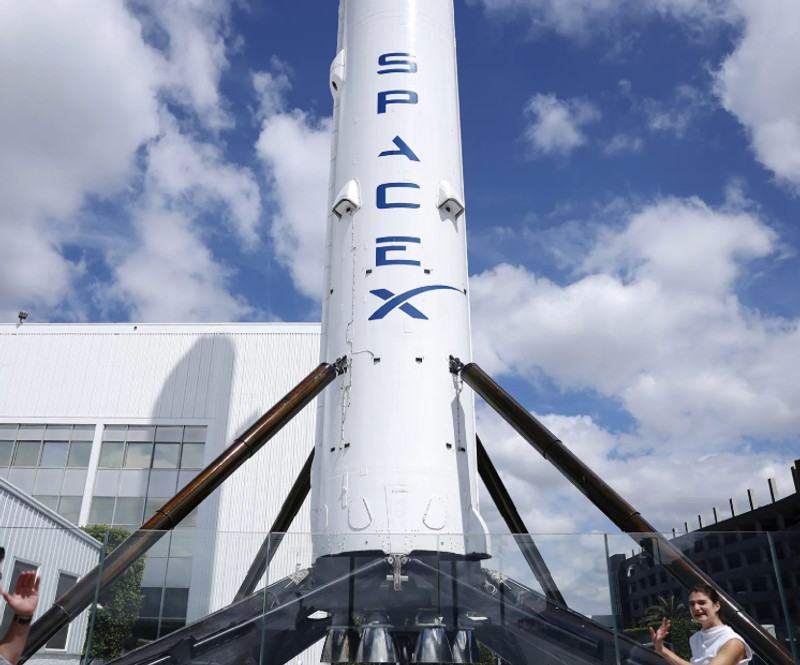
SpaceX is set to begin trading on Nasdaq today under the ticker SPCX after pricing its record-breaking IPO at $135 per share on Thursday evening.
The offering values Elon Musk's company at approximately $1.77 trillion and raises $75 billion, making it the largest public offering in market history. Investor demand has reportedly exceeded available supply, setting the stage for what could be one of the most closely watched and volatile market debuts of the year.
Yet despite the excitement surrounding the listing, Wall Street remains sharply divided on what SpaceX is actually worth.
Some analysts believe the company is uniquely positioned to become one of the dominant infrastructure providers of the AI era, pointing to its rapidly growing data center business and ambitious expansion plans. Others argue investors are paying a massive premium for future projects that may never become commercially viable.
The debate highlights a broader question facing markets today: how should investors value companies building the infrastructure behind artificial intelligence?
Loading tweet...
View Tweet
A Record-Breaking Moment for Public Markets
SpaceX's debut arrives at a pivotal moment for the IPO market.
After several years of subdued activity, investor appetite for high-growth technology companies appears to be returning. The listing follows reports that AI leaders Anthropic and OpenAI have confidentially filed for public offerings, fueling expectations of a new wave of AI-driven IPOs.
Demand for SpaceX shares has reportedly exceeded available supply, making the offering oversubscribed before trading has even begun.
That level of demand could contribute to significant volatility once shares start changing hands on Friday.
For many investors, SpaceX represents more than another public company. It is increasingly being viewed as a proxy for several of the biggest technology trends of the decade, including artificial intelligence, advanced computing infrastructure, robotics, and space technology.
The Bull Case: SpaceX as an AI Infrastructure Giant
Few analysts are more optimistic than Wedbush's Dan Ives.
Long known as one of Wall Street's biggest Tesla supporters, Ives believes investors may still be underestimating SpaceX's position within the rapidly expanding AI economy.
While the company is best known for rockets and space exploration, bulls increasingly point to its AI infrastructure ambitions.
Central to that thesis is Colossus, SpaceX's massive data center facility in Memphis, Tennessee. The site reportedly operates more than 220,000 Nvidia GPUs and has quickly become one of the largest AI compute facilities in the world.