
The largest IPO in history was supposed to be a breakthrough moment for tokenized stocks.
Instead, it became another reminder that blockchain technology still can't solve one of Wall Street's biggest bottlenecks: obtaining the actual shares.
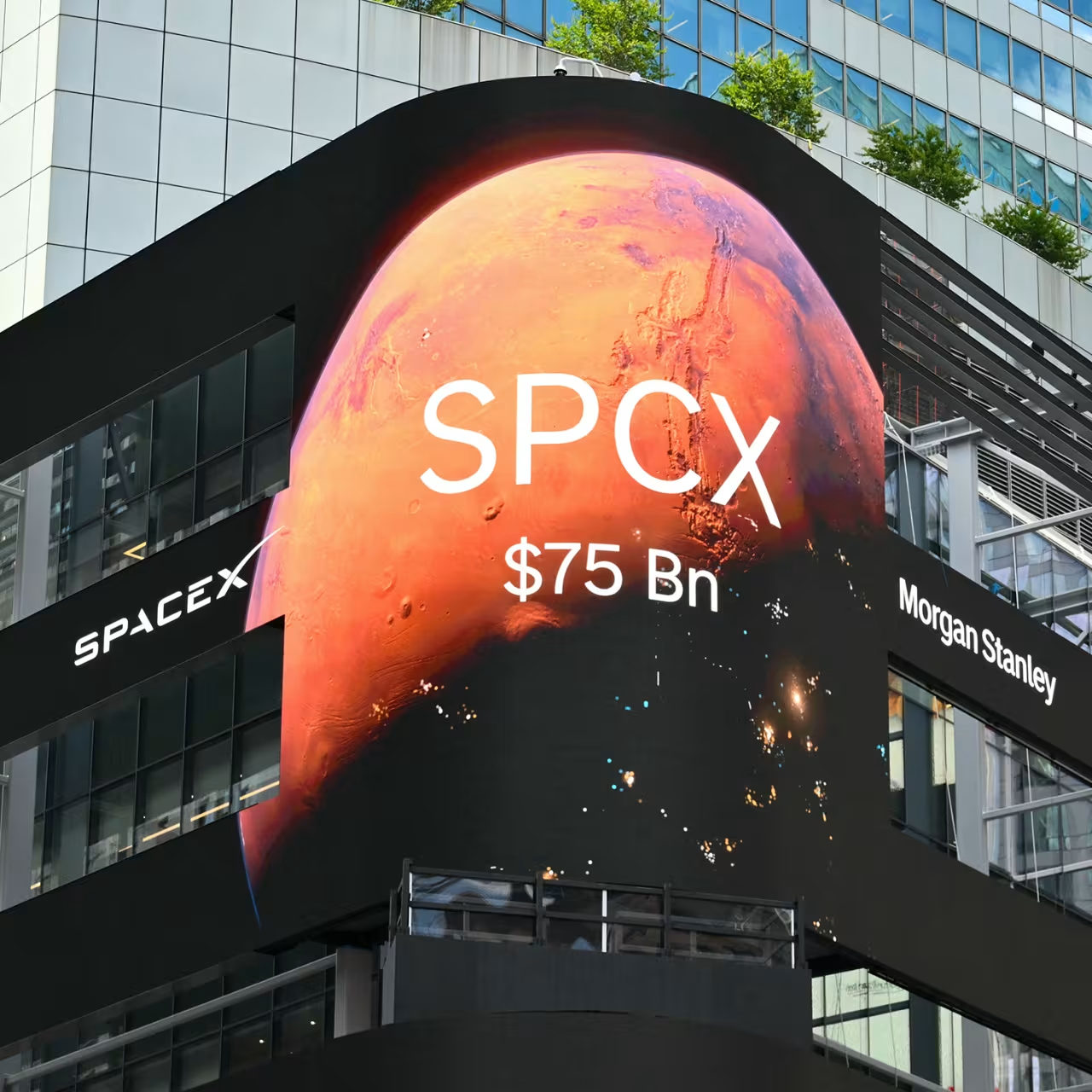
Last week, SpaceX debuted on Nasdaq in a record-breaking $75 billion public offering, pushing the company's valuation above $2 trillion and generating enormous demand from both traditional investors and crypto traders.
According to reports, pre-IPO trading activity surrounding SpaceX became one of the largest crypto-equity crossover events ever seen, with more than $1.3 billion in perpetual futures volume recorded on Hyperliquid and tokenized versions of SpaceX stock launching across multiple crypto platforms.
But while crypto exchanges marketed tokenized SpaceX exposure to users around the world, thousands of investors ultimately walked away with refunds instead of shares.
Post from @coinbureauView the original post on X↗
Over $1 Billion Chased SpaceX
The scale of demand was staggering.
According to reporting from Protos, Binance alone attracted nearly 28,000 wallets that collectively pledged approximately $557 million in USDC to participate in tokenized SpaceX offerings. Across Binance, Bybit, Bitget Wallet and other platforms, total commitments reportedly exceeded $1 billion.
Yet none of those participants received actual SpaceX allocations.
As the IPO approached, multiple exchanges were forced to cancel their tokenized campaigns after underlying shares failed to materialize. Users were refunded and, in some cases, offered promotional rewards or airdrops instead.
The issue wasn't blockchain infrastructure. It was the same problem that has haunted tokenized equities for years: sourcing the underlying shares.
Bybit acknowledged the challenge directly, citing an inability by its underlying provider to deliver the required assets. Similar explanations emerged across the industry as tokenized offerings were quietly rolled back.
The Blockchain Worked. The Market Didn't.
For years, tokenization advocates have argued that blockchain technology could modernize equity markets by enabling global, 24/7 trading without traditional brokerage restrictions.
The theory is straightforward.
A tokenized stock should allow investors anywhere in the world to gain exposure to public companies while benefiting from instant settlement, lower costs and broader accessibility.
The problem is that somebody still needs to own the real shares.
Every tokenized equity ultimately depends on traditional market infrastructure, custodians, brokers, regulations and share availability. When that chain breaks, the token breaks with it.
The SpaceX situation highlighted a reality many crypto investors overlook: tokenization doesn't eliminate the need for the underlying asset.
It merely creates a digital wrapper around it.
Post from @RealAllinCryptoView the original post on X↗
A Familiar Pattern
This isn't the industry's first attempt.
In 2020, Terraform Labs launched Mirror Protocol, allowing users to trade synthetic versions of companies like Apple and Tesla. The project gained traction before collapsing alongside the Terra ecosystem in 2022. Regulators later classified many of those products as unregistered security-based swaps.
Binance and FTX also experimented with tokenized equities in 2021 through partnerships with regulated brokers. Those products were quickly withdrawn after regulatory scrutiny intensified.
The latest generation of tokenized equities was supposed to be different.
Platforms now emphasize asset backing, regulated custodians and stronger compliance frameworks. Companies including Kraken, through its acquisition of tokenization provider Backed Finance, have continued investing heavily in the sector.
Yet the SpaceX rollout demonstrated that even with stronger infrastructure, access to highly sought-after shares remains a challenge.
Why Investors Still Care
Despite the setback, interest in tokenized equities continues to grow.
The SpaceX IPO itself demonstrated why.
Retail investors typically receive a relatively small portion of traditional IPO allocations, with institutional investors capturing the majority of shares before public trading begins.
Reports indicate SpaceX allocated as much as 30% of the offering to retail investors, significantly above typical IPO distributions.
Crypto platforms hoped tokenization could expand access even further by opening participation to global investors who might otherwise struggle to access U.S. markets.
That vision remains attractive. The challenge is execution.
Until tokenized stock providers can consistently secure underlying shares at scale, the industry risks repeating the same cycle: enormous demand, ambitious marketing and disappointed investors.
Post from @elonmuskView the original post on X↗
Tokenization's Next Test
Ironically, the SpaceX IPO may ultimately strengthen the case for tokenized equities. Demand clearly exists.
Hundreds of millions of dollars flowed into tokenized SpaceX products within days, while billions more traded through related crypto derivatives markets.
What remains unresolved is the infrastructure connecting traditional capital markets to blockchain networks.
For now, SpaceX's IPO will be remembered not only as the largest public offering in history, but also as another stress test for crypto's tokenization ambitions.
The appetite is there. The shares, however, remain much harder to find.
Reporting by Lidia Yadlos