

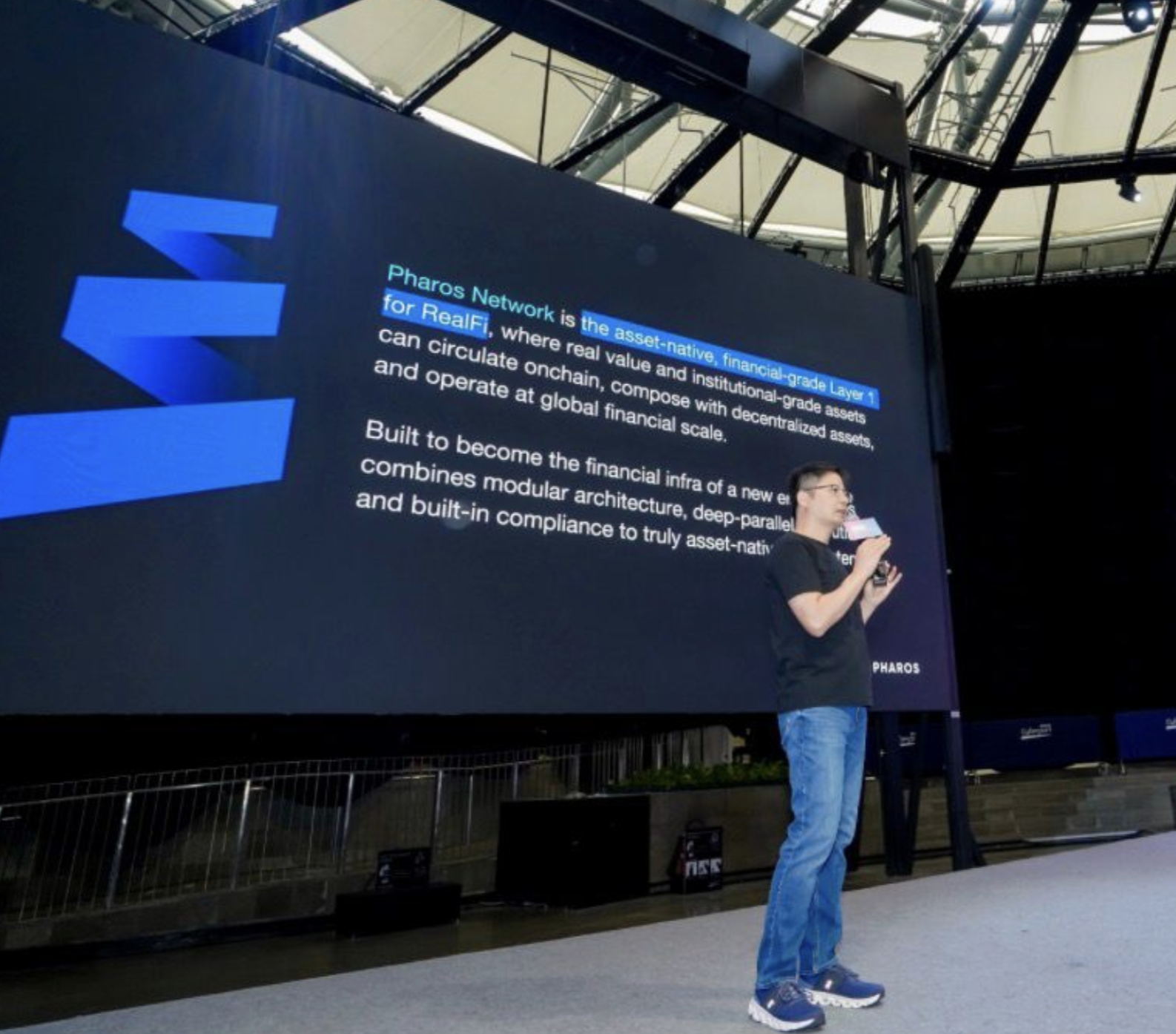
Pharos Network is making a clear bet on where institutional onchain finance is heading — and it’s not more pilots, proofs of concept, or one-off tokenizations.
—
This week, the Financial Layer 1 announced the launch of the RealFi Alliance, an ecosystem initiative designed to move real-world assets (RWAs) from fragmented experiments into a standardized, execution-ready onchain framework built for institutions.
The founding members signal the intent immediately: Chainlink, Centrifuge, LayerZero, alongside Asseto Finance, Ember, Faroo, R25, Re7 Labs, and TopNod.
This isn’t about launching more tokenized assets. It’s about making them usable at scale.
The Real Problem With RWAs Isn’t Demand — It’s Execution
RWAs have become one of crypto’s most talked-about narratives, but the market is still structurally immature. Liquidity is fragmented. Infrastructure standards vary by issuer. Compliance is handled inconsistently. And most assets sit idle after issuance.
Pharos’ RealFi Alliance is built around a different premise: RWAs should function as active financial infrastructure, not static representations.
Instead of treating real-world assets as endpoints, the Alliance positions them as composable building blocks — designed from day one to integrate with liquidity, risk frameworks, yield strategies, and institutional workflows.
In practical terms, that means aligning issuers, infrastructure providers, and onchain capital under a shared execution environment rather than asking each project to reinvent the stack.
Post from @pharos_networkView the original post on X↗
Four Pillars, One Objective: Institutional-Grade Onchain Finance
The RealFi Alliance is structured around four core pillars that reflect what institutional allocators actually require to deploy capital onchain:
Asset Enablement
Real-world value is brought onchain in secure, composable formats designed for ongoing participation — not just issuance events.
Infrastructure and Compliance Alignment
Pharos’ deep-parallel execution and built-in compliance modules are used to meet institutional security and regulatory expectations without bolting compliance on after the fact.
Liquidity and Utility Design
Assets are designed with clear usage paths — staking, yield strategies, and application-level integration — ensuring capital doesn’t sit idle.
A live example is the collaboration between Ember and Re7 Labs, where institutional-grade risk management and vault curation are embedded directly into the asset lifecycle.
Market Transparency
Standardized benchmarks for risk and yield help establish trust — a prerequisite for sophisticated capital allocators.
Together, these pillars are meant to turn RWAs from isolated products into a cohesive financial layer.
Why This Matters for Pharos’ Mainnet Launch
According to Wish Wu, Co-Founder and CEO of Pharos, the issue facing onchain finance isn’t asset scarcity — it’s the lack of a unified environment where assets can operate at scale.
The RealFi Alliance is designed to ensure that when Pharos’ mainnet goes live, it launches as a ready-to-use financial environment, complete with integrated liquidity, compliance, and counterparties already building.
Rather than attracting assets after launch, Pharos is anchoring its ecosystem with institutional participants upfront.
A Long-Term Play for RealFi
The RealFi Alliance will expand in structured batches, with new members selected based on asset quality, technical readiness, and ecosystem alignment. The goal isn’t rapid expansion — it’s maintaining execution standards as the network scales.
Post from @pharos_networkView the original post on X↗
If RWAs are going to move from narrative to infrastructure, this is likely what that transition looks like: fewer isolated experiments, more coordinated systems.
Pharos isn’t promising to tokenize everything. It’s trying to make onchain finance operational for institutions — and that’s a materially different ambition.
Reporting by Blockster Newsdesk