
For years, investors evaluated technology companies using familiar metrics: revenue growth, profit margins, and cash flow. Artificial intelligence is rewriting those rules.
Freshly leaked OpenAI financials show the company generated roughly $13 billion in revenue during 2025 while reporting a staggering $39 billion loss ahead of its planned IPO. Yet rather than scaring investors away, the disclosure may be reinforcing a growing belief across Wall Street: profitability no longer matters as much as winning the AI race.
The numbers arrive at a remarkable moment for the industry.
Anthropic has already confidentially filed for its IPO at a valuation approaching $965 billion, potentially becoming the first AI company to reach public markets at nearly $1 trillion. OpenAI is expected to follow with its own IPO filing later this year, reportedly targeting a similar valuation.
Meanwhile, SpaceX has made perhaps the boldest move of all.
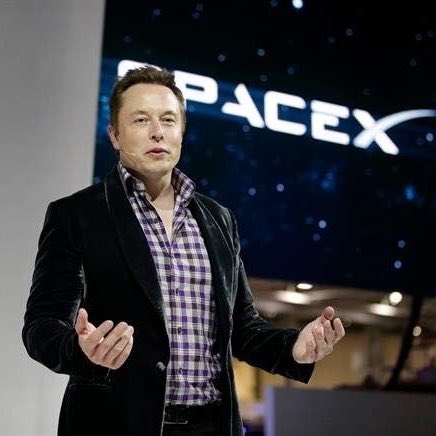
Just days after completing the largest IPO in history, the company announced a $60 billion acquisition of Anysphere, the creator of AI coding platform Cursor, in a deal designed to strengthen its position against both OpenAI and Anthropic.
Post from @WSJView the original post on X↗
The Cost of Competing in AI
The leaked OpenAI figures reveal the extraordinary economics behind modern AI development.
Although OpenAI generated approximately $13 billion in revenue during 2025, massive investments in compute infrastructure, model training, data centers, talent acquisition, and corporate restructuring pushed losses to roughly $39 billion.
Much of the headline loss stems from accounting adjustments tied to OpenAI's transition into a public-benefit corporation, though operating losses remain substantial.
Traditional investors might view those numbers as alarming. AI investors increasingly view them as the cost of admission.
Building frontier models now requires tens of billions of dollars in infrastructure spending, access to advanced chips, and long-term commitments to data center capacity. OpenAI, Anthropic, Google, Meta, and xAI are collectively spending at a pace rarely seen in corporate history.
The underlying assumption is simple: Whoever wins AI could control one of the most important technology platforms of the next decade.
Anthropic Has Suddenly Become OpenAI's Biggest Threat
Until recently, OpenAI appeared to have a commanding lead. That picture has changed dramatically in 2026.
Anthropic recently raised $65 billion at a post-money valuation of approximately $965 billion before confidentially filing for an IPO. The company has rapidly expanded adoption of Claude and Claude Code, establishing itself as a serious challenger to ChatGPT in both enterprise AI and software development.
The significance goes beyond valuation. Anthropic now appears positioned to reach public markets before OpenAI, potentially setting investor expectations for the entire AI sector. Some analysts believe Anthropic's IPO could become one of the most important technology listings of the decade.
For OpenAI, that creates additional pressure. Investors will soon have a direct public-market comparison between two companies building similar AI systems but pursuing different commercial strategies.
Post from @PolymarketView the original post on X↗
Why SpaceX Paid $60 Billion for Cursor
The third player in this story may be the most surprising.
Last week, SpaceX confirmed it would acquire Cursor creator Anysphere for $60 billion, giving Elon Musk's xAI division access to one of the fastest-growing software products in Silicon Valley.
Cursor has become one of the dominant tools in AI-assisted software development, with widespread adoption across enterprise technology teams and Fortune 500 companies. Its rapid growth has turned it into a strategic asset in the battle for developer mindshare.
The acquisition highlights a growing reality:
The AI war is no longer just about building the best model.
It's about owning distribution.
OpenAI has ChatGPT.
Anthropic has Claude.
Google has Gemini.
SpaceX now has Cursor.
The companies that control where users spend their time may ultimately have the strongest advantage, regardless of who has the smartest model.
The New AI Playbook
Viewed together, these developments reveal how dramatically the market has shifted. OpenAI can lose $39 billion and still pursue a valuation approaching $1 trillion.
Anthropic can file for an IPO before turning a profit because investors believe its future market position is worth hundreds of billions.
SpaceX can justify spending $60 billion on a coding platform because it strengthens its broader AI ecosystem.
Post from @cb_dogeView the original post on X↗
In previous technology cycles, profitability eventually became the defining question. In today's AI race, investors appear focused on something else entirely: Who becomes the operating system for the next generation of the internet?
The answer could determine which company emerges as the most valuable business of the AI era.
Reporting by Lidia Yadlos