

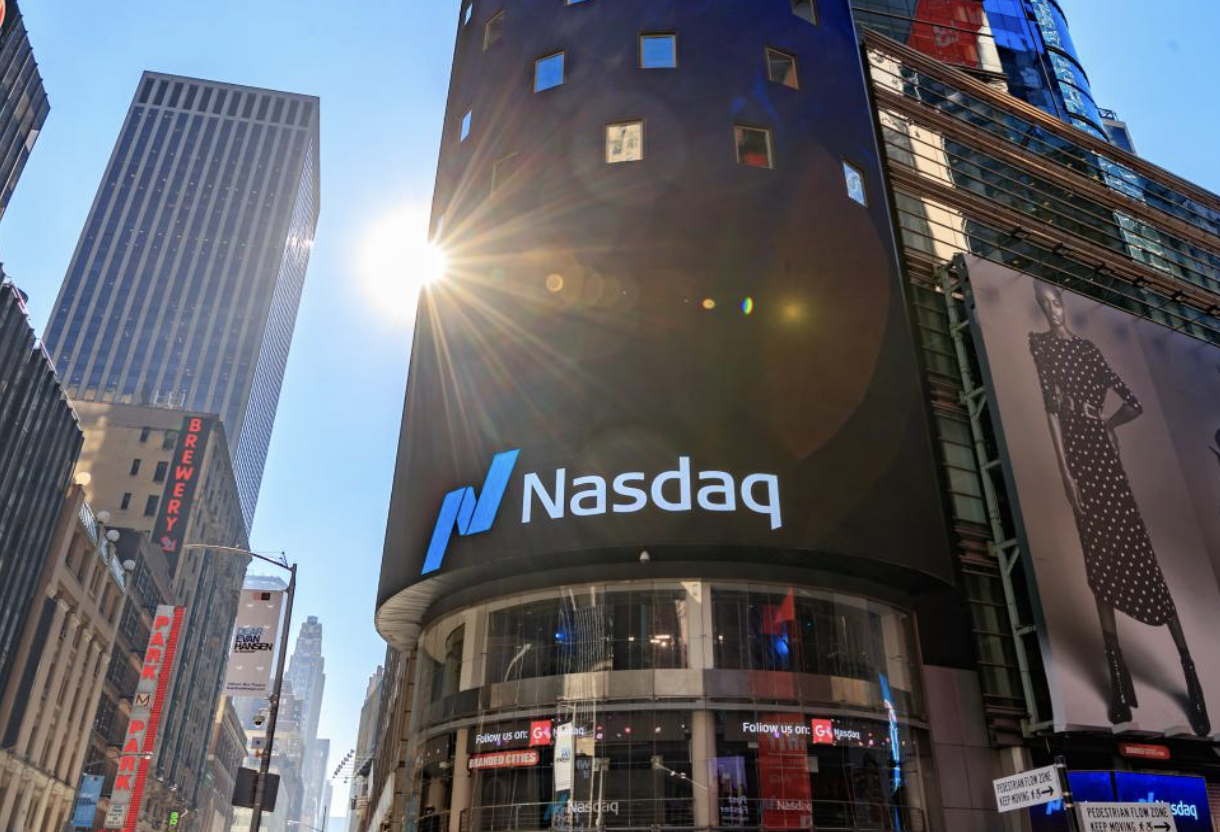
Nasdaq is officially stepping into the prediction markets arena — and it’s doing so through the SEC.
—
The exchange operator has filed for approval to list what it calls Outcome-Related Options, binary contracts priced between 1 cent and $1 that allow traders to take yes-or-no positions on specific outcomes. The initial contracts would be tied to the Nasdaq 100 index and its micro version, giving investors an all-or-nothing way to express directional views on major market benchmarks.
If approved, this would mark Nasdaq’s first formal entry into prediction-style trading — but under a securities framework rather than commodities oversight.
Post from @coinbureauView the original post on X↗
SEC vs CFTC: The Jurisdiction Battle
Unlike platforms such as Kalshi, Polymarket, and Crypto.com — which operate under CFTC oversight — Nasdaq’s proposed contracts would fall under the SEC.
That distinction is not trivial. Event-based contracts have become a regulatory gray zone. Are they securities? Commodities? Gambling products? Nasdaq’s filing effectively forces the question.
By routing these products through SEC supervision, the exchange is signaling that binary outcome contracts tied to securities indexes belong under securities law — not derivatives law. The outcome of this approval process could shape how prediction markets are regulated across the United States.
Wall Street Is Watching Closely
Nasdaq isn’t alone. Traditional financial heavyweights are clearly positioning for exposure to prediction markets:
ICE has invested up to $2 billion in Polymarket.
CME Group has partnered with FanDuel.
Cboe is pursuing similar binary-style offerings.
Prediction markets surged in popularity during and after the 2024 election cycle. What began as a crypto-native niche is now attracting serious institutional capital.
Legal Turbulence in the Background
The expansion of prediction markets has not been smooth. Kalshi, one of the most prominent regulated prediction platforms, sued the state of Nevada in March 2025 after receiving a cease-and-desist order to halt its sports-related event markets.
In February, the U.S. Court of Appeals for the Ninth Circuit denied Kalshi’s request to block Nevada regulators from acting on its sports contracts. The case underscores how unsettled the regulatory landscape remains.
As traditional exchanges push deeper into event-based derivatives, the legal lines are still being drawn.
Post from @KalshiView the original post on X↗
Insider Trading Concerns Add Pressure
Prediction markets have also drawn scrutiny over information asymmetry and potential insider activity.
Recent examples include:
Wallets netting $1.2 million by betting on the outcome of blockchain investigator ZachXBT’s Axiom exposé before it was released.
A Polymarket account reportedly earning $400,000 by betting on the capture of Venezuelan President Nicolás Maduro just hours before U.S. forces carried out the operation.
Israeli authorities indicting two individuals suspected of using confidential military information related to Israel’s strike on Iran to trade on Polymarket.
These incidents highlight a growing concern: prediction markets may amplify information advantage risks in ways traditional markets are already heavily regulated to prevent.
If Nasdaq receives approval, it will be operating within one of the most tightly monitored regulatory environments in global finance — a significant contrast to offshore crypto-native platforms.
What Nasdaq’s Contracts Would Actually Do
The proposed Outcome-Related Options would:
Trade between $0.01 and $1.00
Settle at $1 if the specified condition is met
Expire worthless if not
The contracts would be tied initially to the Nasdaq 100 and its micro version — meaning traders could take fixed, binary exposure to major equity benchmarks. This is not traditional options trading with variable payoffs. It’s structured probability trading — similar to what prediction platforms have popularized.
Post from @NasdaqView the original post on X↗
The Bigger Shift
Nasdaq’s filing is more than product expansion.
It represents:
Institutionalization of prediction-style trading
A regulatory test case between the SEC and CFTC
Wall Street’s formal move into a space pioneered by crypto-native platforms
Prediction markets were once dismissed as experimental. Now major exchanges are seeking regulatory approval to bring them into the core of U.S. capital markets infrastructure.
Whether this becomes a new asset class within securities markets — or triggers deeper regulatory pushback — will likely define the next phase of the industry.
Reporting by Lidia Yadlos