
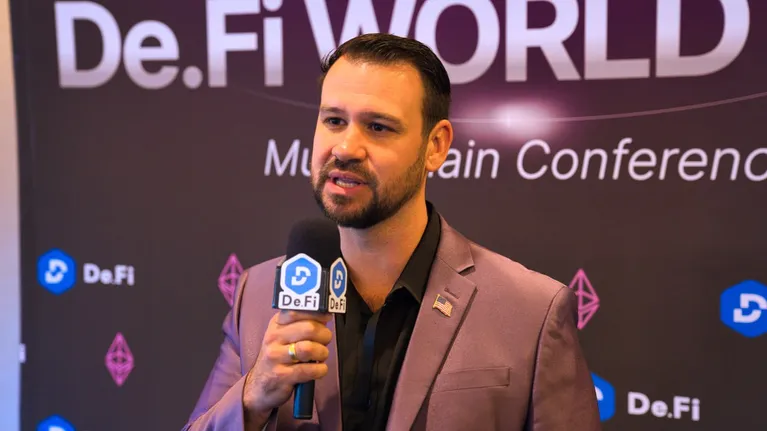
Roc Zacharias, the founder of Quickswap recently sat down with Voice Of Web3 to discuss the success of his decentralized exchange (DEX) on the Polygon network. With near-zero gas fees and lightning-fast transaction speeds, Quickswap has quickly become a popular choice for trading on the Ethereum sidechain. In this interview, Zacharias shared his insights on building a successful DEX and the future of decentralized finance (DeFi).
Origins Into The Crypto Industry
The conversation starts off with a brief overview of Roc Zacharias' journey into the crypto industry. He shares that he first got interested in blockchain technology after reading the Bitcoin whitepaper and was fascinated by its potential to revolutionize the financial world. At the time, he was a Bitcoin Maxi and even dropped out of medical school to learn more about the industry and contribute to its growth.
"Bitcoin is the king and I think it is the one thing that has the highest chance of becoming a world reserve currency."
Roc Zacharias, Founder of Quickswap
Eventually, he met Sandeep Nailwal from Polygon at a hackathon and the two talked for hours about how they could scale Ethereum to mainstream adoption. That discussion led to Roc incubating Polygon and the rest is history.
With the relationship established, Sandeep came to Roc with a unique challenge of building a DEX with developers provided. Roc and his team had to manage the business and marketing side while Sandeep's technical team built the product.
Finally, they launched Quickswap. As a decentralized exchange that could handle thousands of transactions per second without clogging the Ethereum network, QuickSwap quickly gained popularity among traders and investors. 97% of the tokens were given back to the community and despite investment offers from centralized exchanges, the team decided to keep QuickSwap decentralized.
Post from @QuickswapDEXView the original post on X↗
Being Adaptive In This Fast Evolving Industry
Despite being a pioneer in the DEX side of the DeFi industry, QuickSwap and its team understand that adaptation is key in such a fast-evolving sector. Therefore, they constantly update their platform to improve user experience and keep up with the latest market trends. Roc admits that the industry is ever-changing and that QuickSwap must be prepared to continuously evolve in order to stay ahead of the competition.
"There are hardly any projects in the industry that haven't pivoted or changed or re-branded over time other than Bitcoin."
Roc Zacharias, Founder of Quickswap
It's just like any business, you have to adapt but crypto moves especially fast and is extremely volatile. QuickSwap must be ready to adapt quickly and efficiently in order to succeed. From better technology to improved user experience, there's always room for improvement in the world of cryptocurrency.
In order to stay ahead of the competition, receiving investments can be crucial for growth and innovation. QuickSwap may have turned down offers in the past, but Roc admits that in hindsight, it would have helped them grow even faster. With that being said, Roc encourages those seeking investment in the industry to visit as many conferences as possible and to network with others in the community.
BitAngels is also an excellent place to find potential investors for cryptocurrency startups. It is a global investor network focused on connecting blockchain and cryptocurrency startups with angel investors. They host regular events where startups can pitch their ideas and connect with potential investors.
Post from @QuickswapDEXView the original post on X↗
How The Web3 Industry Differs From Web2
The Trump administration has so far been positive for Bitcoin and blockchain in general. This is important because regulation can have a big impact on the success of cryptocurrencies and blockchain technology. The Web2 industry is well established and clarity of laws allows for faster growth. However, the decentralized nature of Web3 means that laws and regulations must be carefully considered to ensure innovation is not stifled.
Roc believes that Web3 founders should keep their teams lean and agile. This is due to the fact that decentralization can make it difficult to scale quickly. In Web2, scaling is achieved through centralized infrastructure and management. In contrast, Web3 relies on decentralized networks and protocols, which may require more coordination and cooperation among participants.
"Hope for the best but plan for the worst, you never know what's going to happen in this industry."
Roc Zacharias, Founder of Quickswap
Although the crypto markets are known for their volatility, the long-term potential of Web3 technologies has immense upside. The crypto market is expected to take market share from bonds and gold and Roc Zacharias believes that Web3 technologies are the future. As such, it's important for individuals and businesses to educate themselves on these emerging technologies and be prepared for potential risks and opportunities.
RWAs (Real World Assets) like real estate, stocks, and commodities are expected to become tokenized and integrated into the Web3 ecosystem. This will increase accessibility and liquidity for these assets while also providing more democratic ownership opportunities for investors.
Roc sees this as a positive development for the market, and mentions Courtyard, a project on Polygon that tokenizes real world assets. Assets such as Pokemon cards for example are now being tokenized on the blockchain, making them more accessible for investors. More than $10 million worth of volume of these collectible assets are traded on NFT marketplaces daily, highlighting the potential for growth in this area.
Post from @LunarAssetsView the original post on X↗
Final Thoughts
As the conversation came to a finish, Roc was asked to give some advice for ambitious leaders in the industry. Without a doubt hard work is important but he emphasized the importance of being adaptable and continuously learning. With the fast-paced nature of crypto and blockchain, it's crucial to stay on top of current trends and new developments in order to remain competitive and innovative.
Networking and building relationships were also key components he highlighted for success in the industry. As Roc has shown, having a strong network can open doors to new opportunities and collaborations that can propel one's career forward. Being a missionary rather than a mercenary in the space can also make a world of difference, as it's important to have a genuine passion and belief in the technology rather than just chasing profits.
Reporting by Lidia Yadlos