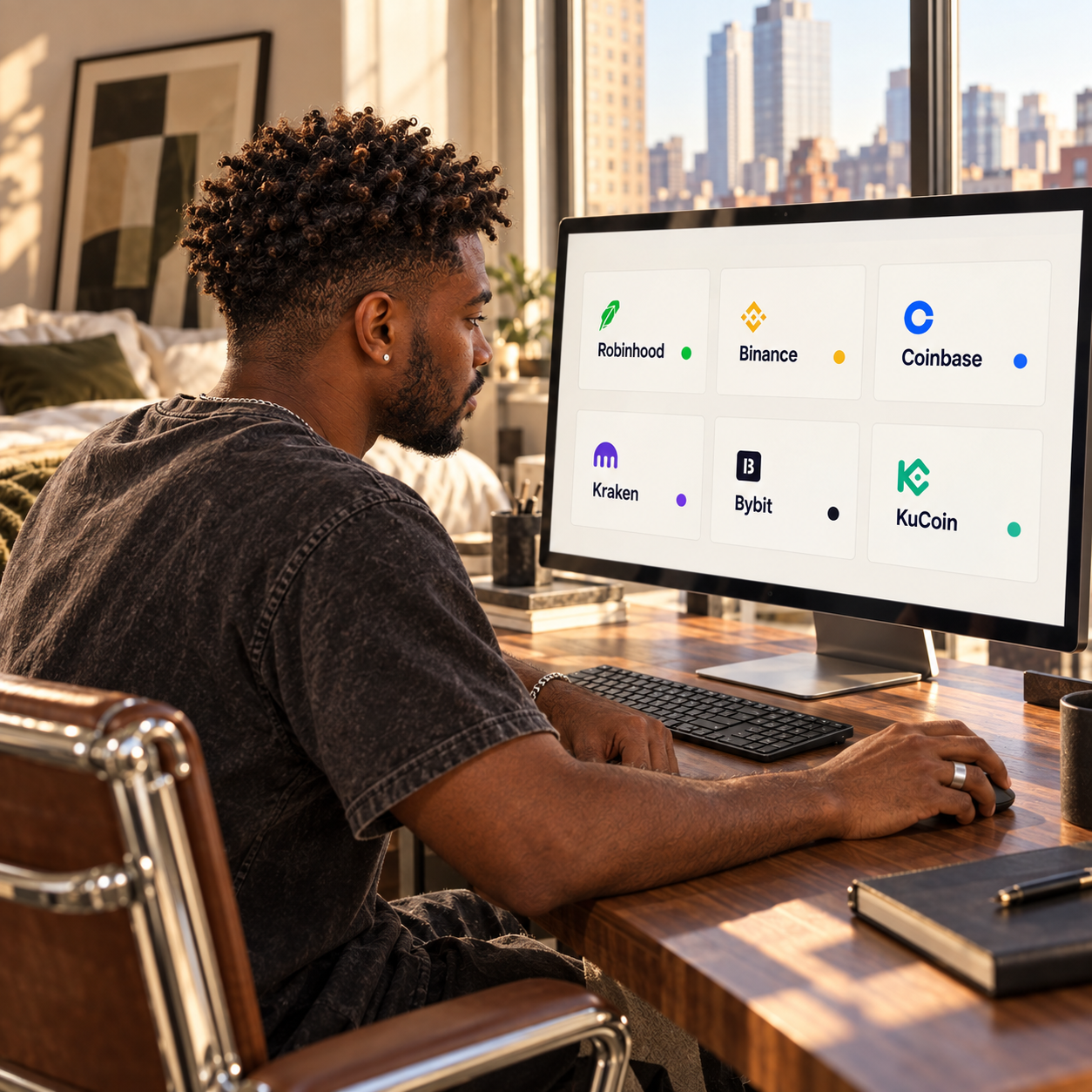


If you have ever watched the market move while you were asleep, at work, or simply away from your screen, you already understand the core problem AI trading solves. Markets never stop, but humans have to. AI trading uses algorithms to monitor conditions and execute trades around the clock, so opportunities are not missed just because you blinked.
This guide explains what AI trading is, how it actually works, and a clear step-by-step process for getting started even if you have never written a line of code or placed a single trade. By the end, you will know how to go from curious beginner to running your first automated strategy.
What Is AI Trading?
AI trading is the use of artificial intelligence and machine-learning models to analyze financial markets and place trades automatically. Instead of a person watching charts and clicking buy or sell, software studies price data, patterns, volume, and other signals, then acts on a defined set of rules far faster than any human could.
It helps to separate two closely related terms. Algorithmic trading means any trading that follows pre-programmed instructions, "if price drops 5%, buy." AI trading goes a step further: the models can weigh many variables at once, adapt to changing conditions, and refine how they interpret market data over time. In practice, most modern platforms blend both, which is why you will often see "AI" and "algorithmic" used side by side.
The appeal is straightforward. An AI system does not get tired, does not panic during a sell-off, and does not chase a hot tip at 2 a.m. It simply follows its strategy with discipline, every minute of every day.
How Does AI Trading Actually Work?
Under the hood, an AI trading system follows a repeating loop:
Data collection. The system pulls in live and historical market data, prices, order book depth, volatility, and sometimes news or sentiment.
Analysis. Trading algorithms scan that data for patterns and conditions that match a strategy. This is where machine learning shines, because it can evaluate dozens of indicators simultaneously.
Signal generation. When conditions line up, the system produces AI trading signals, essentially instructions to enter or exit a position.
Execution. The platform places the order automatically, often within milliseconds.
Risk management. Built-in controls such as stop-losses, position sizing, and exposure limits keep any single trade from doing outsized damage.
The big advantage of this loop is speed and consistency. A person might hesitate or second-guess a plan; bot trading executes the plan exactly as designed, every time.
What You Need Before You Start
You do not need a finance degree or programming skills, but a few things make the journey smoother:
A clear goal. Are you after steady, passive growth, or are you actively experimenting? Your answer shapes which strategy fits.
Capital you can afford to risk. Never trade money you need for rent or emergencies. AI reduces certain errors, but no system removes market risk.
A reputable platform. This is the most important choice, and we will cover it next.
Patience. Automated strategies are designed to perform over time, not to win every single trade.
Step-by-Step: How to Start AI Trading
Here is the practical roadmap. Follow it in order and you will avoid the mistakes that trip up most beginners.
Step 1 - Learn the Basics (One Afternoon Is Enough)
Spend a short while understanding a few core concepts: what a position is, what a stop-loss does, and the difference between volatility and risk. You do not need to master technical analysis. With AI trading, the platform handles the heavy lifting, your job is to understand enough to make informed decisions about which strategy to run and how much to allocate.
Step 2 - Choose the Right AI Trading Platform
This decision matters more than any other. Look for a platform that offers:
No-code, ready-to-use strategies, so you are not forced to build or program anything.
Built-in risk management, not bolted on as an afterthought.
Transparent terms, especially around fees, withdrawals, and bonuses.
A way to try before you commit, such as a free trial or demo credit.
A no-code platform like SaintQuant fits this profile well for beginners: it provides pre-built AI stock trading bot strategies across crypto, stocks, and futures that run automatically, with risk controls already structured into each one. New users also get a $99 free starter trial credit to experience live strategies before depositing - a low-pressure way to see how automated trading feels in practice.
Step 3 - Pick a Strategy That Matches Your Goal
Most platforms group strategies by style and risk level. A conservative beginner might choose a lower-volatility strategy aimed at steady returns, while someone comfortable with more swings might pick a more aggressive one. The key is to match the strategy to the goal you defined in Step 1: Not to chase whichever option advertises the biggest number.
Step 4 - Set Your Risk Controls
Even with built-in protections, decide your own limits before you begin. Determine how much total capital to allocate, and never let a single strategy hold more than you are comfortable losing. Good platforms make these controls easy to set with a few clicks. Treat them as non-negotiable guardrails.
Step 5 - Start Small (or Start With Trial Credit)
Resist the urge to go all-in immediately. Begin with a small allocation, or use trial credit if your platform offers it, so you can watch how the strategy behaves in real conditions. This early stage is about building confidence and understanding, not maximizing profit.
Step 6 - Monitor, Review, and Scale Gradually
Automated does not mean "set and forget forever." Check in periodically to review performance, confirm the strategy still matches your goals, and adjust your allocation as you learn. As you grow comfortable and see consistent behavior, you can scale up thoughtfully.
Common Mistakes Beginners Make (and How to Avoid Them)
Expecting guaranteed profits. AI improves discipline and speed; it does not abolish risk. Anyone promising guaranteed returns is a red flag.
Over-allocating too early. Start small. You can always add more once you trust the system.
Ignoring the fine print. Check withdrawal terms and bonus conditions before depositing.
Chasing the most aggressive strategy. Higher potential reward almost always means higher potential loss. Match risk to your real tolerance.
Abandoning a plan after one bad week. Quantitative strategies are designed to perform across many trades, not to win every day.
Is AI Trading Right for You?
AI trading is an especially good fit if you want exposure to the markets but lack the time, technical skill, or emotional bandwidth to trade manually. It removes the late nights, the impulsive decisions, and the steep learning curve of building your own system. It is not a magic money machine, and it works best when you approach it with realistic expectations and disciplined risk limits.
For passive investors and beginners in particular, a no-code platform with pre-optimized strategies offers the gentlest on-ramp. You get the benefits of algorithmic execution without needing to become a programmer or a full-time trader.
Frequently Asked Questions
Do I need to know how to code to use AI trading? No. No-code platforms provide pre-built strategies you can launch in a few clicks. Coding knowledge is optional, not required.
How much money do I need to start? You can begin small. Some platforms, including SaintQuant, offer free trial credit ($99) plus a small registration bonus ($7) so you can start experiencing strategies before depositing your own funds.
Can AI trading lose money? Yes. All trading carries risk, and AI is no exception. Built-in risk management helps limit downside, but no system can guarantee profits.
Does AI trading work for crypto, stocks, and futures? Many modern platforms support all three. SaintQuant, for example, offers automated strategies across cryptocurrencies, stocks, and futures markets.
How often do I need to monitor it? The system runs 24/7 on its own, but a periodic check-in weekly is reasonable for most beginners helps you confirm performance and adjust your allocation.
Start Your First AI Trade Today
The hardest part of AI trading is simply starting. Once you understand the basics, the rest is a matter of choosing a trustworthy platform, picking a strategy that fits your goals, and beginning small.
If you would like to see automated trading in action without risk, SaintQuant gives new users a $99 free trial package and a $7 instant cash bonus at registration - no deposit and no strings attached. It is a simple, no-code way to experience live AI strategies and decide for yourself whether automated trading belongs in your financial toolkit.
This article is for educational purposes only and is not financial advice. Trading involves risk, including the possible loss of capital. Always do your own research before investing.
Reporting by Lidia Yadlos