

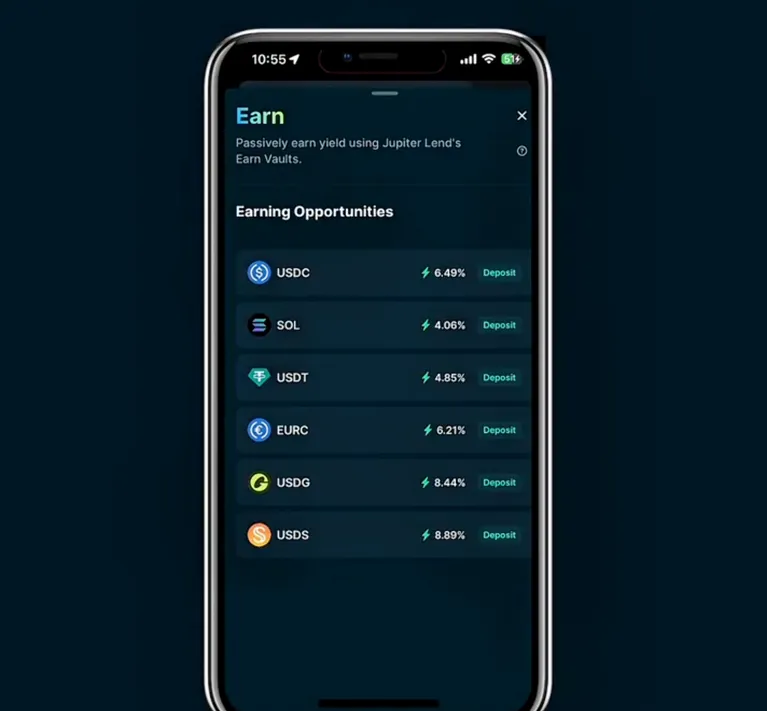
The trouble with traditional stablecoins is that they sit in your wallet, perfectly stable, perfectly idle. In a market where capital efficiency is everything, holding static stablecoins feels like buying a car and leaving it parked forever. Which is why the market is now gravitating towards yield-bearing stables, which do everything a regular stablecoin does but with an additional twist – they earn a return. They pay their way.
These assets allow your dollars to become productive, generating APY that can be boosted through earning extrarewards in other DeFi protocols. Instead of a stationary vehicle, they’re a train that keeps coupling additional carriages, each one adding new value as it moves through the DeFi ecosystem.
If you’re interested in jumping aboard the yield-bearing stablecoin train, here’s everything you need to know before starting your journey, from how these assets work to where to deploy them to maximize returns.
Stablecoins Protect Capital – But They Can Also Grow It
Traditional stablecoins like USDT or USDC offer stability. They hedge volatility, enable fast transfers, and serve as a safe harbor during market chaos. But they don’t grow. Any yield you generate with them usually comes from lending them on a platform like Aave, yielding a few percent at best, and once they’re locked, you can’t use them anywhere else.
This creates a two-part problem: low returns and locked capital. The solution to these limitations lies in yield-bearing stablecoins that unlock composable APY. Instead of earning yield only after you deposit them into a protocol like Aave, these stablecoins represent an ongoing claim on yield-generating activities undertaken by their issuer.
Post from @StaniKulechovView the original post on X↗
It works like this: you deposit or mint a stablecoin by locking other crypto assets as collateral. Then you stake the stablecoin you’re issued to receive a yield-bearing equivalent such as sUSDE or sUSDf. The staked version accrues yield automatically and because it’s liquid, thanks to the “s” version you’ve been issued as a receipt, you can deposit this secondary stable elsewhere to earn more.
That, at a high level, is how yield-generating stables work. Now let’s go a little deeper.
Getting Started With Yield-Bearing Stablecoins
There are two primary ways in which yield-bearing stablecoins can be acquired. You can go to a DEX such as Uniswap or Jupiter and simply buy them, exchanging another asset such as USDC or ETH. Alternatively, you can go to the platform of the stablecoin protocol you wish to acquire and directly mint there.
Many users prefer the latter option because it gives greater flexibility in terms of the type of asset utilized to acquire the yield-bearing stablecoin. For instance, some protocols support assets such as tokenized gold or stocks, which have the potential to appreciate in value, growing your portfolio even as you keep these tokens locked into a smart contract as collateral. This way, you don’t need to sell your precious crypto or tokenized RWA – you can simply borrow against it.
Post from @JupiterExchangeView the original post on X↗
Minting follows a structure similar to taking out a loan against collateral – only the loan is issued as stablecoins. First you deposit collateral, which locks your crypto assets into a smart contract. Second, you mint stablecoins at a level below your collateral value to avoid liquidation.
Because many yield-bearing stablecoin protocols – also known as “synthetic dollar” protocols – accept conventional stables such as USDT and USDC as collateral, you can borrow close to the full value of your collateral, since there is virtually no liquidation risk. If you’ve got $1,000 of USDT, for example, you could safely borrow $950 of yield-bearing stablecoins.
This is how synthetic dollars are created on the main protocols within this sector: USDe (Ethena), USDf (Falcon), sUSD (Synthetix), and DAI (Sky Protocol). Minting is becoming more common because newer protocols allow users to deposit stablecoins as collateral to mint yield-bearing versions without liquidation risk. In other words, you can trade dumb stablecoins for smart ones.
Staking Stablecoins to Earn Yield
Minted stablecoins don’t automatically earn you yield. There’s still a final step you must complete if you wish to start receiving yield and that’s to stake them. Staking converts them into a yield-bearing version of themselves; think of it as giving them superpowers. Stake USDe, for example, and you’ll receive staked USDe (sUSDe), representing your claim on the yield the protocol generates.
As for where the yield comes from – which is an important matter to consider before getting started – the answer is “multiple sources.”
Most yield-bearing stablecoin systems use delta-neutral strategies, meaning they generate yield from market activity while remaining hedged against price movement. They don't bet on whether crypto is going to move up or down in other words.
Examples of this strategy in action include a synthetic dollar protocol using deposited collateral to open short perp futures on exchanges. Long traders pay funding to short traders in bullish markets and vice versa, and the funding payments can become stable yield for stakers. Other protocols use strategies such as funding rate arbitrage or even yield sourced from real-world assets such as T-Bills and tokenized bonds.
The best yield-generating stablecoin issuers don’t just deliver attractive, sustainable yield – they do so while providing full transparency into these activities. Doing so is essential to maintaining user confidence by demonstrating that robust risk management is in place – and that all funds can be accounted for.
Using Yield-Bearing Stablecoins to Earn More APY
While the yield paid out to synthetic stablecoin stakers is attractive compared to that of staking Layer-1 assets such as ETH, there’s the opportunity to further bump this APY. That’s because once you have yield-bearing stablecoins, you can take these “s” tokens and deposit them into liquidity pools such as Curve; into vaults such as Beefy; or use them as collateral to borrow other assets such as with Morpho.
Post from @EarnbaseFinanceView the original post on X↗
Here is where yield “stacks.” You earn the base APY from staking the stablecoin, a second liquidity APY by providing liquidity, and may also qualify for other rewards such as points programs and airdrops. Pendle is particularly powerful here because it splits staked stablecoins into principal tokens (PT) and yield tokens (YT).
You can sell the future yield today or lock into amplified APY. Pendle effectively turns your yield stream into a tradable asset, like selling coupons from a bond before it matures.
Managing Risk: Yield Without Recklessness
Stablecoin yield farming is lower risk than chasing volatile assets, but it’s not risk-free. The primary risks you should factor in are smart contract risk, since any protocol storing funds could theoretically be exploited; collateral risk, where falling crypto prices could trigger liquidation; and liquidity risk, whereby in volatile market conditions, exiting a pool may take time or incur high fees.
As a simple rule of thumb, the more layers of yield you stack, the greater the risk surface area.
A disciplined approach might be to start with staking, then add liquidity, and finally only add vaults or other incentives if you feel comfortable. At the end of the day, the goal is to stack yield – not stress.
Yield-bearing stablecoins earn while you sleep – and keep earning when deployed elsewhere. They represent a structural shift in how value moves across crypto.
If capital in motion is capital that compounds, yield-bearing stablecoins are the conveyor belt. If that’s a proposition that appeals, stake some stables and let DeFi’s composability do the heavy lifting.
Reporting by Lidia Yadlos