

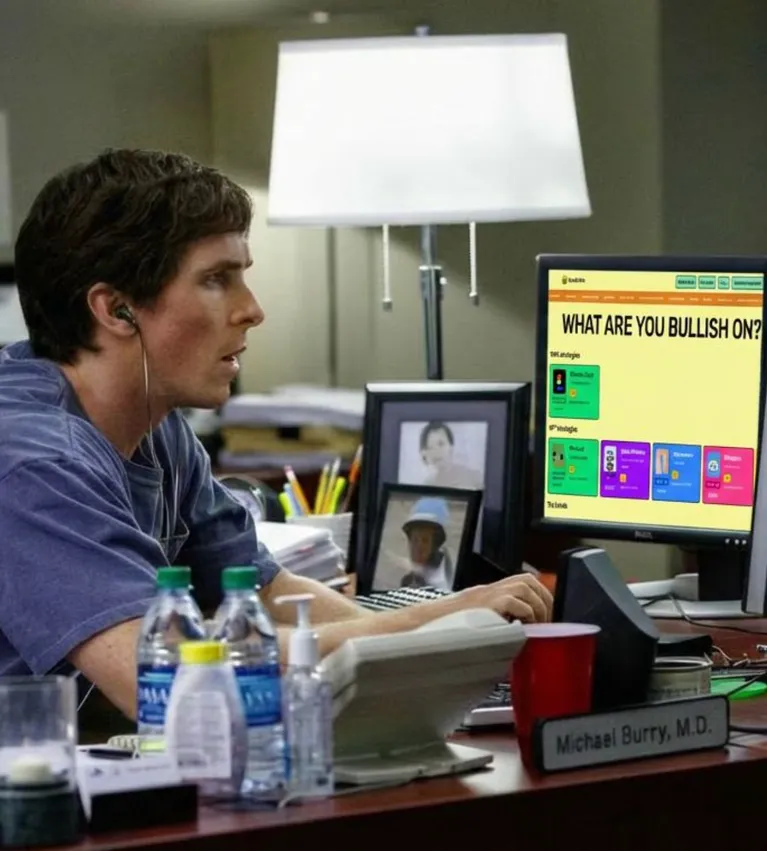
Crypto has always been driven by opinions. They spread on timelines long before capital ever moves. Influence lived in posts, not portfolios, and belief still required translation into action. Creator ETFs change that dynamic. Instead of following someone’s thinking and acting on it later, people can now invest directly in the worldview itself.
In recent announcements, creators can now launch token based ETF style portfolios on Solana that let people invest directly in their investment thesis. This means that a thesis can now become a financial product. Conviction becomes allocatable.
This isn’t just a new feature on Solana. It’s a shift in how influence, trust, and capital start to converge. The distance between saying what you believe and backing it with money just got a lot shorter.
Post from @solanaView the original post on X↗
From Opinions to Allocations
Creator ETFs formalize something that has always existed informally in crypto. People already follow certain accounts for how they think about markets, narratives, and risk. They mirror trades manually, track wallets, and try to reverse engineer conviction from posts. What changes here is that the translation layer disappears.
Instead of interpreting someone’s thesis and rebuilding it yourself, you can now allocate to it directly. The creator defines the basket. The investor opts into the worldview. That shift turns influence into something measurable, not by engagement, but by capital committed.
It also changes accountability. Once money is involved, opinions stop being abstract. A thesis isn’t just persuasive, it’s exposed to market outcomes.
Creator ETFs Are Not About Better Assets
It’s tempting to frame this as a new way to discover alpha, but that misses the point. Creator ETFs aren’t about asset selection being objectively better. They’re about coordination around belief. What matters is not whether the basket is optimal, but whether people believe in the logic behind it.
Crypto markets have always been narrative driven. This just packages narratives into a cleaner financial form. Instead of dozens of loosely correlated trades inspired by a thread, there’s a single product that expresses the idea end to end.
Post from @rgbclash_xyzView the original post on X↗
In that sense, creator ETFs look less like traditional funds and more like cultural artifacts. They represent how a group sees the market at a moment in time. Despite it not increasing the underlying value of the assets held in the ETF, the positioning does have memetic responses in the marketplace and commentators on this announcement are picking up on the benefits of this feature.
Why This Makes Sense on Solana
This kind of experiment only works if friction is low. Rebalancing, composability, transaction costs, and speed all matter when portfolios are dynamic and creator driven. That’s why Solana feels like a natural environment for this to emerge.
When it’s cheap and fast to create, adjust, and interact with on-chain products, ideas can move closer to real time. Opinions don’t have to be static. They can evolve as conditions change, which mirrors how creators already think and communicate. The infrastructure fades into the background, which is exactly what you want if the focus is on belief and allocation, not mechanics.
The Financialization of Influence
This is where things get uncomfortable, and interesting. Turning takes into trades collapses the distance between persuasion and profit. When someone’s opinion becomes investable, the incentives around how that opinion is expressed inevitably change.
Creators now sit at an intersection of trust and responsibility. Their words don’t just shape sentiment, they move capital directly.
That raises questions about signaling, timing, and transparency that don’t exist when influence is purely rhetorical. None of this is inherently bad, but it is different. It forces a reckoning with what influence actually means when it’s backed by money.
A New Incentive Stack
For creators, the incentive is obvious. Alignment between reputation and performance becomes explicit. For followers, the appeal is simplicity. Instead of managing dozens of positions, they’re buying into a coherent thesis.
But alignment can break just as easily as it forms. Creators may feel pressure to optimize for performance over insight. Followers may over-index on personality rather than logic. The structure doesn’t eliminate risk, it just relocates it. What this really creates is a new social contract between thinker and allocator, one that crypto is still learning how to navigate.
The weak points won’t show up in bull markets. They’ll surface when theses underperform, narratives fracture, or incentives drift. Questions around responsibility, disclosure, and expectations will matter more than tooling.
Is underperformance a bad call or just market conditions? When does conviction turn into stubbornness? How much context does an investor need versus blind trust?
These aren’t technical problems. They’re human ones.
Final Thoughts
Labeling these products as ETFs is useful, but incomplete. What’s actually happening is a coordination experiment. Crypto is testing whether belief, expressed clearly enough, can become a durable financial primitive.
If it works, markets start to look less like collections of assets and more like collections of ideas. If it fails, it will still teach the ecosystem something important about where trust breaks down.
Post from @Try_WinkView the original post on X↗
Either way, this announcement signals a shift. Not from speculation to sophistication, but from commentary to commitment. With crypto incorporating more products typically reserved for Tradi, it’s clear that the market is maturing but only time will tell if ETFs will still serve a benefit in the decentralized world of finance.
Reporting by Lidia Yadlos