

Bitcoin has spent much of 2026 struggling to find direction.
After reaching new highs earlier in the cycle, the world's largest cryptocurrency has repeatedly run into macroeconomic headwinds, including rising Treasury yields, stubborn inflation, and growing uncertainty around Federal Reserve policy.
Bitcoin recently traded near $62,000 while ETF flows weakened and investors reduced exposure to risk assets amid expectations that interest rates could remain elevated for longer.
Now, all eyes are on the Federal Reserve's June 16-17 meeting.
While markets overwhelmingly expect policymakers to leave rates unchanged at 3.50%-3.75%, the real story isn't the rate decision itself. It's the economic projections, dot plot, and the first major policy signals from new Fed Chair Kevin Warsh that could shape crypto markets for the rest of 2026.
Crypto Has Been Waiting For Liquidity
For much of the year, crypto investors have been hoping for a return to easier monetary policy.
Instead, inflation has remained stubbornly high. U.S. inflation accelerated to 4.2% in May, while core inflation remains well above the Fed's long-term 2% target.
The Fed has now dealt with inflation running above target for more than five consecutive years.
At the same time, the labor market has remained surprisingly resilient, with May payrolls increasing by 172,000 and unemployment holding near 4.3%. Those figures have made it difficult for policymakers to justify rate cuts despite growing pressure from markets and politicians.
The result has been a challenging environment for speculative assets.
When investors can earn attractive yields in Treasury bills, money market funds, and other low-risk assets, capital naturally becomes more selective. Crypto, growth stocks, and other risk assets typically struggle when real yields remain elevated.
Post from @eyezenhourView the original post on X↗
The Dot Plot Matters More Than The Rate Decision
The June meeting includes the Federal Reserve's Summary of Economic Projections (SEP), one of the most closely watched releases on Wall Street.
The report contains the Fed's forecasts for:
GDP growth
Inflation
Unemployment
Future interest rates
Most importantly, it includes the "dot plot," which reveals where policymakers expect rates to be over the coming years. Historically, shifts in the dot plot have often moved risk assets more than the rate decision itself.
For crypto markets, the implications are straightforward:
A dovish dot plot
Signals cuts later in 2026
Improves liquidity expectations
Could support Bitcoin and broader crypto markets
A hawkish dot plot
Signals rates staying higher for longer
Pushes Treasury yields higher
Creates additional pressure on risk assets
The challenge for traders is that policymakers appear increasingly divided.
Reuters recently reported that nearly 70% of economists now expect rates to remain unchanged through the end of 2026, a dramatic shift from earlier expectations that multiple cuts were likely this year.
The Kevin Warsh Factor
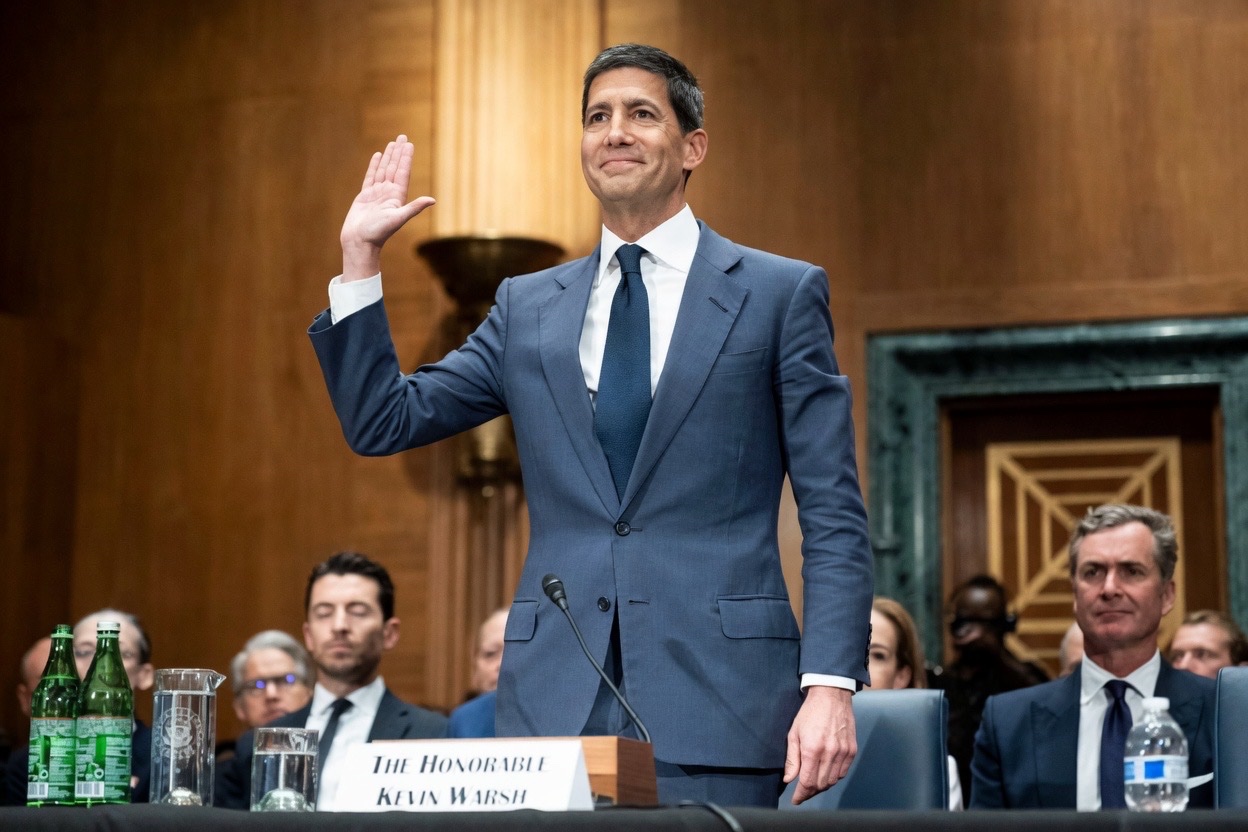
This week's meeting is also unique because it marks the first major policy gathering under Federal Reserve Chair Kevin Warsh.
Warsh inherits an economy facing conflicting forces:
Persistent inflation
Strong employment
AI-driven investment growth
Geopolitical uncertainty
Elevated energy prices
Markets are still trying to understand whether Warsh will be more hawkish than his predecessor Jerome Powell. Some analysts believe he could even move away from the Fed's traditional dot plot communication framework altogether.
His press conference may ultimately matter more than the policy statement itself.
Post from @businessView the original post on X↗
What Crypto Investors Should Watch
Three outcomes matter most for digital assets:
1. Rate Cut Expectations
If the Fed signals cuts later this year, investors could begin pricing in improved liquidity conditions before rates actually move.
2. Inflation Forecasts
Any upward revisions to inflation projections would likely reinforce the "higher-for-longer" narrative that has weighed on crypto throughout 2026.
3. Treasury Yields
Bitcoin has become increasingly sensitive to movements in Treasury yields. A hawkish Fed could send yields higher and pressure risk assets, while a more balanced message could provide relief.
The Bigger Picture
The irony is that the June meeting may produce no actual policy change whatsoever.
Rates are almost certain to remain at 3.50%-3.75%. Futures markets assign an overwhelming probability to a hold.
Yet for crypto investors, this could still be one of the most important macro events of the year.
Post from @SunusiMinjibirView the original post on X↗
After months of uncertainty, weak sentiment, and tightening financial conditions, markets are searching for clues about where liquidity is headed next.
The Fed may not cut rates this week.
But what it says about the future could determine whether Bitcoin's next major move is up or down.
Reporting by Lidia Yadlos