
For years, Bitcoin mining pools quietly controlled two of the most important decisions in mining: which transactions get included in blocks and who receives the rewards generated through merge mining.
Most miners simply contributed hashrate while pool operators handled the rest.
Now, DMND and Rootstock are trying to change that structure.
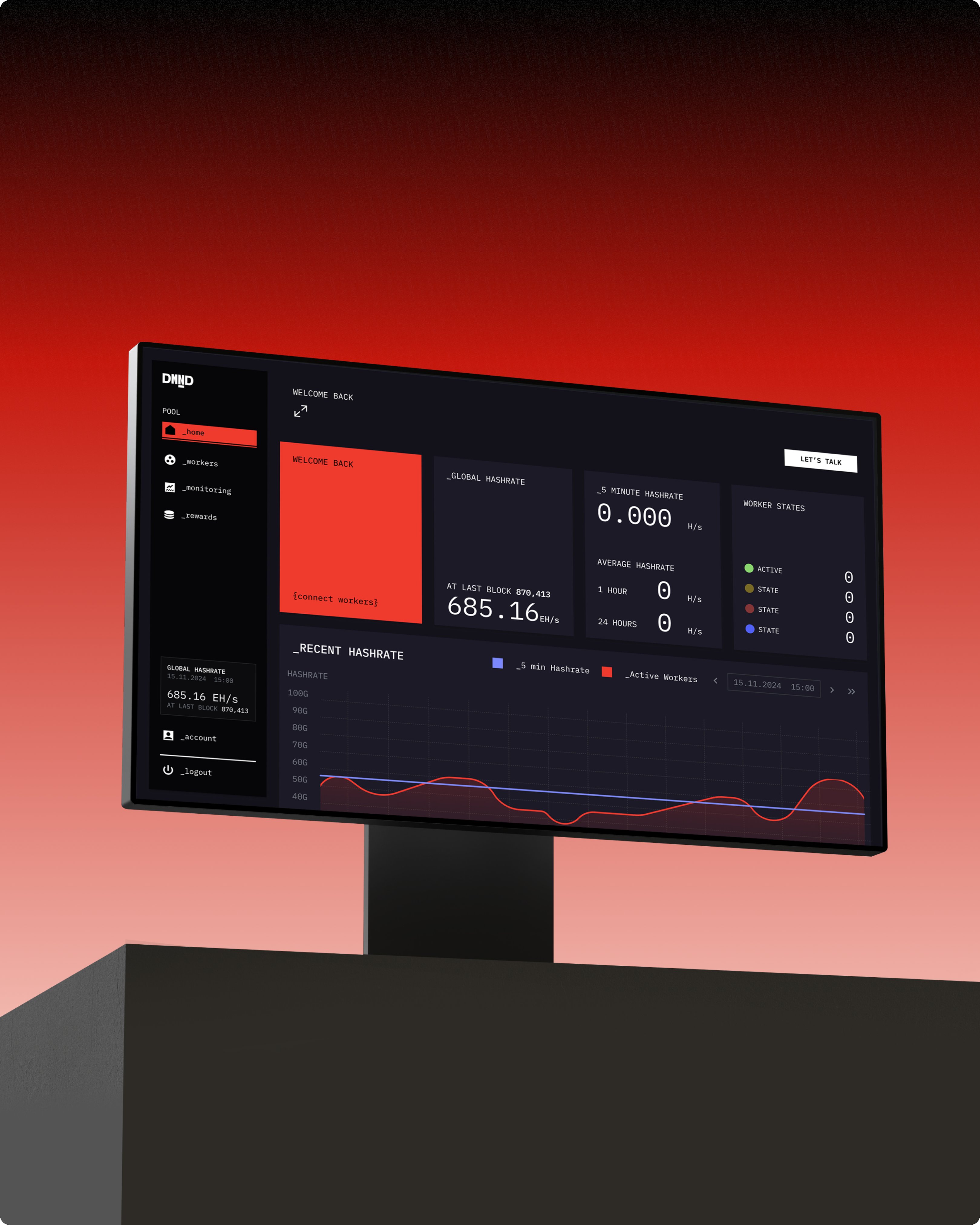
The companies announced this week that miners using DMND can now build their own Bitcoin block templates, choose whether to include Rootstock merge-mining commitments, and receive rBTC rewards directly to their own wallets — without a pool operator sitting in the middle.
The feature runs through Stratum V2 Job Declaration, a newer mining protocol designed to give miners more direct control over block construction and transaction selection.
Post from @rootstock_ioView the original post on X↗
Bitcoin Mining Pools Have Quietly Centralized Power
For more than a decade, mining pools largely controlled block template creation across Bitcoin.
That meant a relatively small number of pool operators effectively decided which transactions entered blocks, creating what many Bitcoin developers and researchers have long viewed as a centralization risk inside the network.
The issue becomes even more significant in merge-mined systems like Rootstock, where Bitcoin miners simultaneously secure additional chains using the same hashpower.
In most existing setups, pools also controlled merge-mining rewards, meaning miners contributed computational power without directly controlling either the merge-mining decision or the associated revenue streams.
DMND’s new implementation changes that structure.
“The miner controls the merge mining and the miner gets paid for the merge mining,” said Alejandro De La Torre. “More delegation of control to miners is our key support for further decentralisation of the Bitcoin ecosystem.”
Under the new system, miners who construct their own templates and include Rootstock commitments receive rBTC rewards directly without sharing revenue through the pool operator.
Rootstock Is Expanding Bitcoin’s Financial Layer
The update also highlights the growing role Rootstock is playing inside Bitcoin’s broader financial infrastructure ecosystem.
Launched in 2018, Rootstock was one of the earliest Bitcoin sidechains built to extend Bitcoin with smart contract functionality while remaining secured through Bitcoin merge mining.
Today, the network supports more than 200 applications spanning DeFi, payments, infrastructure, and lending systems using rBTC, a token pegged 1:1 to Bitcoin.
Because Rootstock inherits security from Bitcoin miners through merge mining, decentralization at the mining layer directly impacts the security assumptions of the sidechain itself.
“This latest news is a critical move towards increasing decentralization across both Bitcoin and Rootstock,” said Adrian Eidelman. “DMND’s implementation of Stratum V2 is an important evolution in mining infrastructure that expands what’s possible for miners.”
Bitcoin Infrastructure Is Starting to Evolve Again
The launch reflects a broader trend happening quietly across Bitcoin infrastructure as developers revisit parts of the network stack that remained relatively unchanged for years.
Much of Bitcoin’s public conversation still revolves around ETFs, institutional adoption, and price cycles. But underneath that, developers are increasingly focused on mining decentralization, Bitcoin-native DeFi, sidechains, and new financial infrastructure built directly around BTC liquidity.
Post from @RootstockLabsView the original post on X↗
Stratum V2 has long been viewed by many Bitcoin developers as one of the most important upgrades for improving miner sovereignty and reducing pool-level control.
At the same time, Rootstock’s growing ecosystem reflects how Bitcoin itself is slowly expanding beyond simple payments into broader onchain financial infrastructure.
Together, the integration highlights how the next phase of Bitcoin’s evolution may focus less on changing Bitcoin’s core protocol — and more on decentralizing the infrastructure layers built around it.
Reporting by Lidia Yadlos