

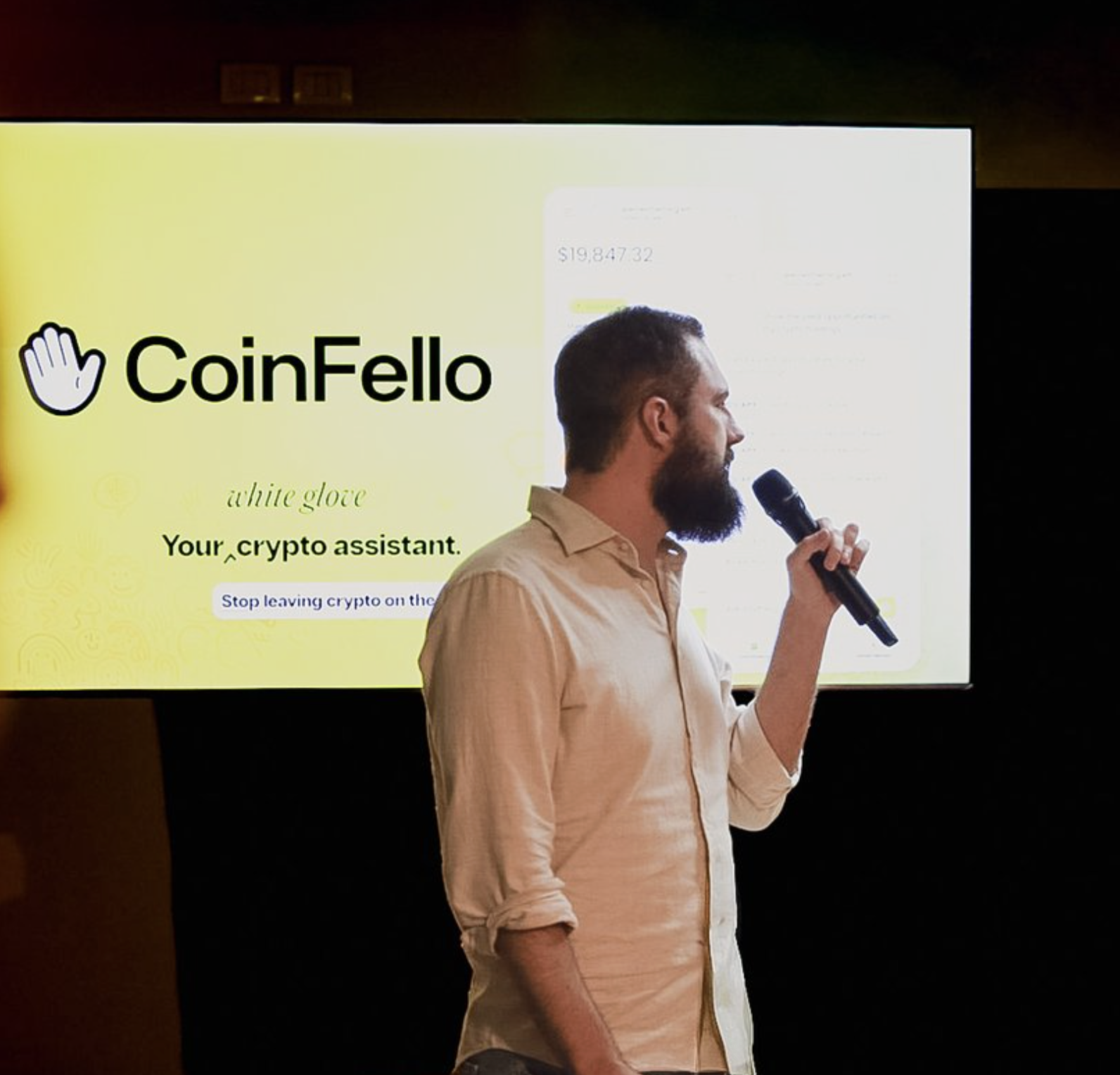
CoinFello, an AI agent platform optimized for EVM smart contract interactions, has released its open-source OpenClaw skill in partnership with MetaMask.
—
The integration allows personal AI agents — called Moltbots — to execute transactions directly with smart contracts onchain, without requiring manual user input for each step.
Post from @CoinFelloView the original post on X↗
This isn't a yield opportunity or a token launch. It's an infrastructure development that changes how users (and their AI agents) can interact with decentralized protocols across any EVM-compatible chain. If you've been following the AI-agent narrative in crypto, this is one of the first major integrations with a widely-used wallet like MetaMask.
How It Works
OpenClaw is an open-source "skill" — essentially a modular capability — that can be added to Moltbots. Once equipped, the AI agent gains the ability to read, interpret, and execute transactions against any EVM smart contract. Here's the general flow:
A user configures a Moltbot with the OpenClaw skill and connects it to their MetaMask wallet.
The user sets parameters or goals — for example, "swap 1 ETH for USDC when gas is below 10 gwei" or "deposit into a specific lending pool when APY exceeds X%."
The Moltbot autonomously monitors onchain conditions and executes the transaction through MetaMask when criteria are met.
Because it's open source, developers can audit, fork, or extend OpenClaw to build custom agent behaviors.
The skill works across any EVM-compatible chain — Ethereum, Arbitrum, Polygon, Base, and others — wherever MetaMask can connect. Gas costs will vary by chain, so users should factor that in when setting up automated transactions. On Ethereum mainnet, complex contract interactions can still run $5–$50+ depending on network congestion.
The Risks
Giving an AI agent the ability to execute onchain transactions introduces a distinct set of risks that go beyond typical DeFi participation:
Smart contract risk — OpenClaw interacts with arbitrary smart contracts. A bug in the skill itself, or in a target contract, could result in lost funds.
Agent autonomy risk — Misconfigured parameters could lead to unintended transactions. An AI agent executing trades or approvals without real-time human oversight is inherently risky.
Wallet security — Connecting an AI agent to your MetaMask wallet means the agent has transaction-signing capabilities. If the agent or its hosting environment is compromised, funds could be at risk.
Open-source maturity — While open source means anyone can audit the code, OpenClaw is brand new. It hasn't had years of battle-testing. Check for third-party audits before trusting it with significant funds.
Regulatory uncertainty — Autonomous agent commerce is uncharted territory from a regulatory standpoint. The legal implications of AI-initiated financial transactions remain unclear in most jurisdictions.
CoinFello's partnership with MetaMask lends some credibility, but MetaMask integration alone doesn't guarantee the safety of the OpenClaw skill itself. Users should start with small amounts and test thoroughly.
Post from @EthereumDenverView the original post on X↗
Bottom Line
OpenClaw is built for developers and power users who want to experiment with AI-agent-driven onchain transactions — if you're not comfortable reading smart contract code or managing agent permissions, this is probably too early-stage for you. For those who are building in the AI-agent space, an open-source MetaMask-integrated skill is a meaningful piece of infrastructure worth exploring.
Reporting by Blockster Newsdesk