

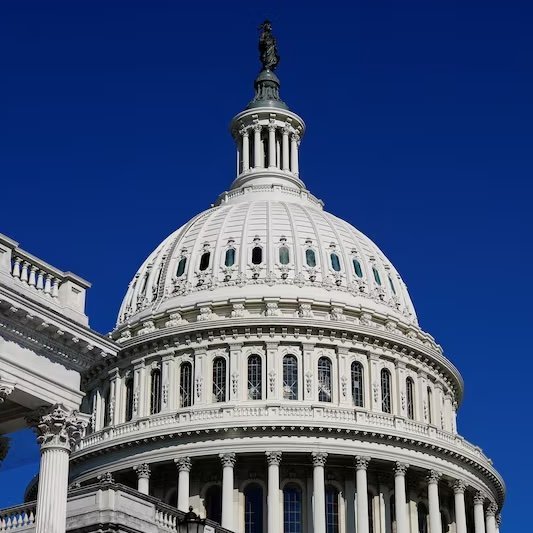
The CLARITY Act, one of the most significant pieces of crypto legislation working its way through Congress, appears to be building real momentum toward a summer passage.
Coinbase Chief Legal Officer Paul Grewal has publicly backed the Tillis-Alsobrooks stablecoin compromise embedded in the bill, expressing confidence it will become law this summer. Meanwhile, Democratic Senator Kristen Gillibrand has outlined the conditions she believes are necessary for the legislation to secure bipartisan support — chief among them, a robust ethics provision.
The dual signals from a major industry executive and a key Senate Democrat suggest the bill is closer to a viable path forward than many previous crypto regulatory efforts have managed. But several unresolved issues remain before a formal markup can proceed.
Post from @CoinDeskView the original post on X↗
Grewal: Banks Should Accept the Stablecoin Deal
Coinbase CLO Paul Grewal has been among the most vocal industry figures pushing for the CLARITY Act's passage. In recent remarks, Grewal expressed strong confidence that the legislation will clear Congress this summer, specifically backing the stablecoin compromise brokered by Senators Thom Tillis (R-NC) and Adria Alsobrooks (D-MD).
The Tillis-Alsobrooks compromise addresses one of the thorniest issues in crypto regulation: how stablecoins should be treated under existing financial law, and who gets to issue them. The deal attempts to bridge the gap between traditional banking interests — which have sought to limit stablecoin issuance to regulated banks — and the broader crypto industry, which argues that non-bank issuers like Circle and Tether should be allowed to operate under a clear federal framework.
Grewal went further, directly urging banks to accept the compromise rather than lobby against it. His message was clear: the deal on the table represents a workable middle ground, and pushing for a more restrictive framework risks derailing the entire effort.
For Coinbase, which has its own stablecoin interests through its partnership with Circle on USDC, the passage of clear stablecoin rules would provide significant regulatory certainty.
Gillibrand Sets Conditions for Bipartisan Support
On the Senate side, Senator Kristen Gillibrand (D-NY) has identified three key issues that must be resolved before the CLARITY Act can move to markup. The most prominent of these is the inclusion of an ethics provision — a requirement Gillibrand has described as essential for the bill to earn Democratic votes.
The ethics provision debate has become a flashpoint in crypto legislation more broadly. Earlier in 2025, a separate stablecoin bill — the GENIUS Act — faced Democratic resistance over concerns about conflicts of interest, particularly related to lawmakers and their families holding financial stakes in crypto ventures.
Post from @CryptosR_UsView the original post on X↗
Gillibrand's insistence on ethics language in the CLARITY Act signals that Democrats are unlikely to support any major crypto bill without guardrails addressing those concerns.
Senator Gillibrand cited the ethics provision as a necessary condition for the crypto bill's passage, alongside two other unresolved issues that must be addressed before a markup can proceed.
While the specific details of the other two issues Gillibrand raised have not been fully outlined, they are understood to relate to broader regulatory and consumer protection questions that have divided lawmakers throughout the legislative process.
The fact that Gillibrand is engaging constructively — setting conditions rather than opposing the bill outright — is notable, given that she has been one of the more active Democrats on crypto policy since co-authoring the Responsible Financial Innovation Act with Senator Cynthia Lummis.
What the CLARITY Act Would Do
The CLARITY Act aims to establish a comprehensive regulatory framework for digital assets in the United States. At its core, the legislation seeks to address longstanding gaps in how crypto assets are classified and regulated — specifically, the jurisdictional tug-of-war between the Securities and Exchange Commission (SEC) and the Commodity Futures Trading Commission (CFTC).
Post from @cryptoroverView the original post on X↗
Key elements of the bill include:
A clearer definition of which digital assets qualify as securities versus commodities
A federal framework for stablecoin issuance, including the Tillis-Alsobrooks compromise on non-bank issuers
Provisions addressing consumer protection and market integrity
Regulatory clarity for exchanges and other crypto intermediaries operating in the U.S.
The bill represents the latest in a series of Congressional attempts to bring regulatory order to the crypto industry. Previous efforts, including the FIT21 Act that passed the House in 2024, laid groundwork but stalled in the Senate. The CLARITY Act builds on those efforts while incorporating lessons from the political battles that slowed earlier legislation.
Reporting by Blockster Newsdesk