For decades, brokerage accounts served as a gateway between individuals and the global financial system. Through them, investors could buy shares in companies, hold bonds, or gain exposure to economies and industries far beyond their own, allowing savings to compound through ownership rather than labor alone.
—
But access to this system has always been far from equal. While financial markets expanded and technology made it easier to trade, the basic structure of participation has remained concentrated in certain parts of the world. In countries with mature financial systems, it takes only a few steps to open an investment account. But for much of the world, the same opportunities are either difficult to access or unavailable.
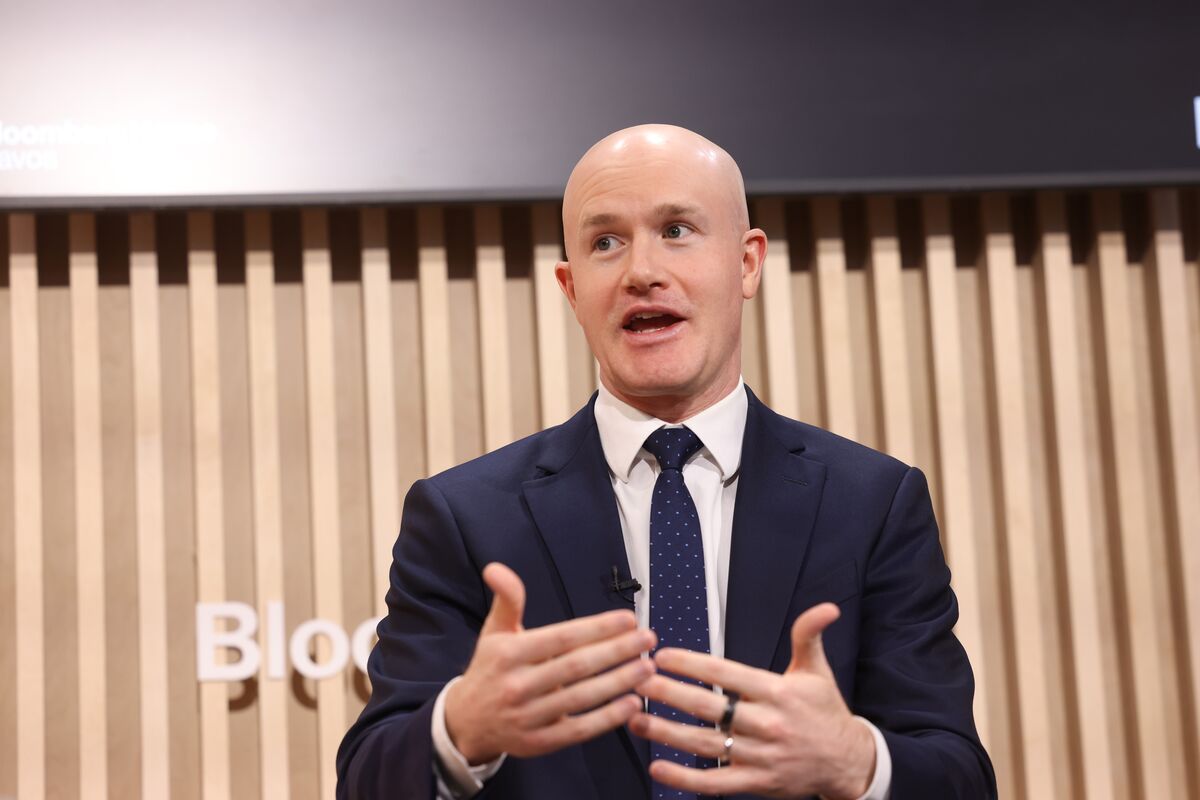
In a recent interview, Coinbase CEO Brian Armstrong said that roughly four billion adults fall into this category. While a handful have access to savings accounts, mobile wallets, or basic financial services, they lack access to brokerage infrastructure needed to invest in equities, bonds, and other capital markets, which Armstrong describes as “unbrokered.”
Post from @Etherealize_ioView the original post on X↗
The Capital Divide
The timing of this divide is particularly significant. Over the past few years, the balance between labor income and capital income has shifted. Wages have grown, but far more slowly than the value of financial assets. In the United States, labor income has increased by 57 percent since the 1980s, while capital income has risen by more than twice that rate.
This means that participation in capital markets has become one of the defining characteristics of economic growth.
Increasingly, access to high-growth investments is concentrated among those already in the system, with “invitation-only” private share transactions offering the wealthy yet another way to build their portfolio. Those who own assets benefit from returns, while those who rely solely on wages find it hard to keep pace.
For Armstrong, this imbalance reflects not a lack of interest but a structural limitation in how financial infrastructure was built. In many large financial institutions, participation comes with fixed costs, minimum account sizes, and delays, making market access inefficient for smaller investors.
For many, the desire to invest is not the problem. Outside major financial hubs, the system can feel less like an open marketplace and more like a maze that only experienced participants can navigate. For smaller investors, especially those investing across borders or in regions with less mature financial institutions, the path to capital can be complicated and costly, making participation feel out of reach before it even begins.
Post from @MavrykNetworkView the original post on X↗
Tokenization as a Path Forward
Armstrong argues that this gap can be narrowed through technologies designed to reduce friction. Tokenization, in particular, is increasingly being positioned as a way to make markets more accessible.
And in fact, solutions have emerged in an effort to offer an alternative way to invest. Mavryk Network, for example, is a Layer-1 blockchain for on-chain tokenization, designed to support regulated asset issuance and exchange. It is designed to support the tokenization of real-world assets such as real estate and commodities, providing the infrastructure for bringing these traditionally less accessible markets into a digital environment.
In that context, tokenization is positioned as a way to make certain assets easier to access across different investor groups. Its wallet, backed by industry-leading security measures, connects investors directly to the infrastructure needed to hold and interact with tokenized assets.
Expanding Access
For the world’s billions of “unbrokered” adults, tokenization offers a new way to build wealth beyond wages and could challenge the barriers that have kept capital income out of reach. It points to a system in which access is not reserved for those already connected and financially established.
Post from @MavrykNetworkView the original post on X↗
Without new systems that break down these barriers, traditional markets will continue to operate in ways that allow the rich to become richer, while pushing everyone else further from participation.
Reporting by Lidia Yadlos