

The hiring process is rapidly becoming an AI-to-AI conversation.
Candidates are using artificial intelligence to write resumes, optimize applications, and tailor cover letters. Employers, meanwhile, are increasingly deploying AI agents to screen, rank, and evaluate talent at scale. As machines take over more of the hiring workflow, a new problem is emerging: nobody is quite sure which signals can still be trusted.
Bondex believes that trust gap is becoming one of the biggest infrastructure challenges facing the future of work.
The Web3 professional network has published a new technical paper, When Agents Hire Humans: Verified Reputation Infrastructure for Hiring, outlining a cryptographically verifiable reputation system designed for a world where AI is increasingly making hiring decisions.
Post from @bondexappView the original post on X↗
The timing may be critical. Gartner forecasts that by 2028, 25% of candidate profiles shared with employers could be fake. At the same time, companies are processing more applications than ever, forcing recruiters to rely heavily on automation to identify qualified candidates.
According to Bondex, this combination of AI-generated applications and AI-powered screening systems is creating a labor market flooded with noise.
"Hiring stopped being human-to-human about eighteen months ago," said Ignacio Palomera, Co-Founder of Bondex.
"Candidates use AI to write their applications, and employers use AI to read them. Nobody trusts the signal anymore. The response rate sits at 2%, the honest professional gets buried by optimised noise, and entire geographies get filtered out before anyone reads a name."
The Resume Was Built for Humans
Traditional hiring infrastructure was designed for people.
Resumes, LinkedIn profiles, endorsements, and portfolios were all created to help recruiters assess candidates manually. But AI agents don't evaluate trust the way humans do. They need structured data that can be verified, measured, and compared across millions of profiles.
That creates a significant challenge.
LinkedIn profiles can be embellished. Applicant tracking systems primarily manage workflows rather than verify credibility. GitHub activity only captures a narrow view of a person's capabilities. Even isolated onchain credentials often fail to provide a complete picture of an individual's reputation.
Bondex argues that as AI becomes the primary gatekeeper of hiring, professional reputation must become machine-readable.
Post from @bondexappView the original post on X↗
Building a Reputation Layer for AI
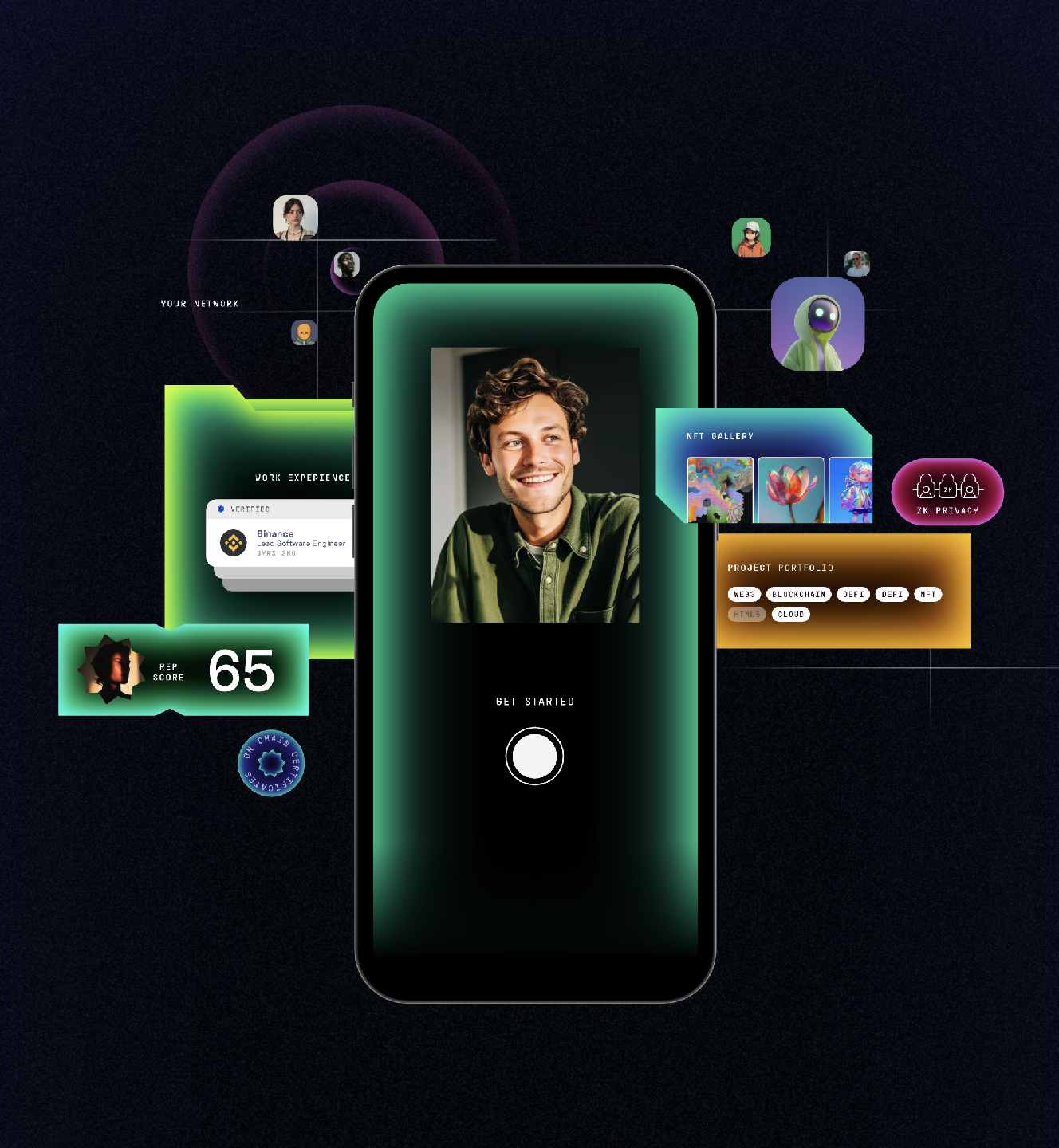
At the center of Bondex's proposal is the Bondex Reputation Score, a system designed to provide AI agents with verifiable trust signals that extend beyond traditional resumes.
Instead of relying on self-reported information, the framework aggregates multiple categories of cryptographically anchored proof.
The architecture is built around five core verification pillars:
Human Proof
Education Proof
Work Proof
Skill Proof
Reputation Proof
The system also introduces several mechanisms designed to improve trustworthiness. These include multi-source verification models that weigh signals based on provenance and corroboration, time-decay functions that prioritize recent accomplishments, and trust multipliers that reward consistently verified behavior while reducing the influence of unreliable signals.
The result is a reputation framework that AI systems can query, evaluate, and incorporate directly into hiring decisions.
According to the research paper, any reputation infrastructure capable of supporting agent-driven labor markets must satisfy a number of key requirements, including portability, composability, verifiability, resistance to manipulation, multidimensionality, and AI readability.
The Cost of Trust Failure
Bondex's research suggests the consequences extend beyond inefficient hiring.
As AI-generated content becomes increasingly difficult to distinguish from authentic work, employers may rely on increasingly defensive filtering systems. Rather than evaluating more candidates, AI systems may simply exclude larger portions of the applicant pool to reduce risk.
In that environment, legitimate professionals can become less visible while synthetic profiles optimized for algorithmic screening gain disproportionate reach.
The company argues that without verifiable reputation infrastructure, AI hiring systems risk amplifying exactly the types of behaviors they were intended to solve.
Post from @bondexappView the original post on X↗
Beyond Recruitment
While the paper focuses on hiring, Bondex sees reputation as a much broader opportunity.
As AI agents become responsible for financial transactions, freelance marketplaces, lending decisions, insurance underwriting, and cross-border commerce, trust will become a foundational component of machine-mediated economic activity.
McKinsey estimates AI agents could facilitate between $3 trillion and $5 trillion in transaction value by 2030. Yet many digital systems still lack portable trust frameworks capable of supporting autonomous decision-making at scale.
Bondex believes verified reputation could become a foundational layer for the agentic economy, enabling machines to evaluate credibility in the same way financial institutions use credit scores today.
Scaling a Verified Professional Network
The publication of the paper follows several recent initiatives aimed at strengthening trust across the Bondex ecosystem.
Earlier this year, Bondex integrated with World ID to help users prove they are real people and participate in a human-only talent pool. The collaboration combines proof-of-human verification with Bondex's validation of skills, work history, and professional reputation.
The company has also continued to expand its network. Bondex now reports more than 5 million downloads, over 2 million user profiles, and more than 130,000 daily active users.
Its platform integrates directly with applicant tracking systems and HR software, allowing employers to access verified talent while enabling users to build portable professional reputations and participate in the growth of the network through the $BDXN token.
Bondex has raised more than $10 million from investors including Animoca Brands, Morningstar Ventures, and CoinList. Companies including Blockchain.com, Ankr, Chainlink, Binance Recruitment, Solana, OKX Wallet, CoinMarketCap, and Aptos are already using the platform to connect with Web3 talent.
As AI increasingly takes over both sides of the hiring process, Bondex is making a simple but increasingly important bet: in a world where machines read resumes and machines evaluate candidates, trust itself may become the most valuable piece of infrastructure.
Reporting by Lidia Yadlos