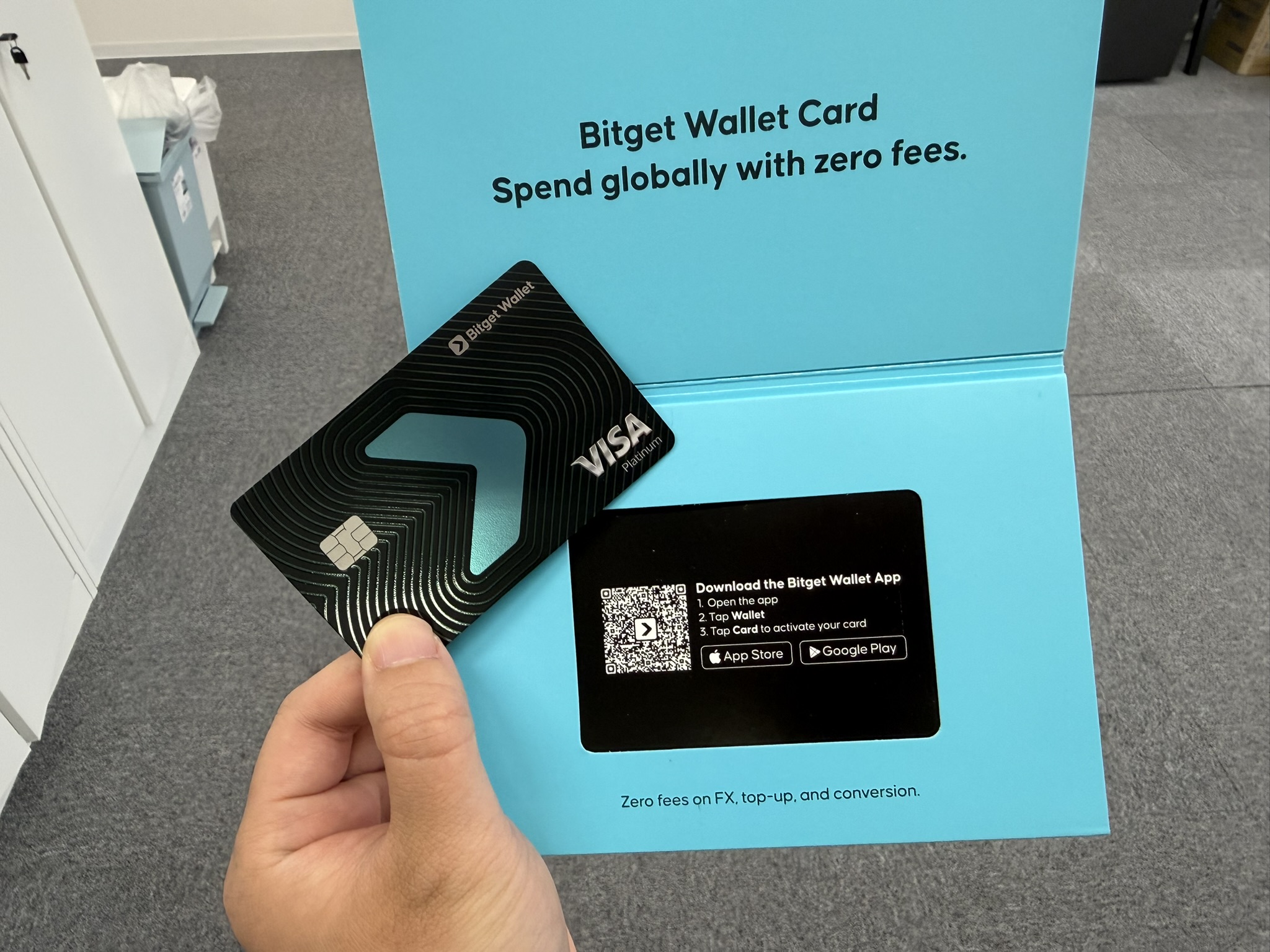



San Salvador — Bitget Wallet is pushing stablecoins closer to everyday use with the launch of its Onchain Payments Matrix, a new infrastructure layer designed to connect banks, card networks, and blockchains into a single, coordinated system.
—
The rollout brings together major players including Ripple, Mastercard, Visa, Tether, Circle, and MoonPay—forming one of the most expansive stablecoin payment ecosystems to date.
Turning Stablecoins Into Everyday Money
At its core, the Onchain Payments Matrix is built to solve a simple problem: stablecoins are widely used, but not easily spent.
Post from @BitgetWalletView the original post on X↗
Rather than focusing on backend settlement or experimental pilots, Bitget Wallet is targeting the user and merchant layer—where payments actually happen. The system connects:
Blockchains and stablecoin issuers
Card networks and banking rails
Liquidity providers and merchants
The result is a unified network where users can move between crypto and traditional payments seamlessly—whether paying online, sending cross-border transfers, or interacting with emerging AI-driven financial systems.
Scale From Day One
The network launches with significant reach:
90 million users connected
150+ million merchants accessible
Coverage across 50+ markets
Infrastructure capable of handling 155M+ transactions and $177B in volume
This positions the platform not as a test environment, but as a live global payments engine operating at scale.
A Shift From Fragmentation to Coordination
Stablecoin adoption is accelerating rapidly. Transaction volumes have already surpassed $33 trillion, while crypto-linked card usage surged over 500% in 2025 alone.
But the infrastructure behind these payments remains fragmented—split across regions, providers, and disconnected blockchain ecosystems.
Post from @BitgetWalletView the original post on X↗
The Onchain Payments Matrix addresses this by acting as a coordination layer, enabling:
Crypto card payments across global networks
QR-based merchant payments in Asia and Latin America
Bank transfers and remittances across Africa and Latin America
Direct wallet-to-bank settlement through 300+ financial institutions
Instead of building new rails, Bitget Wallet is aligning the ones that already exist.
Preparing for an AI-Driven Economy
Beyond human payments, Bitget Wallet is also building toward agentic finance—where AI systems can transact autonomously.
Future upgrades to the Onchain Payments Matrix will introduce programmable payment infrastructure designed for AI agents, allowing machines to coordinate payments, manage liquidity, and execute financial actions in real time.
This signals a broader shift: stablecoins are not just becoming a payment method—they are evolving into a programmable settlement layer for both people and machines.
The Bigger Picture
With this launch, Bitget Wallet is positioning itself as more than a crypto app. It’s aiming to become the connective layer of global finance, where traditional systems and onchain networks operate as one.
Post from @BitgetWalletView the original post on X↗
As stablecoins continue to expand across payments, trading, and financial infrastructure, the question is no longer whether they will scale—but how seamlessly they integrate into everyday life.
The Onchain Payments Matrix is Bitget Wallet’s answer: make stablecoins usable, everywhere.
Reporting by Lidia Yadlos