
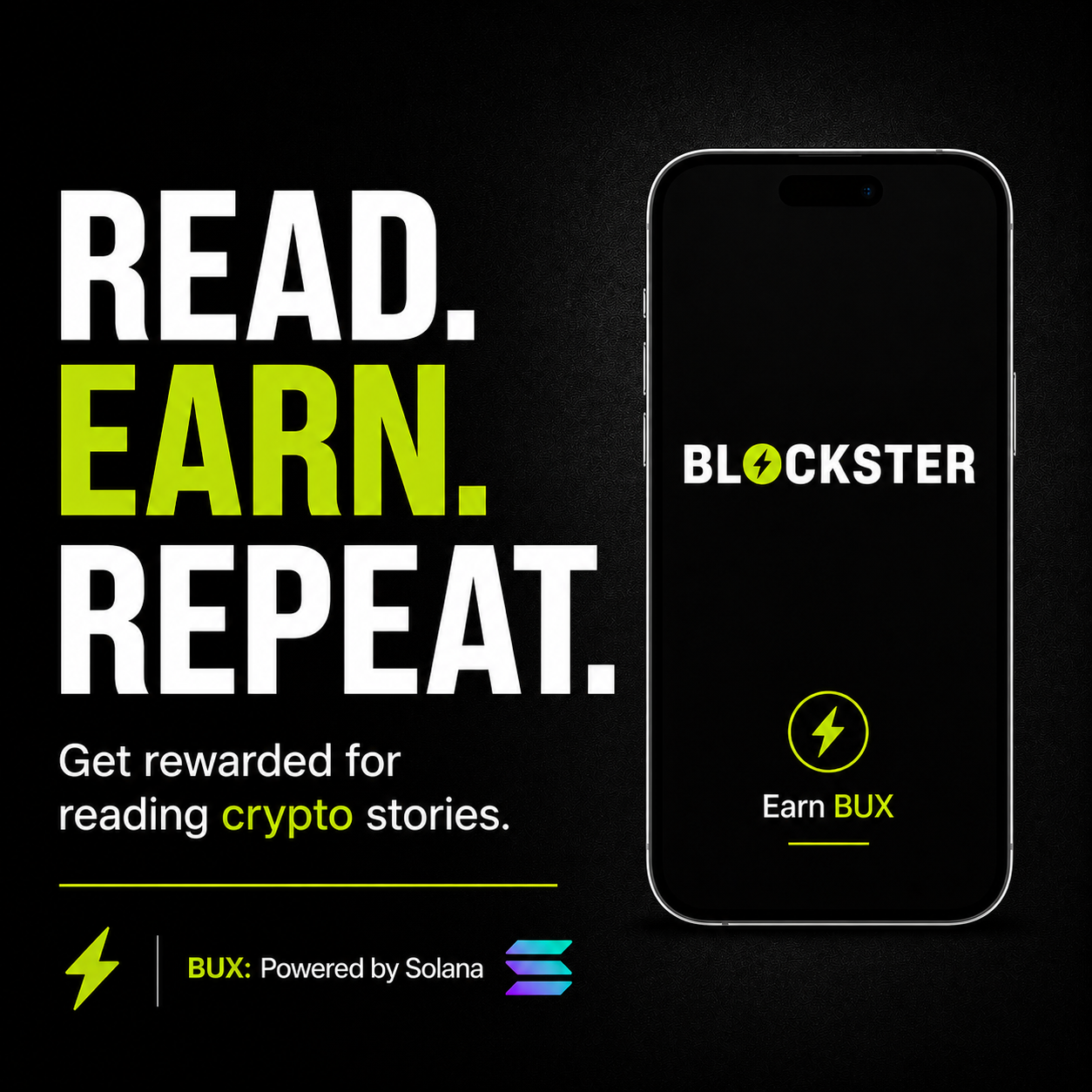
This week, we quietly completed one of the biggest infrastructure changes in Blockster’s history: Blockster is now running on Solana.
Alongside the migration, we also rolled out a few cosmetic upgrades across the platform — but the bigger story is what this move means for the future of Blockster, BUX, and the kind of Web3 media ecosystem we’re building.
Blockster Is Now Running on Solana
For those new to the platform, BUX remains our loyalty-layer token (currently works as an on-chain points system). Users earn BUX for reading, watching, and sharing stories across Blockster. That core experience isn’t changing. What is changing is the infrastructure powering it all underneath.
We originally launched the new Web3-powered Blockster in Q1 2026 on our own L3 Rogue Chain. At the time, it made sense. We wanted flexibility and ownership over the stack.
But over the past few months, something became increasingly obvious: L3s are difficult to market, difficult to explain to mainstream users, and difficult to scale socially. We realized that if we wanted Blockster to grow into a true consumer-facing Web3 media platform, we needed to build on a chain already being used by millions of people every day.
That chain is Solana.
Why Solana
As a media platform, Blockster processes a massive amount of activity behind the scenes — engagement tracking, rewards, wallet interactions, game activity, loyalty mechanics, and eventually much more.
If the platform scales the way we believe it can, there could be thousands of concurrent transactions happening at once.
We needed infrastructure that was:
Fast
Cheap
Consumer-friendly
Already adopted at scale
Solana was the only chain that realistically fit those requirements.
The ecosystem has also matured significantly over the last year. According to recent data from The Block, Solana continues to rank among the most active blockchain ecosystems across transaction volume, wallet activity, stablecoin usage, and decentralized exchange volume.
Some recent Solana ecosystem metrics include:
163 million transactions processed in a single day (as of April 28, 2026)
5.57 million average daily active wallets
168 million active wallets recorded throughout March 2026
Major adoption across payments, gaming, DeFi, NFTs, and consumer apps
The momentum is hard to ignore.
Funny enough, the morning we finalized the migration, the first thing I saw on X was a meme showing project after project moving over to Solana. Honestly, it felt pretty accurate.
Post from @luminariesView the original post on X↗
And now, for the first time ever, I’ll officially be attending Solana Accelerate in Miami as part of the Solana community.
I’m genuinely excited about that.
What Blockster Actually Is
A lot of people still think Blockster is “just” a crypto news site. It’s much bigger than that.
At its core, Blockster remains a crypto media platform publishing daily stories across the industry.
Yes — now that we’re on Solana, you’ll definitely see more Solana coverage. But we’re still chain-agnostic editorially.
We’ll continue covering ecosystems like:
Tezos
TRON
EVM chains
Emerging AI + blockchain projects
Consumer crypto infrastructure
Payments, RWAs, gaming, DeFi, and more
Over the years, I’ve built relationships with teams across many ecosystems, and I genuinely respect what a lot of these communities are building.
That won’t change. And honestly, for communities, it’s in everyone’s best interest to cross-pollinate — sharing news, products, and ideas across different ecosystems instead of staying siloed within a single chain.
Hubs: Web3-Native Media Communities
One of the parts of Blockster we’re especially excited to push further is Hubs.
Right now, 43 projects are already using Hubs to publish:
Announcements
Interviews
Press releases
Videos
Community updates
Think of it as a Web3-native publishing and community layer.
Each Hub also includes:
Its own merch shop
Subscriber notifications
Email alerts
In-app notifications
Event functionality (coming soon)
Projects can invite their communities to subscribe to stories, meaning users automatically receive updates whenever new content, merch, or events are published.
We haven’t even properly marketed Hubs yet. It’s still incredibly early.
I’d also love to bring more journalists, creators, and podcasters into the Blockster network so Hub partners can connect directly with them for interviews, media coverage, podcasts, and collaborative storytelling across the ecosystem.
Another area I’m excited to experiment with is bringing artists into the ecosystem to create unique merch for communities. Instead of just printing standard logos on hoodies and T-shirts, I’d love for artists to design original pieces and collections specifically for Hub partner shops.
Again, it’s still very early-stage, but I think there’s something really interesting there.
The New SOL Coin Flip Game
This is where things get a little more experimental.
We’ve always had a BUX coin flip game as a lightweight way for users to boost earnings.
Now we’ve rebuilt the experience on Solana.
The new game is:
Decentralized
Non-custodial
Provably fair
Powered by SOL
Players can instantly double their SOL stake by flipping the coin correctly.
And honestly? It’s quite addictive.
What makes this interesting for Blockster is the infrastructure behind it. The game includes a decentralized House Bankroll LP, meaning users can provide liquidity to the bankroll itself.
That turns the game into something bigger than a simple gambling mechanic — it becomes a potential revenue layer for the platform and the community.
Media businesses today are tough. Ad revenue alone isn’t enough anymore. Subscription models are saturated.
To survive long term, platforms need multiple revenue streams.
For us, that means experimenting with:
Loyalty systems
Games
Commerce
Community monetization
Events
Sponsored media
Creator infrastructure
The coin flip game currently operates with a 1% house edge, but it’s fully provably fair, meaning users can independently verify results were not manipulated.
What Can You Actually Do With BUX?
BUX is still evolving, but here’s where we’re headed.
Planned BUX Utility
Burn BUX to enter raffle-style airdrops
Use BUX to buy merch
Redeem BUX during events
Potentially use BUX for drink vouchers and event perks in the future
We also plan to integrate BUX deeper into the Hub economy itself.
Right now, we’ve onboarded Hubs for free to help bootstrap the ecosystem.
But longer term:
Projects may need to hold BUX to activate a Hub
Brands may purchase BUX credits to distribute to their communities
BUX could become the core engagement layer powering the entire platform economy
That’s the direction we’re building toward.
Final Thoughts
This migration to Solana isn’t just a technical upgrade.
It’s a strategic shift toward building Blockster as a true consumer-scale Web3 media platform — one designed for real users, real engagement, and real activity happening onchain.
We’re still early.
But I genuinely believe crypto media needs to evolve beyond banner ads and recycled press releases.
It needs community.
It needs ownership.
It needs incentives.
It needs products people actually use.
That’s what we’re trying to build. And now we’re building it on Solana.
If you’re in Miami for Consensus 2026 or Solana Accelerate, reach out to me on X @blockstercom. I’d love to meet.
Post from @BlocksterComView the original post on X↗
We’re actively onboarding projects into Hubs, helping teams with content strategy, booking interviews, event curation, and ongoing community publishing support.
We’ve also been fortunate to work alongside some incredible marketing and PR partners over the years. Huge shoutout to MarketAcross, Coinbound, Lunar Strategy, Wachsman, and many others — it’s always a pleasure collaborating with you and your clients.
If you haven’t joined Blockster yet, I’d love to invite you to check it out. Getting started takes seconds — simply enter your email and we’ll automatically generate a Solana wallet for your account, or connect an existing wallet like Phantom or Solflare.
Reporting by Lidia Yadlos